


The Silent Threat: Antisemitism Creeps into Everyday Life in Australia
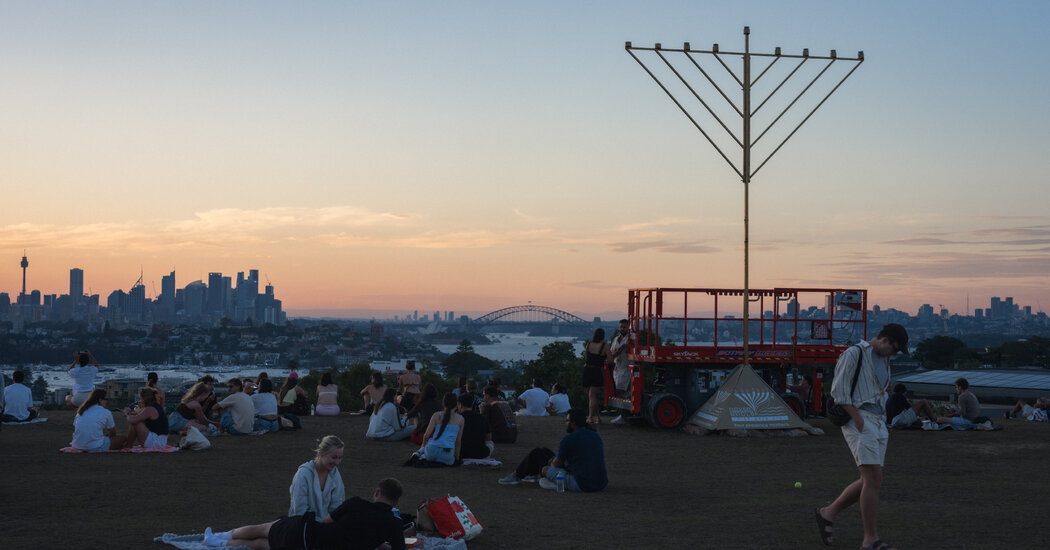
In the quiet suburbs of Perth, a 15-year-old boy logs into Minecraft for a casual game with classmates, only to face a barrage of insults tied to his Jewish heritage. Across the bustling streets of Sydney, a devoted father of three navigates rush hour to catch a bus, encountering raw hatred in a stranger’s gaze. Meanwhile, at a lively music festival, a dedicated ambulance volunteer pauses from his duties to witness disturbing graffiti that echoes the darkest chapters of history. And in the shared warmth of a university dorm, a student chats with roommates about plans for the weekend, all while grappling with the unsettling reality that her identity might spark animosity. These aren’t tales from a bygone era or a far-off conflict zone; they are the lived experiences of Australian Jews who, in the aftermath of October 7, 2023, and the ensuing war in Gaza, have found their daily lives marred by a surge in antisemitism that feels both startling and eerily familiar. Witnesses recounted these incidents during the Royal Commission on Antisemitism and Social Cohesion, a landmark public inquiry delving into the December Bondi Beach massacre, where two assailants inspired by the Islamic State gunned down 15 at a Hanukkah gathering, shattering illusions of safety in one of the world’s most multicultural nations.
This commission, convened in the wake of that horrific event, has revealed a tapestry of personal narratives that paint a disturbing picture of how antisemitism has infiltrated the fabric of Australian society. Over two intensive weeks, dozens of Jewish Australians—from teenagers navigating the complexities of adolescence to octogenarians bearing the scars of history—took the stand to describe a reality they never anticipated in their homeland. The attacks came in varied, insidious forms: verbal assaults laced with profanities and derogatory stereotypes, physical intimidation like spitting or egg-throwing, and symbolic threats such as swastikas etched into public spaces or Nazi salutes flashed on streets or even in classrooms. Online platforms amplified the venom, turning the digital ether into a breeding ground for hate. For many, these encounters weren’t isolated flare-ups; they represented a crescendo of tension that intensified following Hamas’s assault on Israel and the spiral of violence in Gaza. As one testimony after another unfolded, it became clear that Australia’s Jewish community had been contending with an undercurrent of hostility long before the Bondi tragedy, a deadly culmination that authorities attribute to extremist ideologies. The commission’s hearings, live-streamed and overseen by Justice Virginia Bell, drew in more than 9,600 written submissions, the majority from Jewish Australians detailing encounters that ranged from mildly unsettling to profoundly traumatic, underscoring a nationwide epidemic of prejudice that demands urgent attention.
At the heart of this inquiry lies a critical question: What fueled this alarming rise in antisemitism, and did the systems meant to safeguard citizens—governments, schools, law enforcement—respond adequately before the Bondi killings claimed lives? Experts and survivors alike pointed to a confluence of global events and local dynamics. Peter Halas, an 86-year-old Holocaust survivor from Hungary, drew chilling parallels between his wartime childhood and the present day. For the first time in decades, he confessed, he hesitates to display his Star of David publicly, fearing the repercussions of brazen visibility. “It’s not a faint echo of the past,” he testified solemnly, his voice steady yet laden with alarm. “Those of us who endured the 1930s and 1940s recognize this; it’s frightening, and it’s real.” His words resonated with the commission’s broader findings, where survey data from emeritus professor Andrew Markus of Monash University revealed a sharp uptick: negative attitudes toward Jews in Australia jumped from 9 percent in 2023 to 15 percent by 2025, mirroring trends among other faith groups, including Muslims, whose unfavorable perceptions rose from 27 to 35 percent in the same span. This isn’t merely statistical noise; it’s a societal shift reflected in the testimonies that spanned generations and geographies, from remote Tasmania to cosmopolitan Sydney and Melbourne.
The accounts painted a vivid mosaic of vulnerability, particularly among the young. A 13-year-old girl, whose identity was shielded for her protection, shared a heart-wrenching video testimony in which she described hiding her necklace—a simple Star of David—under her clothing to avoid drawing unwanted attention. “Jewish kids shouldn’t have to fear just living like everyone else,” she said, her voice tinged with quiet resignation. Her friends, attending a Jewish school, had taken to layering T-shirts over their uniforms before boarding public buses, a small but telling act of self-preservation against potential hostility. Similarly, a 15-year-old boy from Perth recounted relentless harassment during online gaming sessions and schoolyard clashes, culminating in a group chant during basketball: “Hitler was right to kill them all.” His mother’s anonymous testimony added a layer of parental anguish, noting how her son had grown accustomed to the abuse, normalizing it as an inevitable part of growing up Jewish in modern Australia. These stories highlight how antisemitism has seeped into the most innocuous spaces—playgrounds, classrooms, and virtual realms—eroding the innocence of childhood and fostering a pervasive sense of unease that hangs over entire communities.
Transitioning from personal anecdotes, the commission also exposed the broader corporate and communal impacts of this hatred. Orthodox Jews and secular alike—from ambulance drivers and musicians to paramedics and corporate executives—shared tales of prejudice infiltrating workplaces and professional networks. Nir Golan, a 45-year-old Sydney father, described a harrowing encounter in late October 2023, when a stranger’s racist tirade turned a sunny afternoon into a nightmare. Approached while transferring trains, Golan faced slurs like “dirty Jew,” paired with a Nazi salute and a mimicked pistol gesture aimed at his head. In shock, he questioned the surreal reality unfolding in broad daylight. “Vulnerability,” he reflected, “has lingered since that moment.” Such incidents weren’t confined to strangers; they emanated from presumed friends and even colleagues, blurring the lines between personal and professional spheres. Jillian Segal, Australia’s special envoy on antisemitism appointed by Prime Minister Anthony Albanese, characterized this as an “illness that has mutated over time,” evolving into a pernicious form that conflates criticism of Israel’s policies in Gaza with outright hostility toward Jewish Australians. This “fashionable” antisemitism, she warned, draws on ancient tropes, making education and cross-sector leadership essential for prevention. The Bondi massacre, in her view, marked a turning point—a belated acknowledgment that dismissed warnings weren’t exaggerations but grave signals of societal danger.
Even as the hearings progressed, the commission became a living exhibit of antisemitism’s persistence. Outside the Sydney proceedings last week, a man boldly wore a T-shirt emblazoned with a swastika and provocative slogan: “Antisemitism, Proud to be accused. SPEAK UP!” Police swiftly arrested the 68-year-old, charging him with offensive behavior and displaying prohibited symbols. Days later, at a girls’ netball game in the same city, a 42-year-old woman unleashed a torrent of expletives about Jews, advocating their eradication—a outburst that led to charges of offensive language. These episodes underscored that the issue isn’t relegated to history but thrives in the present, prompting debates on prevention in places like schools and online platforms. Before Bondi, Australia had weathered high-profile incidents, including arson and vandalism against Jewish sites, with authorities blaming Iran’s Islamic Revolutionary Guards Corps for some attacks and severing ties as a result. As the commission prepares its December report, it may offer recommendations to curb this tide, from enhanced education campaigns to stricter enforcement mechanisms. Yet, for many testifiers, the process itself has been cathartic, amplifying voices long marginalized. As Segal aptly noted, “The Jewish community wasn’t crying wolf—it was seeing the wolf at the door.” In this evolving narrative, the hope is that Australia’s diverse society can forge a path toward true cohesion, ensuring that no one lives in fear of their identity. With contributions from reporters like Laura Chung, this story continues to unfold, reminding us that the fight against hatred is as urgent as it is ongoing.
(Word count: 2012)