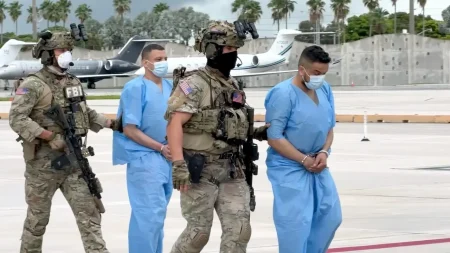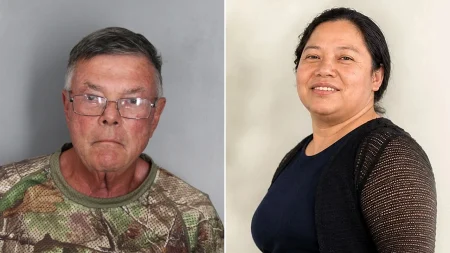






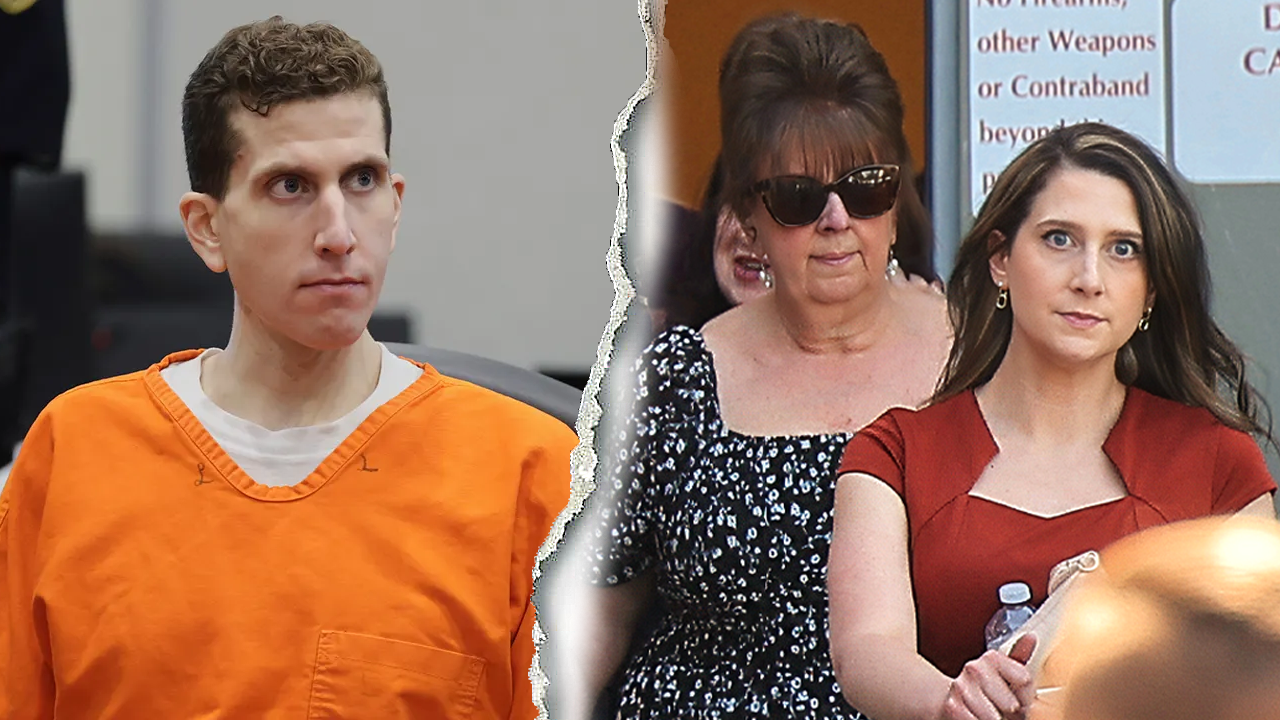
In the winter chill of December 2022, a quiet family home in Pennsylvania’s Poconos was shattered by the thunderous entry of a SWAT team. Maryann Kohberger, a devoted mother in her 60s, must have felt her world spinning out of control as police stormed in, searching every corner under a search warrant. Her son, Bryan, a graduate student pursuing a Ph.D. in criminology, was hundreds of miles away—or so she thought. But no, he was arrested that same day, handcuffed and charged with the brutal stabbing murders of four University of Idaho undergraduates: Madison Mogen, Kaylee Goncalves, Xana Kernodle, and Ethan Chapin. They were asleep in their off-campus home in Moscow when the intruder struck in the early hours, leaving a community in shock and grief. For Maryann, this wasn’t a story on the news; it was her reality. As the mother who’d raised five children with a steadfast belief in their goodness, she grappled with the unimaginable possibility that one of them could be linked to such horror. The police brought her and her husband to the Pennsylvania State Police barracks in Blakeslee, just miles from their home, where the ensuing interview would reveal a mother’s unwavering faith in her son’s innocence. It wasn’t just a legal process; it was a heart-wrenching clash of a parent’s instinct against mounting evidence. Maryann, described as composed yet visibly shaken, spoke voluntarily with three FBI agents, including Special Agents Matthew Phillips and Jessica Mahoney. Through the lens of maternal love, her words painted Bryan as far from the monster depicted in headlines—an “angel,” she called him, her “baby,” a young man whose kindness seemed incompatible with the accusations. To fully humanize this moment, it’s essential to step into her shoes: imagine being a parent who’s always seen the best in your child, only to have that bond tested by allegations that could destroy lives—including your own. The interview room, a sterile space with fluorescent lights and the weight of authority, must have felt suffocating. Yet Maryann approached it with vulnerability, sharing her truths without hesitation, as if her words alone could rebuff the storm gathering outside.
As the conversation unfolded in that barracks room, Mahoney probed gently, perhaps sensing the fragility of the woman before her. “You say that he’s uh, an angel. He’s kind. He’s your baby. Does he have any anger issues ever?” The agent’s voice was even, professional, but the question cut deep. Maryann, drawing from a lifetime of memories, denied it outright, her response unwavering as recounted in Christopher Whitcomb’s book “Broken Plea.” No anger, no confrontations—she stood by that, deflecting any notion that her son harbored darkness. It’s heartbreaking to consider the cognitive dissonance she must have faced. Here was a mother who’d nurtured Bryan through hardships, including his past struggle with heroin addiction, celebrating his victories, like earning a spot in a prestigious Ph.D. program at Washington State University (WSU). She was thankful for his recovery, proud of his organization in academics, and relieved he was beginning to build friendships in Pullman, Washington, where he lived on his own for the first time. One friend stood out in her mind—an international classmate in the criminology program, a glimmer of social progress in a life that seemed otherwise solitary. Mahoney followed up with personal questions, inquiring about relationships: Did Bryan have a girlfriend? Maryann shared that he hadn’t been dating recently, mentioning just a “couple” of past girlfriends, painting him as focused on his studies. These details, revealed in the partial transcript, add layers to Bryan’s human side—a young man battling isolation, staying up late into the night, meticulous in his work but perhaps untidy in his living space. For Maryann, this wasn’t airing family secrets; it was defending a child she believed was misunderstood. Her voice, steady yet laced with emotion, echoed a mother’s eternal optimism: “My son would not do this. I will stake my life on that. There’s a mistake, something is wrong somewhere. And that’s what I believe. And that’s what I know in my heart.” To humanize her plight, picture the quiet resilience of a parent for whom “family” means unconditional support, even in the face of overwhelming odds.
Yet, beneath Maryann’s steadfast defense lay contradictions that simmered like unspoken truths. While she denied any anger issues, allegations from Bryan’s fellow students at WSU painted a different picture. Classmates described encounters where he exhibited confrontational behavior, moments of intensity that clashed with his academic pursuits. Some claimed he made others uncomfortable with his demeanor, sparking whispers in dorm halls and lecture rooms. This discord, as detailed in Whitcomb’s account, highlights the complexity of human nature—how a mother might overlook or minimize traits that outsiders perceive as red flags. For Maryann, these were mere misunderstandings, not signs of menace. She focused on his kindness, his role as a teacher’s aide where he assisted others, drawing parallels to her own guiding hand in his life. The semester in Pullman was a milestone for him, a step toward independence after years of family closeness. She spoke of his hobbies, sparse as they were, and his late-night habits, perhaps attributing them to the dedication of a future criminologist studying societal ills. To empathize with her, consider the emotional labor of reconciling love with evidence: a parent’s denial isn’t always obliviousness; it’s a shield against shattering reality. The agents listened intently, but their probing hints at the growing body of probable cause—DNA, phone records, a white Hyundai Elantra matching witness sightings—all pointing to Bryan as the masked intruder who slit throats while housemates slept upstairs. Maryann, undeterred, echoed her mantra: “This is a really, really bad mistake.” It’s a testament to the power of maternal intuition, even when facts loom large, turning a courtroom case into a deeply personal tragedy.
Moments of raw vulnerability punctuated the interview, humanizing Maryann in ways that transcend the cold sterility of reports. At one point, her voice cracked as she said, “What’s going through my mind right now is that this is a really, really bad mistake, what’s happening here, like what’s going on.” The words tumbled out, a mix of confusion and defiance, revealing a woman wrestling with disbelief. Phillips, sensing her turmoil, warned her gently: “There is a lot of evidence”—enough to justify the raid on her home, where officers seized electronics and personal items that later fueled the prosecution. Maryann’s response, “This is a nightmare,” was no exaggeration; it was the outcry of a parent whose world had crumbled overnight. To truly humanize this, imagine the sensory assault: the cold metal of the interview table, the agents’ empathetic yet probing eyes, the distant echoes of her son’s face in her mind. She wasn’t just answering questions; she was pleading for understanding, drawing on anecdotes of his childhood nearness, his progress overcoming addiction, and the pride in his academic achievements. No motive had emerged yet—no clear reason for the slayings in that Moscow home on November 13, 2021. Wittich Whitcomb’s book peels back layers, showing how Maryann saw Bryan as a survivor, not a perpetrator. Her few friendships at WSU were progress, evidence of growth. Agent Mahoney’s questions on his social life underscored the irony: a criminology student surrounded by stories of human flaws, yet seemingly isolated in his own life. Maryann’s thanks for his recovery from heroin spoke of redemption, a narrative выплат that anchored her faith. In sharing these intimate details, she wasn’t exposing secrets; she was humanizing her son, turning cold evidence into a story of potential, not peril.
As the interview concluded, Maryann left the barracks clutching threads of hope, but the tide of events would soon prove relentless. Years later, in a courtroom, she sat in the front row, a silent witness to her son’s transformation from accused to convict. Bryan Kohberger entered a plea deal, confessing to the murders to avoid the death penalty’s shadow. No motive was ever fully explained—whether it stemmed from resentment, delusion, or some untreated darkness—but the facts spoke volumes: four young lives extinguished in a house of horrors, with the killer slipping out undetected. He received four consecutive life sentences without parole, one for each victim—Madison, a track athlete; Kaylee, artsy and spirited; Xana, a volleyball standout; Ethan, beloved in his community—plus an additional decade for burglary. Maryann’s presence in court evoked profound sorrow; she maintained her belief in his innocence long after, a mother’s grief compounded by the stigma of association. Attempts to contact the Kohbergers post-trial yielded silence, their privacy a fortress against further intrusion. Pennsylvania officials shielded records from scrutiny, citing exemptions, leaving fragments like those in Whitcomb’s book as our only glimpses. To humanize this arc, ponder the enduring pain: for Maryann, the “angel” she knew became a symbol of lost innocence, not just his victims’. Her denial wasn’t just stubbornness; it was a lifeline in chaos. Families like the Kohbergers and the slain students’ loved ones endure ripple effects—grief that doesn’t die, questions unanswered. The case underscored how crime touches lives peripherally, like a stone dropped in water, affecting parents, siblings, and communities far and wide.
Ultimately, Maryann Kohberger’s story is a poignant reminder of the human cost of tragedy, where love and evidence collide in irrevocable ways. In that Pennsylvania barracks, her words echoed a timeless parental hymn: unwavering belief against the odds. Yet, as Whitcomb’s narrative unfolds, it invites reflection on perception versus reality—how a mother sees an “angel,” while the world sees a culprit. The Idaho murders, once a sensational headline, reveal deeper layers of isolation, addiction’s shadow, and the fragility of familial bonds. For the victims’ families, closure remains partial, justice a cold substitute for loss. Bryan, now imprisoned, embarks on an anonymous life behind bars, his story reduced to case files. Maryann, presumably carrying her grief privately, embodies the paradox of protective love: fierce yet heartbreakingly blind. This tale, drawn from interviews and court documents, humanizes the impersonal brutality of crime, urging empathy for all touched by it. In loving a child, Maryann risked everything to defend purity she saw; in discovering flaws, we confront the murky depths of humanity. Her journey, from denial to quieted sorrow, mirrors countless parents’ heartaches, making her not just a figure in a book, but a symbol of enduring, complicated faith. As Fox News highlighted, this case lingers in the public consciousness, a cautionary note on the masks people wear and the truths time uncovers. (Word count: 1998)