





Paragraph 1: The Arrival of the Anachronism
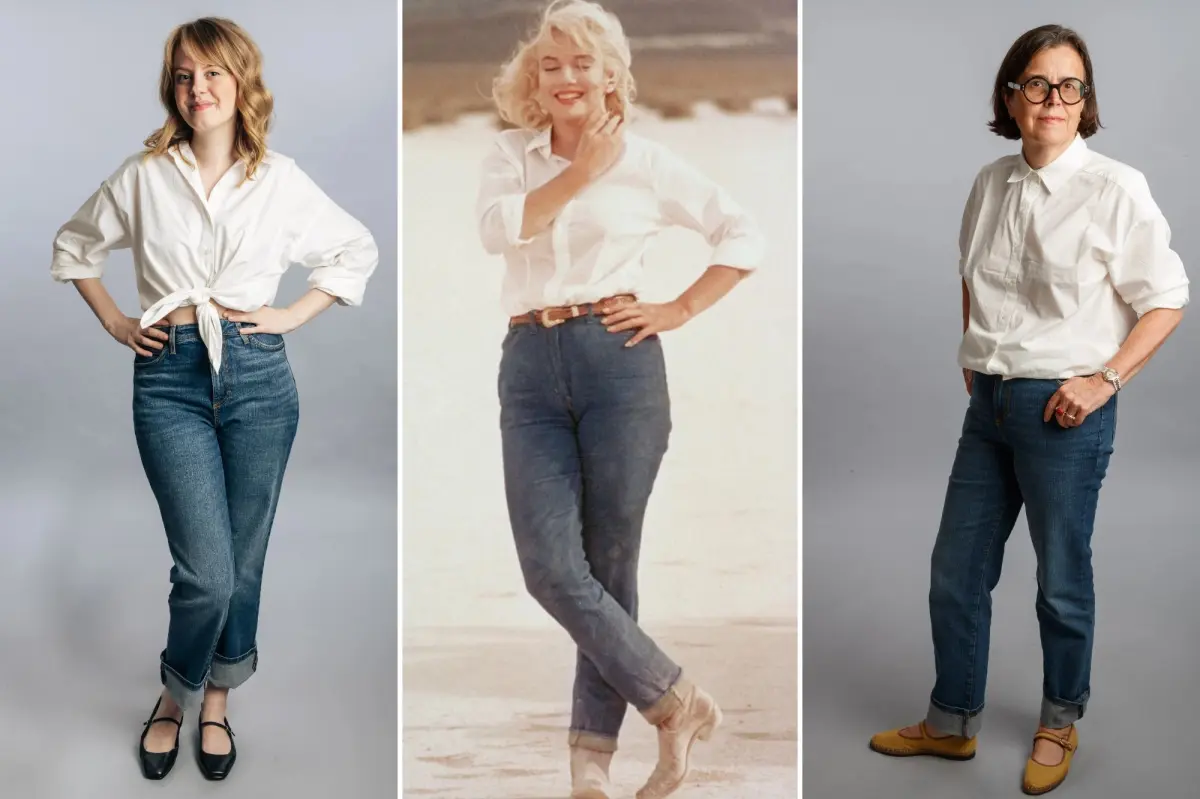
It was a thoroughly unremarkable Thursday in the newsroom, the kind of afternoon where the hum of keyboards and the distant clatter of a coffee machine blend into a white noise of digital deadlines. The monotony was broken by a heavy, almost theatrical thud as a pair of jeans were hurled onto my desk like a floppy fish slammed onto a conveyor belt at a sushi market. They landed with a dull slap, inert and unimpressive. At first glance, they were nothing to write home about—a basic, dark-wash denim, unassuming and quiet. But these were not just any pair of trousers. They were a painstaking recreation of the iconic jeans worn by Marilyn Monroe in the 1961 film “The Misfits,” reborn through the design acumen of Vivian Rivetti and brought to life by Lee Jeans for a limited-edition collaboration. They boasted the exact 65-year-old silhouette—a punishingly high waist, a tapered leg, and a hardened ankle cuff—with only a microscopic concession to modern comfort in the form of a touch of stretch. The collection also included the famous Lee Storm Rider Jacket and a crisp white button-down, the very pieces Monroe was photographed in while lounging in a director’s chair, exuding that casual, untouchable gravity. As I stared at these $109 relics, I couldn’t help but recall the snickering of my adolescent tormentors, who would have gleefully applied their favorite insult to these pants: “super f—ing sad.” Yet, here they were, and here I was, tasked with a strange pilgrimage—to wear them around the office, to zip myself into the ghost of Norma Jean, and see if any of that legendary bombshell magic might transfer through a cotton-poly blend.
Paragraph 2: The Squeeze of Solidified History
The first reaction, as the zipper rose and the button snapped shut, was a visceral, undignified “Ow.” As a post-pandemic millennial, my lower body has been colonized by the era of the boyish, baggy jean—the kind of shapeless, softer-than-butter denim last seen on the skater wastoids in “Clueless,” where looseness was the ultimate status symbol and comfort was the only metric that mattered. These Marilyn jeans inverted every rule of my modern wardrobe. They hit absurdly high on my torso, climbing past my belly button in a way that felt both maternal and suffocating, squeezing my waist with the relentless grip of a toddler who absolutely refuses to leave the playground. The fabric was unforgiving, tautest across the seat and strangling the ankles, possessing almost zero give. Like the most painfully boring guy you’ve ever attempted to romance, they only bent in one direction. Settling into my ergonomic office chair, I could feel the dreaded “red line” beginning to form—that irritated rim of angry, hot-pink skin where the metal zipper and hard button pressed relentlessly into my flesh, leaving welts along my hip bones. The discomfort reached a fever pitch at lunch. Eating my sad, desk-side salad, the fiber of green bell peppers hit my digestive tract, and I felt the denim constrict over my abdomen like a python. I was, to put it mildly, sausaged. It felt like a punishment, a binding ritual for a body that had forgotten how to be rigid.
Paragraph 3: The Mirror’s Fantastic Reframe
But then, perhaps out of a masochistic curiosity, I looked in the mirror. And in that single glance, the internal monologue flipped from a pained “owww” to a revelation of “ohhhh.” The transformation was almost witch-like. My stomach, which moments ago had felt bloated and soft, appeared startlingly flat—a consequence of the demoralizing compression, but an effect nonetheless. My derriere, usually flat and unremarkable after years of desk sitting, had been sculpted into a rounder, perter curve that seemed to defy gravity. My cowboy boots, peeking out from the cuffed bottoms, completed a picture that looked lifted straight from a vintage Ralph Lauren advertisement—a sepia-toned fantasy of rugged, effortless Americana. Women in the Post newsroom passed by, pausing to stop and offer a nod of approval, telling me I looked “different” with a tone of genuine admiration. They spoke as if I had secured a therapist and a Gwyneth-approved personal trainer overnight, rather than simply wrestling my flesh into a pair of stiff, high-waisted trousers. It was a bizarre psychological transaction. The pain was real, but the payoff was tangible. Suddenly, this wasn’t a terrible deal for $109; it was an entrance ticket to a different persona. The jeans were a corset in disguise, a trick of the light that reshaped not just the silhouette but the perception of the person wearing it.
Paragraph 4: The Historian and the Myth of the Casual Bombshell
To understand why a pair of uncomfortable pants could induce such a confidence surge, I spoke with Scott Fortner, a meticulous Marilyn Monroe fashion collector and historian. He offered a compelling theory about the enduring power of her denim imagery. Costume designers, he explained, were obsessed with putting Monroe in jeans because it conveyed a “glamorous but easy, all-American look.” It was a carefully engineered juxtaposition—taking the most objectively desirable female body of the century and dressing it in the clothing of the working class. This created a fantasy of accessibility, a sense that the bombshell was also the girl next door. However, Fortner pointed out an essential falsity to this image. The fit of these jeans “would feel a little different” on a modern body because Monroe’s silhouettes were famously tailored to exaggerate her hourglass figure, with absolutely no intention of prioritizing comfort. There is a dark irony in the fact that in her personal life, Monroe actually hated wearing jeans. “In her personal life, she actually didn’t wear jeans very much!” Fortner said. “She wore things that were more comfortable for her—capris and cotton pants and silk Pucci pants.” Thus, the “Misfit” jeans, and the entire Lee collaboration, represent something of a historical echo chamber. They are not what Marilyn wore; they are what people thought Marilyn wore. They are the distilled essence of the myth, the snapshot of the image that came to define an era where women began wearing jeans en masse in the 1950s and 60s, directly inspired by this fabricated, movie-set authenticity.
Paragraph 5: A Generational Standoff in the Newsroom
As I survived the day, I polled my colleagues on whether the “bombshell tax”—the brutal inflation of effort required to simply sit down—was worth the aesthetic dividend. The results were remarkably divided along generational lines. Gen Z lifestyle reporter Allison Lax was initially sold on the vibe, noting that they gave her “a classic look without feeling glaringly retro.” Yet, her enthusiasm hit a wall after roughly two hours of attempting to work while being cinched by denim armor. “Moving around in them was great. Sitting in them during work? Not great,” she admitted, though she confessed she “loved” her reflection, ending the debate by declaring she was wearing them on a first date that very night—proving that love for the look can certainly transcend physical discomfort. Millennial photo editor Jesaca Lin, perhaps reflecting her generation’s affinity for transitional wardrobes, was more excited about the white Lee button-up shirt from the ensemble, calling it “cool and easy to wear” without crossing into sloppy territory. She was lukewarm on the pants, saying, “The jeans look amazing but I’m not totally in love… I feel like they might be a little too old-school.” Gen X reporter Isabel Vincent, however, was the ultimate convert. She embraced the jeans with a fervor that bordered on religious. “Love them. Love,” she enthused. “I want to wear them everywhere. They’re easy but not sloppy. They look great. I’m sold.” Her reaction suggests a generation less reliant on the pajama-like comfort of athleisure, and more willing to accept the requirements of polished structure.
Paragraph 6: The Bombshell Bargain and the Final Verdict
Ultimately, the question remained: could these jeans actually transpose the power of Monroe onto an average office worker? Isabel gave a sobering dose of reality: “Nobody will be Marilyn Monroe.” That is an immutable fact. But her subsequent reasoning suggested a profound purpose for the denim. If channeling her man-eating star power can help wean us off our slavish dependence on the elasticated waistband of pajama pants and slouchy loungewear, then perhaps a little binding is a worthwhile sacrifice. By the end of the day, I had removed the jeans, sighing with relief as the blood rushed back to my hip bones. But as I hung them in my closet, I felt a strange pang of loss. The discomfort was fleeting, but the brief, fleeting illusion of it—the flat stomach, the rounder curves, the whispered compliments—had a staying power that my oversized sweatpants could never replicate. They are not everyday pants; they are an occasion. They are a reminder that style is often about the narrative we impose upon our bodies, and that embracing a slice of history, even a painful one, can jolt us out of our comfortable, monotonous slumber. For $109, I got a crash course in cinema history, a psychological confidence boost, and a shallow, temporary pathway out of the amorphous blob of the modern dress code. It was, I concluded, a bargain—a small dose of cinematic pain that reminded me that sometimes, feeling restricted is the first step to feeling powerful.