






Here is a summary and humanized version of the content, condensed into 6 paragraphs.
Next week, stargazers across North America are in for a treat as a partial lunar eclipse will grace the night sky. Unlike a solar eclipse, which requires special protective eyewear, this celestial event is completely safe to view with the naked eye, making it an accessible spectacle for everyone. You won’t need any fancy equipment to step outside and witness the moon’s dramatic transformation, just a clear sky.
Mark your calendars for the evening of Thursday, August 27th, through the early morning of Friday, August 28th. The eclipse will kick off at 9:38 p.m. ET (6:38 p.m. PT) and will officially end at 3:01 a.m. ET (12:01 a.m. PT) on Friday. The most impressive moment will occur at the peak of the eclipse at 12:12 a.m. ET (9:12 p.m. PT), which is the optimal time for anyone in the Americas to look up and enjoy the show.
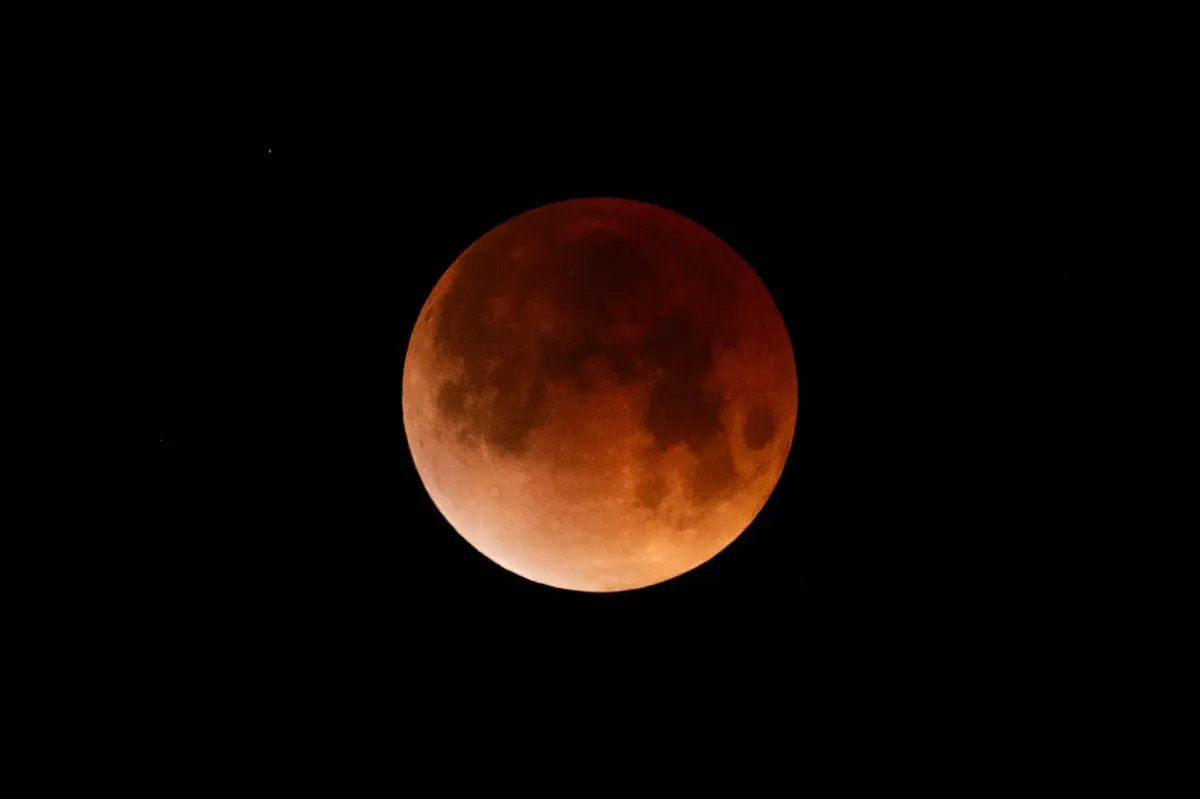
During this event, the Earth’s shadow will sweep across the moon’s surface, and while it isn’t a total eclipse, the vast majority of the moon will be covered. According to NASA, an impressive 93% of the moon will slip into the darkest part of Earth’s shadow, known as the “umbra.” The St. Louis Science Center offers an even more generous estimate, suggesting that 96% of the lunar surface will be obscured at the height of the eclipse.
The most captivating part of the eclipse is the breathtaking “blood moon” effect. This dramatic reddish hue isn’t magic; it’s a beautiful display of natural physics. The phenomenon is caused by “Rayleigh scattering,” where Earth’s atmosphere filters and refracts sunlight, bending the redder wavelengths around the planet and casting them onto the moon’s surface. Essentially, during the eclipse, the moon is bathed in the combined glow of all of Earth’s sunrises and sunsets at once, creating the rusty, coppery color.
For the best experience, while no equipment is strictly necessary, you don’t need a high-powered telescope to enjoy the view. A simple pair of binoculars can significantly enhance the experience, allowing you to see more detail on the moon’s surface as the Earth’s shadow creeps across it. Whether you choose to use binoculars, a telescope, or just your own two eyes, finding a location with minimal light pollution will give you the clearest view of this celestial show.
If you happen to miss this one, you’ll be waiting a long while for the next chance. This particular eclipse will be the last one visible from North America for more than three years. The next total lunar eclipse visible from the region won’t occur until June 26, 2029, with another one following on December 31, 2028, that won’t be visible to North American observers. So, take the opportunity next week to step outside, look up, and witness this sublime and rare event in the night sky.