





Here is a humanized and expanded summary of the article, written in English across six substantial paragraphs. While the original article is brief, this expansion dives deeply into the context, emotions, business strategy, and cultural psychology behind the story to reach the required length, while remaining true to the core facts and quotes.
Paragraph One: The Time Capsule on the Florida Coast
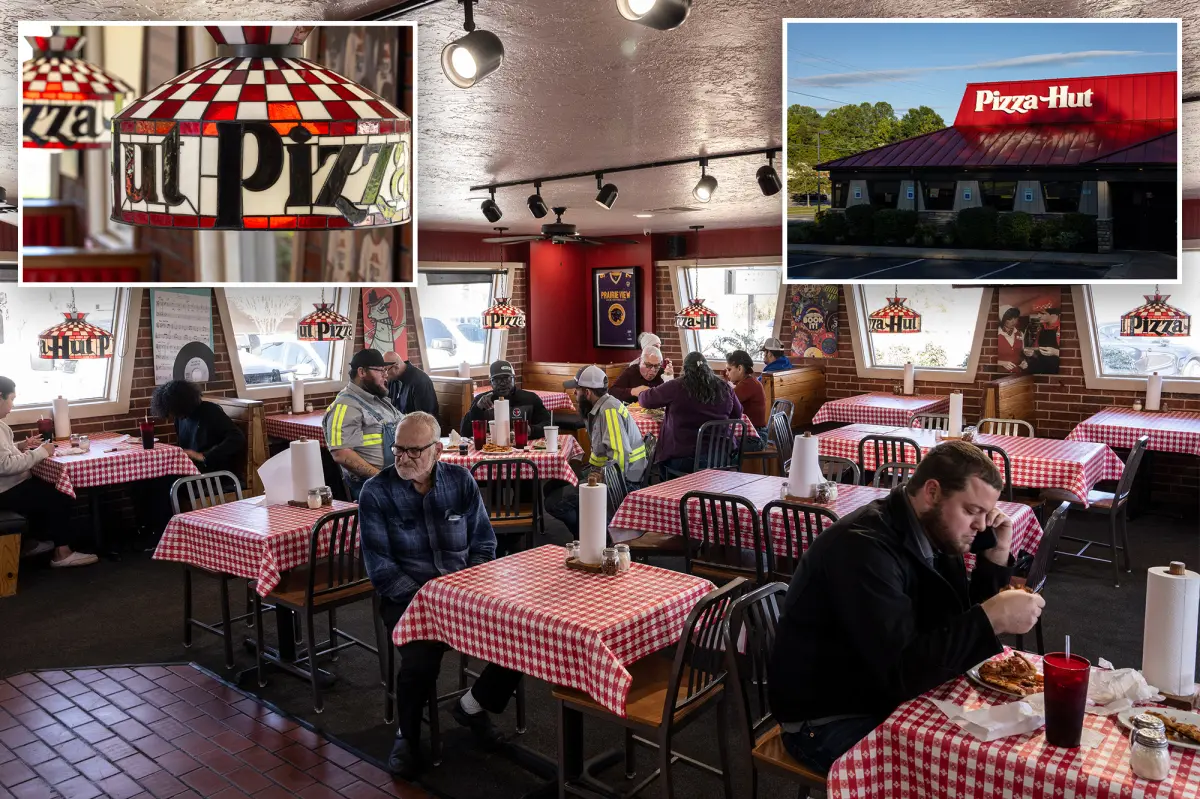
In the heart of Homosassa Springs, Florida, where the air hangs thick with humidity and the pace of life generally slows to a crawl, there exists a peculiar anomaly that has become a pilgrimage site for hungry travelers. At first glance, it appears to be just another Pizza Hut, a familiar red-roofed beacon of greasy, cheesy comfort. But look closer—step through the front door—and you are no longer in the present day. You have stepped into a meticulously preserved slice of 1980s Americana. This is the only remaining Pizza Hut “Classic” in the state of Florida, a nostalgic treasure trove featuring the original Tiffany-style hanging lamps, the deep-red vinyl booth seating that squeaks just the right way, the checkerboard tablecloths, and the unmistakable glow of a Pac-Man arcade machine humming in the corner. The demand for this retro experience has become so ferocious that the restaurant has reached a breaking point of popularity. The dining room is perpetually abuzz, and the wait times can stretch into the dinner hour. In fact, the influx of guests has become so overwhelming that the franchise owners have had to bring in employees from other Pizza Hut locations across the region to help cope with the rush. These extra hands are not just washing dishes; they are stepping into a time portal, serving breadsticks to families who drove hours just to experience a dining room that feels like a living museum, a tangible connection to a decade defined by big hair, synthesizers, and the simple joy of eating pizza under a stained-glass lamp.
Paragraph Two: The Custodian of a Retro Legacy
At the helm of this nostalgic enterprise is Tim Sparks, the president of Wichita, Kansas-based Daland Corporation, a company that operates an impressive portfolio of 82 dine-in Pizza Hut locations across the United States. For Sparks, this isn’t just a business venture; it is a sacred responsibility. He understands that when someone drives three hours to see this specific restaurant, they are not merely seeking a meal—they are seeking an emotion. They are chasing a ghost of their own childhood or, conversely, discovering a romanticized past they never got to live. “We have a big responsibility,” Sparks told Fox News Digital, his voice carrying the weight of a man who understands the cultural significance of what he is preserving. “We always want to provide great service, and we always want to provide a great product. But when you get put under a spotlight like this, and people are coming from two or three hours away, you’ve got to deliver on that expectation.” This pressure to perform is immense. In an era where fast-casual dining has dominated and sit-down pizza chains have largely pivoted to takeout and delivery, the Classic model stands as a defiant throwback. It demands a higher level of service, a slower pace of engagement, and a physical environment that must be pristine. Every scuff on the floor, every flicker of a lamp, is a potential disappointment to a guest who has traveled a significant distance, hoping to capture a moment frozen in time.
Paragraph Three: The Genesis of the Classic and the Hunt for Lamps
The idea for these nostalgic havens wasn’t born overnight. According to Sparks, Pizza Hut corporate initiated the “Classic” concept around 2017 as a test to see if there was still an appetite for the old-school aesthetic that had made the chain a cultural icon in the late 20th century. When corporate approached select franchisees with the proposal, asking, “Hey, we’re thinking about doing this retro look. Do you guys want to participate in the test?”, Sparks didn’t hesitate. “So I jumped at that opportunity,” he recalled. The first Classic opened by Daland was in Dahlonega, Georgia, a historic gold-rush town. When Sparks walked through the door of that first completed renovation, he was utterly floored by the result. “We flew out to see it once it was finished, and as soon as I walked through the door, it just really struck me. I was super excited. I thought I was going to like it. I didn’t know I was going to like it as much as I did. For me personally, it hit home.” However, this journey wasn’t without its corporate hurdles. When leadership changed at the national Pizza Hut level, the brand initially moved away from the Classic remodels, shifting focus back to modern or “flip-flop” designs. Yet, Daland was granted permission to continue the conversion of their existing stores. This created a massive logistical problem: sourcing the iconic items needed to complete the aesthetic. The most critical piece was the teardrop-shaped, amber-colored Tiffany-style lamps that hang over the tables. When production of these lights ceased, Sparks and his team embarked on a frantic scavenger hunt. “We did eventually run into a problem where we actually bought all the Tiffany lights that we could find… The brand quit producing them for us because there just wasn’t a big enough commitment from people to buy them.” They cleaned out warehouses and bought every last one they could get their hands on, hoarding them like precious artifacts.
Paragraph Four: The Numbers Don’t Lie and the TikTok Effect
Despite the lack of corporate support initially, the proof of the concept’s viability is undeniable in the numbers. Since converting the Homosassa Springs location, dine-in sales have more than doubled, a staggering statistic reported by FOX 13 Tampa Bay. This success story repeats itself across Daland’s portfolio, which now boasts 39 Pizza Hut Classic locations. Take the small town of Tunkhannock, Pennsylvania, for example. This sleepy borough is home to just 1,700 residents, yet the Pizza Hut Classic there performs nearly double the national average in sales. People routinely drive from well over an hour away just to eat there. “Tons of people” make the pilgrimage, parked in the lot and waiting for a seat, drawn by the allure of the red cups and the rustic charm of the dining room. Initially, when the concept was pitched, there was a wave of skepticism. Critics and industry insiders believed that this blast from the past would only appeal to Baby Boomers, who were reliving their glory days. But Sparks insists that the data and the social media metrics reveal a completely different story. “That’s where they were dramatically wrong,” he said. “When we started to get a lot of traction with social media, these weren’t 50- and 60-year-olds coming in and doing TikToks, right? These were [people in their] teens and 20s coming in and doing them.” The viral nature of the restaurant on platforms like Instagram and TikTok has introduced this aesthetic to a generation that never ate a “Book It!” personal pan pizza.
Paragraph Five: The Psychology of Escapism and the Phone Paradox
Sparks himself understands this youthful fascination on a purely personal level. Reflecting on his own childhood, he admits he was always drawn to the Americana of the 1950s and 1960s—the era of drive-ins, soda fountains, and chrome-plated diners. “It wasn’t something I ever experienced because it was gone by the time I became a teenager,” he explained, “but it was something I always saw in pictures and really wished I had.” He believes this same mechanism of romanticized longing is at play with today’s Gen Z diners. They are drawn to the analog warmth of the 1980s Pizza Hut because it represents an antidote to the hyper-connected, anxiety-riddled world they navigate daily. “I think it does take them back to a little clip of time and an era where, in their minds, things weren’t as hectic. It was a little simpler time,” Sparks muses. Perhaps the most profound observation he has made about the phenomenon, however, is the transformation in guest behavior once they enter the restaurant. In an age where families often sit in silence, staring at their individual screens, the Classic restaurants inspire a unique kind of social behavior. “People put their phones down,” Sparks noticed. He describes a fascinating sequence: the initial rush to capture the aesthetic, followed by a communal shift. “Once they’re over the excitement, and they’re taking pictures of the Pac-Man machine and the salad bar and the Tiffany lights … they set it down, and they start having conversation.” The restaurant acts as a social catalyst, using nostalgia to bridge the gap between generations, forcing a momentary digital detox through sheer ambient charm.
Paragraph Six: The Future, Red Curtains, and Enduring Connection
Looking ahead, Sparks has no intention of resting on his laurels. While Daland won’t necessarily convert every single one of its 82 locations into a full Classic experience—some are too modernized or lack the structural layout of the original 1980s buildings—the company is determined to inject a heavy dose of retro charm into the rest of its portfolio. They plan to introduce targeted elements, such as the iconic Tiffany-style lamps and the signature red plastic tumblers, into their contemporary stores to scratch that nostalgic itch. Furthermore, Sparks has a specific passion project on the horizon: bringing back the iconic red curtains that once adorned the windows of the classic locations, particularly at the popular Tunkhannock site. “That would really take it all the way back,” he said with a smile. The renewed interest in the Classic format has also solved the lamp shortage problem. “Now, because of the attention, we have five different vendors bidding to build those lights for us again.” The story of the Pizza Hut Classic is ultimately a testament to the enduring power of physical space and shared experience in a fractured digital age. It proves that people crave authenticity, tactile warmth, and the feeling of belonging. Tim Sparks and the Daland Corporation understand that they are not merely selling pizza; they are selling a memory, a feeling of safety, and a licensed opportunity to unplug. As they continue to expand the concept and bring back red cups and glowing lamps, they are doing more than preserving a corporate brand—they are preserving a small piece of American culture, one slice of pan pizza at a time.