







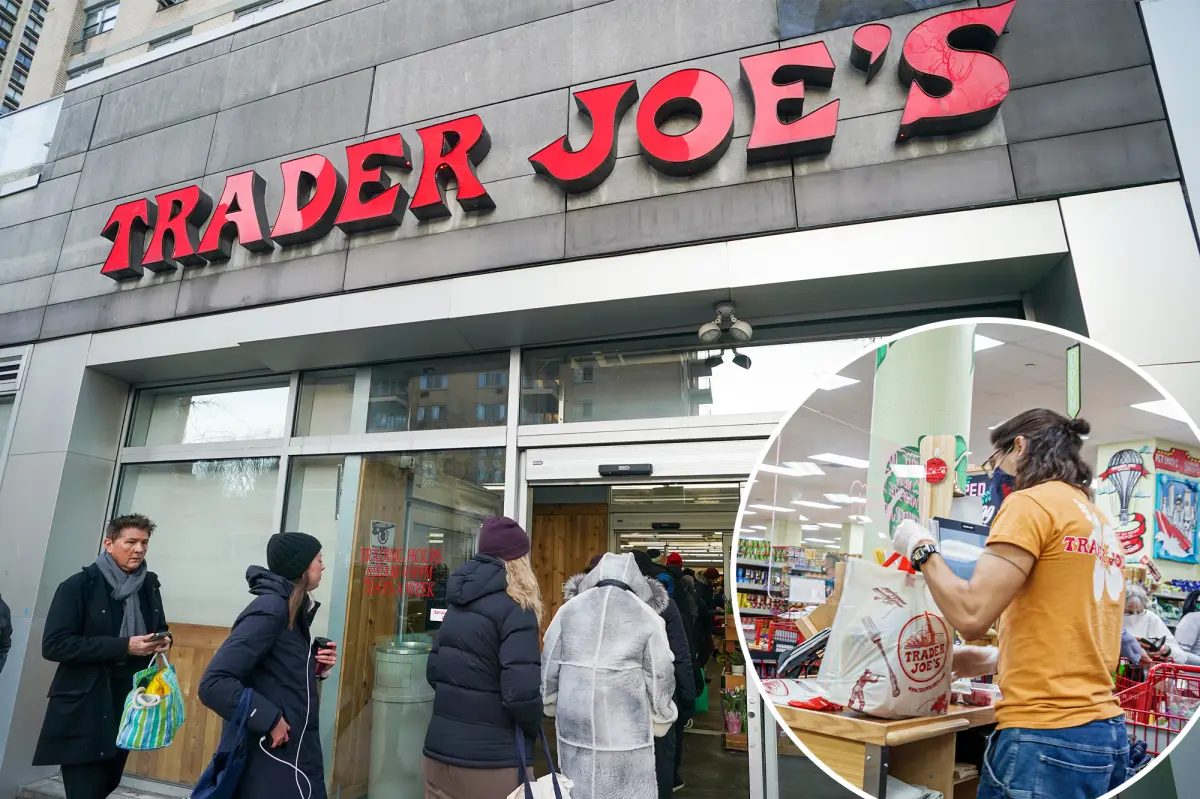
For many of us, a trip to Trader Joe’s is a comforting ritual filled with the cheerful rustle of paper bags, friendly employees in Hawaiian shirts, and the thrill of hunting down seasonal treats like pumpkin butter or dark chocolate peanut butter cups. But beneath this wholesome, neighborhood-grocery aesthetic lies a stark reminder that even our coziest shopping habits can intersect with the cold realities of corporate data security. If you frequented the beloved grocery chain back in 2019, your routine grocery run might now be worth cold, hard cash. Trader Joe’s has agreed to pay a substantial $7.4 million settlement to resolve a class-action lawsuit alleging that the company violated federal consumer protection laws. At the heart of the dispute is a simple, easily overlooked slip of paper: the cash register receipt. The lawsuit claims that in their haste to ring up customers, certain Trader Joe’s registers printed too much private financial information, putting hundreds of thousands of shoppers at a heightened risk of identity theft. Now, a ticking clock stands between eligible consumers and their portion of this multi-million-dollar payout, transforming a mundane shopping trip from years past into a timely opportunity for financial restitution.
The legal battle stems from a federal law known as the Fair and Accurate Credit Transactions Act (FACTA), which serves as a vital shield protecting everyday consumers from fraud. Under these strict federal regulations, businesses are legally prohibited from printing anything more than the last five digits of a customer’s credit or debit card number on any receipt. However, the lawsuit alleges that during a specific window in 2019, certain Trader Joe’s store terminals malfunctioned or were improperly configured, printing both the first six and the last four digits of customers’ payment cards. While displaying ten digits might seem harmless to the untrained eye, to a motivated identity thief, it acts as a partial map to crack open a victim’s financial life. This alarming oversight was first caught by a vigilant customer named Brian Keim at a store in Palm Beach Gardens, Florida. Shocked to see so much of his sensitive credit card information laid bare on a simple paper receipt, Keim decided to hold the grocery giant accountable. Although the lawsuit began in Florida, it was ultimately transferred to the Central District of California, closer to Trader Joe’s corporate headquarters in Monrovia, where the legal gears ground steadily toward the current multi-million-dollar resolution.
If you are wondering whether your past purchases qualify you for a piece of this settlement, the eligibility criteria depend heavily on when and how you shopped. The class-action suit covers customers who used a credit or debit card at affected Trader Joe’s locations during a relatively brief window: between March 5, 2019, and July 19, 2019. It is important to note that the settlement does not cover every single Trader Joe’s location across the country, nor does it apply to every transaction made during those months, as the receipt-printing issue was localized to a specific minority of cash registers. Records indicate that there are roughly 757,663 unique card numbers tied to the affected transactions, meaning over three-quarters of a million people could be eligible to file a claim. If you are one of the lucky eligible class members, your estimated payout is currently projected to be around $102.45. However, this figure is not set in stone; the final amount you receive could fluctuate based on how many people actually step forward to file valid claims, as well as the deductions taken out for administrative fees, court costs, attorney fees, and a special incentive award for the lead plaintiff, Brian Keim, who brought the issue to light.
Navigating the process of claiming your money requires a mix of vigilance and prompt action, as the window of opportunity will eventually close. Eligible class members should keep an eye on their mailboxes and email inboxes for a personalized notification containing a unique claim identification number, which acts as a key to accessing the settlement funds. When you receive this notice, you will face an important decision that requires weighing your legal options. If you choose to submit a claim and collect your $102.45, you will legally waive your right to sue Trader Joe’s in the future over this specific receipt issue or any related claims. If you wish to preserve your right to file an independent lawsuit against the company, you must actively opt out of the settlement class. The absolute deadline to either submit your valid claim form or officially opt out of the agreement is Tuesday, June 9, 2026. Following this deadline, the court will hold a final approval hearing on August 10, 2026, to officially sign off on the distribution of funds, after which any unclaimed leftover money will either be distributed to claimants in a second round of payments or donated to the non-profit Identity Theft Resource Center.
For its part, Trader Joe’s has steadily maintained its innocence throughout the legal proceedings, denying any systemic wrongdoing, negligence, or liability. The company insists that the receipt-printing anomaly was an isolated glitch that impacted only a tiny fraction of its total transactions, rather than a widespread corporate failure to protect user data. Despite this stance, the grocery chain opted to settle the case for $7.4 million rather than drag out an expensive, unpredictable court battle that could further tarnish its carefully cultivated brand image as a friendly, community-oriented grocer. In the corporate world, agreeing to a settlement is often treated as a pragmatic business decision—a way to buy peace of mind and put a PR headache to rest without admitting fault. Yet, for the average consumer, the settlement represents a rare and welcome victory, proving that even massive retail empires must face financial consequences when they fail to safeguard the sensitive financial footprints of the people who keep their businesses afloat.
Ultimately, the Trader Joe’s receipt saga is a small chapter in a much larger, more troubling narrative about consumer privacy in our modern, paperless-adjacent world. In our fast-paced society, we continuously exchange our personal data for the sake of convenience, often forgetting how easily that information can be compromised. This receipt incident is far from an isolated event; corporate giants across all industries frequently find themselves paying millions to sweep data vulnerabilities under the rug. For instance, Krispy Kreme Doughnuts recently agreed to a $1.6 million settlement to resolve claims stemming from a November 2024 data breach that exposed private consumer information. Around the same time, financial services giant Fidelity Investments agreed to a $2.5 million settlement after failing to prevent a major 2024 breach that compromised the highly sensitive personal data of approximately 770,000 customers. Whether we are buying a box of cheap cookies, grabbing a dozen glazed donuts, or managing our retirement portfolios, our personal identities are constantly at risk, making it more important than ever for consumers to read the fine print, check their paper receipts, and stand up for their right to digital safety.