






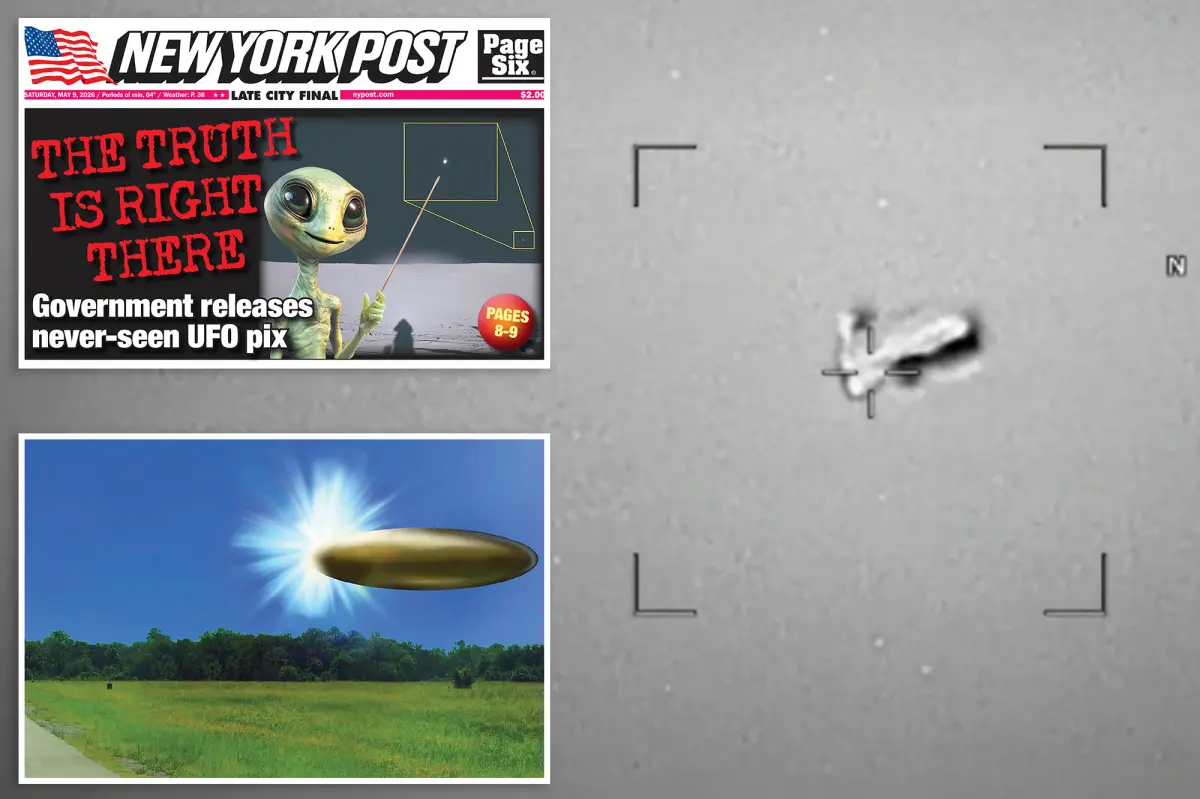
The recent surge in media coverage surrounding Unidentified Flying Objects, now more formally referred to as Unidentified Anomalous Phenomena, has had a significant impact on public perception, particularly among younger demographics. A new survey suggests that the constant stream of news stories, congressional hearings, and military disclosures is not just informing the public but actively reshaping their beliefs about the possibility of intelligent life beyond Earth. This shift represents a cultural moment where the topic of aliens is moving from the fringes of conspiracy theory to the mainstream of public discourse, fueled by a generation that is more open to the unknown than its predecessors.
The data reveals a clear and striking generational divide in how this news is received. When asked if recent coverage has changed their opinions, 37% of all Americans stated they now believe in aliens more than they used to. However, this number jumps dramatically among the youngest cohort, with 54% of Gen Z respondents reporting an increase in belief. This trend shows a steady decline with age, as 45% of Millennials, 36% of Gen X, and only 23% of Baby Boomers felt similarly influenced. This suggests that younger generations, who have grown up in an era of unprecedented information access and a more fluid acceptance of the unknown, are more susceptible to accepting new evidence as it emerges, rather than clinging to the skepticism that characterized previous eras.
The survey also highlights a fascinating gender gap in the reaction to this information. Men are significantly more likely to feel that recent news coverage has increased their belief in aliens, with 43% saying so compared to 33% of women. This difference extends to the emotional response to a hypothetical confirmation of alien life. While 38% of all Americans say they would be curious about such a revelation—double the 17% who say they’d be fearful—men were nearly twice as likely as women to say they would be excited about the news. This divergence suggests that the topic, and the prospect of contact, is processed differently across genders, with men leaning towards a sense of adventure and discovery while women are perhaps more cautious about the implications.
The public’s emotional readiness for such a world-changing revelation is a complex issue. While a plurality of Americans would feel curiosity, a more significant majority, 55%, believe that society is not prepared to properly comprehend the existence of otherworldly beings. This anxiety likely fuels a deep-seated suspicion of government secrecy. Indeed, a large majority of 60% of those polled believe that governments around the world know more about UFOs than they have publicly shared to date. This belief in a cover-up suggests that many see the recent wave of transparency as a calculated, gradual reveal, a way of easing a potentially fragile society into the idea that we are not alone in the universe before any definitive announcement is made.
Popular culture plays an undeniable role in shaping these beliefs, acting as both a mirror and a mold for public opinion. The survey found that 54% of respondents feel that movies and television shows about aliens have made Americans more likely to believe that intelligent extraterrestrial life exists. This speaks to the power of storytelling in normalizing an otherwise abstract concept. However, this influence is not absolute, as 27% see no correlation between alien-related media and belief levels, and a small 8% feel it has the opposite effect, potentially undermining credibility by linking the topic to pure fiction knowledge.
Ultimately, this survey reveals a public in a state of flux, caught between curiosity and caution. The overwhelming majority of Americans are undeniably fascinated by the prospect of alien life, but they are also deeply divided on whether we are ready for the truth. The findings suggest that as the news cycle continues to deliver more information—or more leaked speculation—the collective mindset of the nation, particularly its youth, is increasingly prepared to accept that the universe is far stranger and more populated than we ever imagined. The conversation has moved from whether UFOs exist to when, and how, we will officially acknowledge them a testament to a profound shift in the human psyche.