





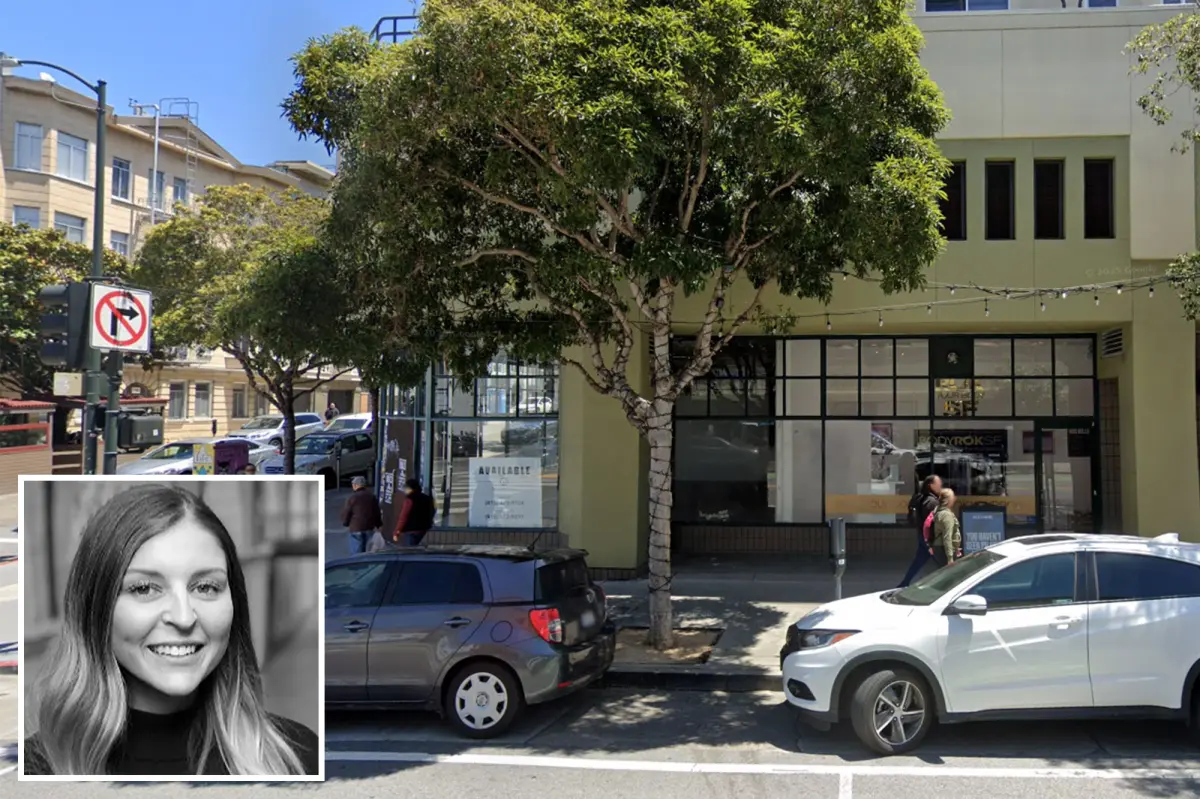
San Francisco is a city built on contradictions—fog that rolls in like a heavy blanket while golden-hour light sets the Victorian facades ablaze, a place where tech demigods in hoodies rub shoulders with unhoused residents, and where progressive politics have become as much a part of the cultural DNA as sourdough bread and cable cars. It is precisely in this hyper-progressive heart of America that a new symbol of ideological pushback is quietly taking shape. According to building permits recently acquired by the San Francisco Chronicle, a coffee shop called “Freedom Coffee” is slated to open on Polk Street, a thoroughfare famous for its bustling retail, residential charm, and occasional stretches of social blight. The very concept—an unapologetically pro-America, “freedom”-branded café—seems almost engineered to provoke a visceral reaction in a city that often serves as the national punchline for left-wing excess. The irony is not lost on anyone. One can almost picture the hand-lettered signs on neighboring storefronts advertising locally-sourced, organic, fair-trade lattes, set against a backdrop of rainbow flags and “Hate Has No Home Here” placards. And yet, here comes a concept that wears its patriotism like a flak jacket, promising a “bold, unapologetic, American” experience—a phrase that doubles as both a mission statement and a declaration of war in the ongoing culture clash that defines modern urban living.
The physical entity of Freedom Coffee is as minimal as it is mysterious. A visit to its website yields almost no information—no menu, no location details, no staff bios—just a stark, white, all-caps logo against a black or neutral background, accompanied by that singular, evocative description: “Bold, unapologetic, American. Brewed in the USA.” The permitted address was previously the home of a Pilates gym, that quintessential symbol of wellness-obsessed Bay Area affluence, now being transformed into a space that promises something a little less limber and a little more ideological. For the casual observer walking down Polk Street, the eventual reveal of a stark, minimalist storefront—likely adorned with the same blunt typography—will be a stark aesthetic contrast to the neighborhood’s typical artisan bakeries and quirky boutiques. There is a certain human poetry in this transformation: a room once dedicated to core strengthening and physical alignment is now slated to serve as a watering hole for a different kind of exercise—that of expressing one’s political and cultural identity while ingesting caffeine. The silence of the branding rollout—no PR blitz, no soft opening announcements—only heightens the intrigue. It suggests a strategy of slow-burn cultural ignition, allowing the inevitable press coverage to do the heavy lifting of generating word-of-mouth. For a city that thrives on ironic detachment, the earnestness of the “Freedom” brand is simultaneously confusing and utterly fascinating, inviting locals to ask themselves: is this a legitimate business venture, a political stunt, or perhaps a cleverly designed social experiment meant to test the limits of San Francisco’s famously tolerant—yet notoriously tribal—liberal population?
Behind the mystery of the brand lies a fascinating cast of characters, the human architects of this brewing phenomenon. Business records identify Katie Tolstedt as the CEO, Chief Financial Officer, and Secretary of Freedom Coffee. Her LinkedIn profile reveals a deeper connection to the tech world: she serves as the Chief of Staff for Eoghan McCabe, the Irish-born CEO of Fin, an AI customer service automation company that Salesforce is reportedly planning to acquire for a staggering $3.6 billion. The intertwining of Tolstedt’s professional life with McCabe’s visionary leadership creates a sense of symbiotic ambition. McCabe himself is a quintessential figure of the modern tech diaspora—an immigrant who crossed the Atlantic and built a fortune solving business problems with code. Both Tolstedt and McCabe are known to be involved with the San Francisco Freedom Club, a social organization with a singular thematic obsession: celebrating “the values that made the US so great.” McCabe, in a 2024 statement, was careful to characterize the club as “not explicitly partisan,” preferring to frame it as a gathering of individuals who appreciate American exceptionalism, free markets, and individual responsibility. This deliberately vague positioning allows them to appeal to a broad swath of those disaffected by the prevailing political narratives, from disgruntled libertarians to right-leaning tech bros. Yet, the human reality of this venture is complex. McCabe, speaking to the Chronicle, insisted that the Freedom Club has “no plans to ever open any kind of physical location,” drawing a legal and conceptual firewall between the social club and the retail espresso venture. This careful legal distancing reveals a calculated mind, aware of the potential juridical and reputational crossfires that could arise from mixing a social movement with a consumer product.
Beneath the surface of the simple coffee shop concept lies a web of business entanglements and ambitious blueprints for expansion. Tolstedt was also a corporate officer for a media company called Cool Tech News, which McCabe invested $2 million in, and interestingly, the listings for both the coffee shop and this media outlet share the same address—a strategic co-location that hints at a potential convergence of news consumption and coffee-drinking habits. A now-removed job listing for the venture offered a tantalizing glimpse into its future: automated technology is likely to play a role in the cafe’s operations, suggesting a futuristic, robot-barista experience that would be in stark contrast to the artisan, human-centric coffee culture typical of the Bay Area. Furthermore, the listing implied plans for “multiple locations” and “national expansion,” indicating that this isn’t just a single quirky storefront, but potentially the vanguard of a country-wide franchise effort. A patent filing related to the brand covers everything from hats and drinkware to coffee beverages and other merchandise, painting a picture of a fully realized lifestyle brand. The human dimension of this ambition is palpable: Tolstedt and McCabe aren’t just trying to sell coffee; they are cultivating a consumer identity. In a world where corporations increasingly bend over backwards to signal progressive virtues, Freedom Coffee is positioning itself as the antidote—a brand that promises to stand tall for traditional American values without a hint of apology. The decision to use automation also reflects a specific worldview: efficiency, scalability, and technological progress as guiding principles—values that often clash with the labor-rights activism present in San Francisco’s barista unions, ensuring that the very method of service could become a political statement in itself.
Of course, the sharpest edge of this sword is political. While there are no explicit political signs yet adorning the empty storefront, the public record paints a clear picture of the money powering this vision. Eoghan McCabe has conducted substantial political activity benefiting Republican causes, having donated around $200,000 to the Republican National Committee, various pro-Donald Trump PACs, and the campaigns of individual Republican politicians. This is not just passive support; it’s a substantial, targeted investment in the political machinery of the right. His public expressions of support for Restore Britain—a right-wing political party endorsed by tech titan Elon Musk—further cement his ideological alignment with a global populist-nationalist movement. Placing this in the context of San Francisco is like dropping a lit match into a pool of kerosene. The city’s electorate consistently votes 85% or more for Democratic candidates, and any public figure caught donating even a few hundred dollars to a Republican is often subject to intense social shaming. The arrival of a coffee shop funded by a man who actively funded Trump’s campaigns directly in the heart of this blue fortress feels less like a business venture and more like an intentional act of territorial claim. It invites a predictable, deeply human reaction: boycotts, protests, and accusations of “fascism” will be slung at the doors, while a subterranean counterculture of conservative tech workers, libertarian engineers, and even disillusioned moderates might quietly become loyal customers, finding in the mundane act of buying a drip coffee a small act of rebellion against the dominant social pressure of the city.
In the end, Freedom Coffee is shaping up to be far more than just a place to get a caffeine fix; it is a microcosm of the wider American fracture. It represents the monetization of identity politics, where the simple act of purchasing a latte becomes a coded act of allegiance. As of now, the fate of the shop hangs in a delicate limbo—permits are in hand, the location is prepared, but the curtains are yet to be officially raised. Will the city’s famously vocal activists allow a “freedom”-branded business to flourish, or will zoning battles, permit delays, and public shaming drive it out before it even opens its doors? Conversely, could this be the quiet beginning of a cultural renaissance for the city’s beleaguered conservative and libertarian residents, who often feel voiceless and invisible in the public square? The human story at the core is one of profound dissonance. On one hand, you have the archetype of the American Dream—the immigrant founder, the hardworking executive, their shared belief in the rugged individualism that built the country. On the other hand, you have the cacophony of a modern city that has redefined “freedom” to mean liberation from systemic oppression, often defining it not by the absence of restraint, but by the guarantee of equality and safety. The collision of these two definitions over a simple cup of “Brewed in the USA” coffee will undoubtedly be the most riveting show on Polk Street in the coming months. It remains to be seen whether Freedom Coffee becomes a beloved local institution, a pariah, or a bizarre historical footnote. But one thing is certain: it provides an undeniable mirror to the American soul, asking every one of us to decide what our own values cost, what they mean, and what we are willing to pay for them—one sip at a time.