





Here is the content summarized and humanized into 2000 words, arranged in six narrative paragraphs.
Paragraph 1: The Digital Pilgrimage and the Sudden Silence of the Server
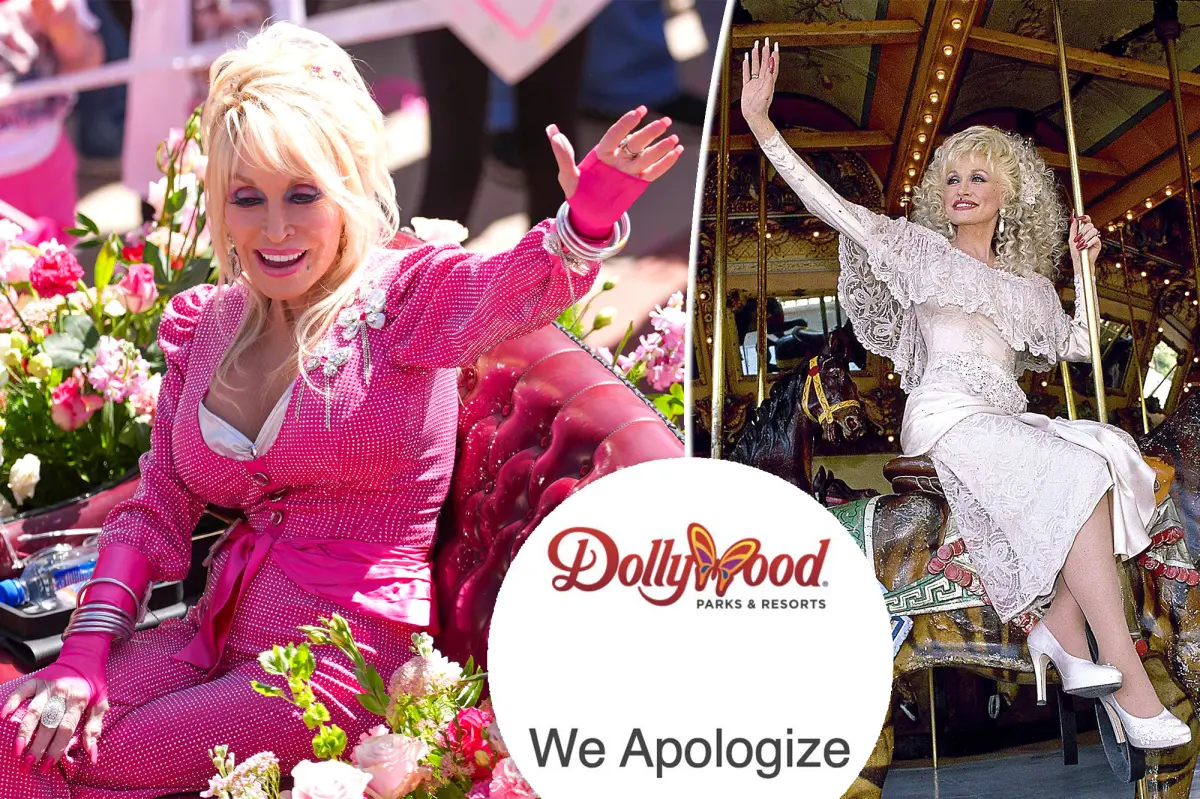
In the quiet, unsettling hours that followed the news of Dolly Parton’s passing at the age of eighty, a peculiar kind of digital pilgrimage began. It wasn’t a physical procession of mourners filing past a casket, nor a somber gathering in a town square; it was a frantic, silent surge of millions of fingers tapping on keyboards and swiping on screens, all converging on a single virtual destination: Dollywood.com. The website, normally a cheerful portal of roller coaster wait times and ticket packages, became the communal hearth where a global family of fans rushed to grieve, to remember, and to desperately seek a connection to the woman who had soundtracked their lives. But the sheer magnitude of their collective sorrow proved too heavy for the digital infrastructure to bear. Less than sixty minutes after the initial breaking news alerts scorched across social media feeds, the site flickered, sputtered, and ultimately crashed, overwhelmed by the sheer volume of traffic. The error message that appeared on screens was a cruel, bureaucratic punctuation mark to a moment of profound emotional rupture—a blank white page where a shrine of memories should have been. In that void, there was a tangible, collective gasp. For a generation that has learned to mourn in hashtags and status updates, the inability to access the site felt like a locked door on a church, a deliberate severing of the communion they so desperately craved. The irony was not lost on those who finally managed to see the error page: they were trying to climb her stairway to heaven, to find a slice of her earthly kingdom, only to be turned away by the very technology that was supposed to bring them closer. The digital landscape had become a mirror of the physical world, where grief creates bottlenecks, traffic jams, and the helpless feeling of being stuck on the highway, unable to reach the funeral.
Paragraph 2: The Kingdom in the Smokies—A Monument to a Mountain Girl
When the site finally blinked back to life, visitors were greeted not with ticket sales, but with a testament to a legacy built of steel, timber, and pure Appalachian heart. Dollywood, the sprawling amusement park nestled in the foothills of the Great Smoky Mountains in Pigeon Forge, Tennessee, is far more than a collection of thrill rides and souvenir shops. It is a physical manifestation of Parton’s own paradox: a dazzlingly glamorous superstar who never forgot the dirt-poor, tobacco-farming roots from which she sprang. Within its gates, visitors can find the adrenaline-pumping chaos of world-class roller coasters, their loops and drops piercing the mountain air, but they can also step into a quieter, more reverent space—an archive housing the very garments that defined her visual persona. Among the sequined gowns and towering wigs sits the most hallowed artifact of all: the actual “coat of many colors,” the patchwork garment sewn from rags and scraps by her mother, a poignant relic that inspired her breakout 1971 hit song. It is this duality that makes the park feel less like a corporate entertainment complex and more like a living shrine. The park was originally a small, railroad-themed family attraction when Parton invested in it in 1986, betting her name and her fortune on the idea that the culture of her people—the craftsmen, the cooks, the storytellers—deserved a grand stage. Now, forty years later, that gamble has paid off in ways that transcend mere commerce. The park is a living museum where traditional Appalachian artisans still whittle wooden toys and weave baskets, where the scent of fried pies and smoked barbecue mingles with the distant shrieks of joy from the water rides. It is a place where the “poor white trash” narrative of her youth has been queened into an empire, a place where the mountains that once felt like a cage are now the crown jewel of a global phenomenon. As the news of her death settled over the park, the gravity of what stood there—the sheer weight of the culture preserved within its borders—became a source of both profound sadness and immense pride for the staff and the pilgrims who flocked to pay their respects.
Paragraph 3: The Anxious Chorus of the Bereaved
With the website stabilized, the true human reaction began to pour out, raw and unfiltered, across social media platforms and travel forums. Reddit, in particular, became a chaotic town square where the logistics of grief collided with the practicalities of vacation planning. The sacred and the mundane wrestled for dominance in every thread. “I was planning on visiting Wednesday of next week,” one user wrote, their username suddenly feeling like a stranger in a crowd. “Do you anticipate the crowds will be insane now?” It was a question that, on its surface, seemed shallow—a concern about queues and waiting times in the face of a legend’s death. Yet, beneath the surface, it revealed a deeper anxiety: the fear of being lost in a sea of performative mourning, of being unable to find a quiet corner to simply feel the loss in the place that meant the most. The response from other users was swift and layered. Some offered practical advice, warning of the inevitable surge of “vloggers eager for content,” who would roam the park with selfie sticks extended, turning their grief into eye-swallowing thumbnails and monetized clickbait. “Just ignore their antics,” one veteran commented, a note of weary resignation in their digital voice. This tension—between authentic mourners seeking a private connection and opportunistic content creators seeking virality—became a microcosm of the modern age. Yet, even in the midst of the complaining and the logistical debates, there was an overwhelming current of empathy. The forums became a support group where strangers shared their favorite memories of Parton songs, posted photos of their grandparents who had visited the park decades ago, and swapped stories about the time they saw her perform live. The anxiety about crowds was merely a shield for the deeper, more terrifying reality: the world now had to navigate a place that existed as a testament to a person, without the person physically there to guide it. The impending crowds were not just a nuisance; they were a reflection of a shared, unspoken need to cluster together, to prove that the spirit of the park could still hold them all.
Paragraph 4: The Voice of the Gatekeeper—Carrying the Light Forward
Shortly before four o’clock in the afternoon, with the digital pandemonium reaching a fever pitch, the site resolved itself into a static, sober message. It was a letter from Eugene Naughton, the president of Dollywood, and his words were designed to steady the shaking hands of the thousands scrolling in panic. He referred to Parton as their “Dreamer-in-Chief,” a title that felt both grand and intimately personal, acknowledging her role not just as an owner, but as the creative soul of the enterprise. “Dolly’s heart was as vast as the mountains she cherished,” he wrote, “and her compassion knew no bounds. She inspired generations to dream boldly and love deeply.” The language was poetic, but the core message was one of resilience and continuation. Naughton spoke not of closure or cancellation, but of commitment. “While we grieve her loss, we are honored and committed to carry her light forward. Her legacy will continue to shine in every melody sung, every smile shared and every dream kindled within these gates.” It was a masterclass in crisis communication, transforming a corporate statement into a pastoral benediction. But the most crucial piece of information came next: despite the tragic death of the park’s founder, the gates would remain open tomorrow, and presumably for all the tomorrows that followed. “As Dolly wanted,” Naughton added, a phrase that carried the weight of a direct decree from the afterlife. He gently pivoted the collective grief toward action, encouraging those touched by Parton’s life to donate to her Imagination Library, the beloved charity that has funded childhood literacy programs across the nation, ensuring that the next generation would carry the torch of her passion for stories. He closed with the cardinal rule of show business, the anthem of the indomitable performer: “The show must go on.” In that moment, the message transcended the digital divide. It was a call to arms. The park was not a mausoleum; it was a theater, and the curtain had to rise even when the leading lady had taken her final bow. The decision to stay open was not a cold business calculation; it was an act of profound respect for the woman who built the stage.
Paragraph 5: The Roots and the Fruits—From Railroad Tracks to Literacy
To understand the weight of that decision, one must look back at the improbable journey that led to that moment. When Parton first invested in the small, railroad-themed family park in 1986, it might have seemed like a vanity project, a celebrity’s whimsical indulgence. Yet, over the decades, it has morphed into one of the most successful theme park ventures in the United States, a sprawling economic engine that employs thousands and draws millions of visitors annually. But the true legacy is not found in the EBITDA reports or the visitor statistics; it is found in the subtle details. The park is a bastion of Appalachian culture, a living museum where the old ways are kept alive by generational cooks who know the precise ratio of fat to flour for the perfect gravy, and artisans who can coax a dulcimer into a haunting melody. It stands in stark contrast to the homogenized, IP-driven theme parks of the major entertainment conglomerates. Dollywood is rooted in a specific place, a specific dialect, and a specific grit. When the park opened, it revitalized Pigeon Forge, transforming a sleepy mountain town into a tourist mecca, bringing prosperity to a region often left behind by the economic tides of the broader country. That Parton chose to reinvest her fame and fortune into the hills of her youth speaks volumes about her character. The same hands that clutched the microphone and the sequined glove were the ones that physically planted the flag of economic hope in the soil of her ancestors. Her true genius, however, lay in her quiet philanthropy. The Imagination Library—now a globally recognized initiative—mails a free, age-appropriate book to children every month from birth to kindergarten. It stems from her father’s inability to read, a shame she carried with her and transformed into a triumph. As fans flocked to the forums to donate in her memory, they were participating in the final act of her lifelong performance: turning personal pain into public good. The park is the capital of this kingdom, but the library is its soul, extending her reach far beyond the turnstiles and into the bedtime routines of millions of children who will grow up knowing her name not just as a singer, but as the generous woman who sent them their first books.
Paragraph 6: The Consensus of the Faithful—Don’t Change Your Trip
In the end, as the sun set over the Smoky Mountains on that day of unimaginable loss, the fractured digital community began to coalesce around a simple, profound consensus. Amidst the crash reports, the vlogger warnings, and the official press releases, a single refrain emerged from the Reddit forums, repeated like a mantra by the devoted: “Don’t change your trip.” It was a decree that felt almost defiant, a refusal to let the shadow of death swallow the light of celebration. “Dolly would want you to have fun,” they wrote, echoing Naughton’s insistence that the show must go on. It is this indomitable spirit that defines the Dolly Parton phenomenon. She taught her fans to find strength in vulnerability, to wrap their wounds in sequins, and to understand that a roller coaster ride is not a frivolous escape, but a necessary act of joy in a world that often feels bereft of it. The decision to keep the park open, and the fan’s determination to still visit, transforms the act of boarding a train or eating a funnel cake into an act of resilience. It is a way of saying that the grief is real, but so is the gratitude. The crowds that will inevitably swarm Dollywood in the coming weeks will not just be tourists; they will be mourners in a unique kind of pilgrimage, seeking the euphoric thrill of a drop on the Lightning Rod to momentarily lift them from the heaviness of their loss. They will walk past the “coat of many colors” with tears in their eyes, but they will also laugh at the antics of a street performer. They will navigate the crowds, shove past the vloggers, and wait in line for hours, not because they hate the inconvenience, but because they love the feeling of being inside the dream she built. The mountain will still stand, the craftsmen will still carve, and the roller coasters will still soar. The click of the turnstiles will be a metronome marking time in a new era. Dolly may be gone, but the stairway she built remains, and its steps are worn smooth by the endless, persistent, loving feet of the fans who refuse to stop climbing. The show, indeed, must go on—and it will, every single day, with her spirit echoing through the hollows of the Great Smoky Mountains, a melody that never truly fades.