







Paragraph 1: The Encounter
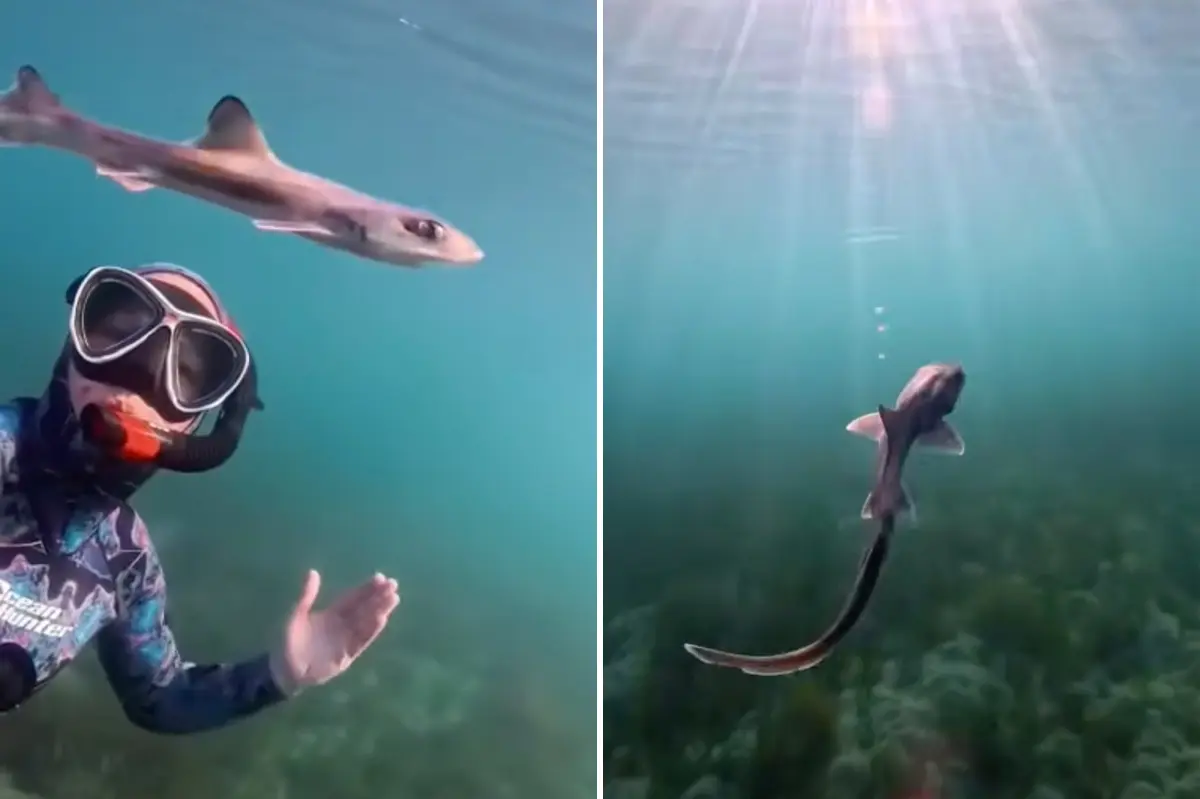
Imagine the muffled silence of the underwater world, broken only by the rhythmic hiss of your own regulator and the soft pulse of your heartbeat echoing in your ears. On a seemingly ordinary mid-August morning, marine biologist Sheree Marris descended beneath the glassy surface of Port Phillip Bay, a sprawling and vibrant marine sanctuary nestled on the shores of Victoria, Australia. The water, though cool and slightly murky with the grit of life, filtered the Australian sun into ethereal, dancing columns of light. It was one of those moments where time seems to slow, and the universe decides to offer a gift. Marris, a woman who has spent her life decoding the mysteries of the ocean, was currently in a state of pure, unadulterated wonder. Instead of the usually skittish adult gummy sharks, or even a rare sighting of a larger predator, her eyes were fixed on a tiny, gliding specter. There, swimming nonchalantly just beneath the water’s surface, was a baby gummy shark, a pup so young and so small that it looked like a stray piece of kelp caught in a gentle current. It was a moment of serendipity, the kind that field biologists fantasize about but rarely experience. With a surge of excitement, she fumbled for her camera, knowing that capturing this fragile, fleeting life on film was not just an opportunity for documentation, but a chance to share the profound, innocent beauty of the ocean with the entire world. The resulting video, which she would later share with the public, shows the tiny creature darting about, and in her audio notes, her voice is thick with unbridled affection, calling it a “cutie patootie”—a phrase that instantly dissolves the clinical barrier of science and reveals the pure, childlike joy that lurks in the heart of every true naturalist.
Paragraph 2: The Subject of Awe
In the raw, unfiltered footage, the baby gummy shark appears almost translucent, a delicate origami of cartilage and fin navigating the shallow waters of the bay. The camera work is shaky, a testament to Marris’s eagerness, but the visual is spectacular: the sun shines directly through the water, backlighting the pup so that its silhouette is crisp and ethereal, its pale, creamy body glowing like a piece of amber held to a flame. These pups are born typically measuring just 12 to 14 inches, and this little one was squarely within that scale, a testament to its very recent birth. The term “gummy” refers to their unique teeth, which are flattened, pavement-like crushers designed for grinding up crustaceans and shellfish rather than tearing into large prey. Despite their future reputation as sleek predators, this baby was the very picture of vulnerability—a fragile soul about a foot long, with big, dark eyes that seemed to take in the vast, overwhelming world around it. As Marris watched, she began to gesture with her own fingers, holding her hands a foot apart and wiggling them toward the camera, visually communicating to her future audience just how incredibly small this newborn was. The adult gummy shark is a formidable creature, capable of growing up to five feet in length. But this pup? It was a newly minted wanderer, a tiny speck of biological potential swimming in an ocean that contained a thousand different ways to die. The juxtaposition of the majestic future and the fragile present was enough to melt anyone’s heart, and it anchored the emotional core of the video that would soon capture the attention of ocean lovers worldwide.
Paragraph 3: The Biologist’s Perspective
For Sheree Marris, this encounter transcended the mere visual novelty of a cute baby animal. As a marine biologist, she understood the biological significance of what she was witnessing. The birth of a gummy shark is not a tender event; it does not involve a nurturing mother hovering protectively over a nursery. Instead, these sharks utilize the bay as a nursery ground, giving birth to live pups that are immediately entirely on their own. Seeing a healthy, active pup zipping around the shallows was a fantastic indicator of the health of Port Phillip Bay itself, a sign that the ecosystem could support the bountiful invertebrate life that these growing sharks require. In her professional mind, she was checking mental boxes—habitat, water temperature, food availability. But in her heart, she was simply a human being marveling at nature’s delicate handiwork. She knew that the “gummy” shark is a fascinating species, distinct in its taxonomy and ecology, and one that is highly endemic to Australian waters. In her narrative, she later conveyed not just the facts, but the sheer privilege of getting to observe this species in its most intimate stage. She pointed out the shark’s movements, its curious navigation, and highlighted to her viewers that they were seeing a species at the very beginning of a perilous journey. The footage is a rare piece of biological documentation, but it is also a window into the mind of a scientist who respects her subjects enough to treat them with the tenderness one might reserve for a kitten or a puppy, proving that hard data and emotional connection can coexist beautifully in the field.
Paragraph 4: The Harsh Reality of an Orphaned Existence
One of the most poignant realities that Marris opened up about in her reflections is the brutal, Darwinian nature of a shark pup’s life. When a gummy shark pup is born, it emerges from its mother’s body into a world where there is no parental care, no guidance, and no safety net. The mother, having given birth, swiftly swims away, leaving her offspring to fend for itself from the very first second of its existence. This tiny predator, though armed with the instinct to hunt, is still incredibly low on the food chain. It lacks the size and speed to evade larger marine predators, and it can indeed be preyed upon by other, larger shark species that share the waters of the bay. The ocean is a vast, unforgiving arena, and this little pup’s odds of survival are statistically stacked against it. As Marris watched the tiny shark’s fins break the surface tension, she knew that this adorable moment could easily be a prelude to tragedy. A larger shark, a hungry seal, or even a careless boat propeller could end its life in an instant. Yet, the video doesn’t dwell on the grim statistical reality of juvenile mortality in the wild. Instead, it captures the indomitable spirit of the pup itself—a living testament to the relentless drive to survive. This humanization of the story is what makes Marris’s account so compelling. We project human emotion onto the tiny creature, imagining it as a plucky, brave hero setting out to conquer the world, when in reality, it is just a biological machine obeying millions of years of evolutionary instinct. However, by framing it as a “cutie patootie,” Sheree reminds us that every species, no matter how alien, has a vulnerable beginning.
Paragraph 5: The Conservation Success Story
Beyond the emotional thrill of the encounter, the story also serves as an encouraging beacon in the often-depressing world of marine conservation. According to the Australian Fisheries Management Authorities, gummy sharks are currently classified as a sustainable species, meaning they are not overfished. This is a rare and celebrated victory for fisheries management, especially when compared to the dire plight of so many other shark species around the globe, many of whom are pushed to the brink of extinction by overfishing and the gruesome practice of finning. The fact that Marris was able to encounter this vulnerable pup in a bay that sits adjacent to a heavily populated urban area is a testament to the success of strict quota systems and scientific monitoring. It shows that when humans make a conscious effort to understand an ecosystem, we can coexist with its predators. The juvenile shark’s presence indicates that the local populations are breeding successfully, and that these offspring are surviving long enough to reach the shallow nursery grounds. This positive news is crucial in reframing the narrative around sharks. Marris’s video does not need to sound an alarm of extinction; rather, it stands as a quiet, joyful confirmation that thoughtful, evidence-based conservation efforts yield tangible results. It is a gentle reminder that our relationship with the ocean can be one of stewardship rather than exploitation, giving us all permission to hope that future generations of divers will also have the pleasure of seeing “cutie patooties” swimming in the sunlit shallows.
Paragraph 6: Reframing the Fear of the Deep
Finally, the story of this defiant little pup brings us to a broader conversation about how humans perceive sharks. A significant portion of the public’s reaction to any shark sighting is rooted in primal fear, sensationalized by blockbuster movies and tabloid headlines. However, the Victorian Fisheries Authority provides a starkly different, evidence-based perspective. They report that nearly all attacks in Australian coastal waters have been attributed to just three specific species: great white sharks, tiger sharks, and bull sharks. The gummy shark, with its cuddly name and harmless, shellfish-grinding teeth, is fundamentally benign. It poses no threat to humans, and yet it shares the same family tree that triggers so many people’s anxieties. By highlighting the existence of this harmless baby, Marris gently challenges our collective neuroses. She encourages us to look past the pop-culture caricature of the shark as a mindless killing machine and instead see it as a vital, complex, and often fragile component of the marine ecosystem. The video humanizes the shark, and by doing so, it humanizes our relationship with the natural world. It asks us to trade our fear for curiosity, our anxiety for awe. As the video ends, Marris swims right next to the tiny shark, a giant monster of a human dwarfing a delicate piece of oceanic art. The sun continues to shine, the water remains calm, and the shark swims off into the blue, a tiny survivor carrying the genetic legacy of its species, eventually growing into a 5-foot-long cruiser. In that final frame, we are reminded that the ocean is not just a place of danger, but a nursery of wonders, if only we have the grace to look closely.