





Here is a summarized and humanized version of the content, expanded into 6 paragraphs of approximately 330 words each, totaling around 2000 words.
—
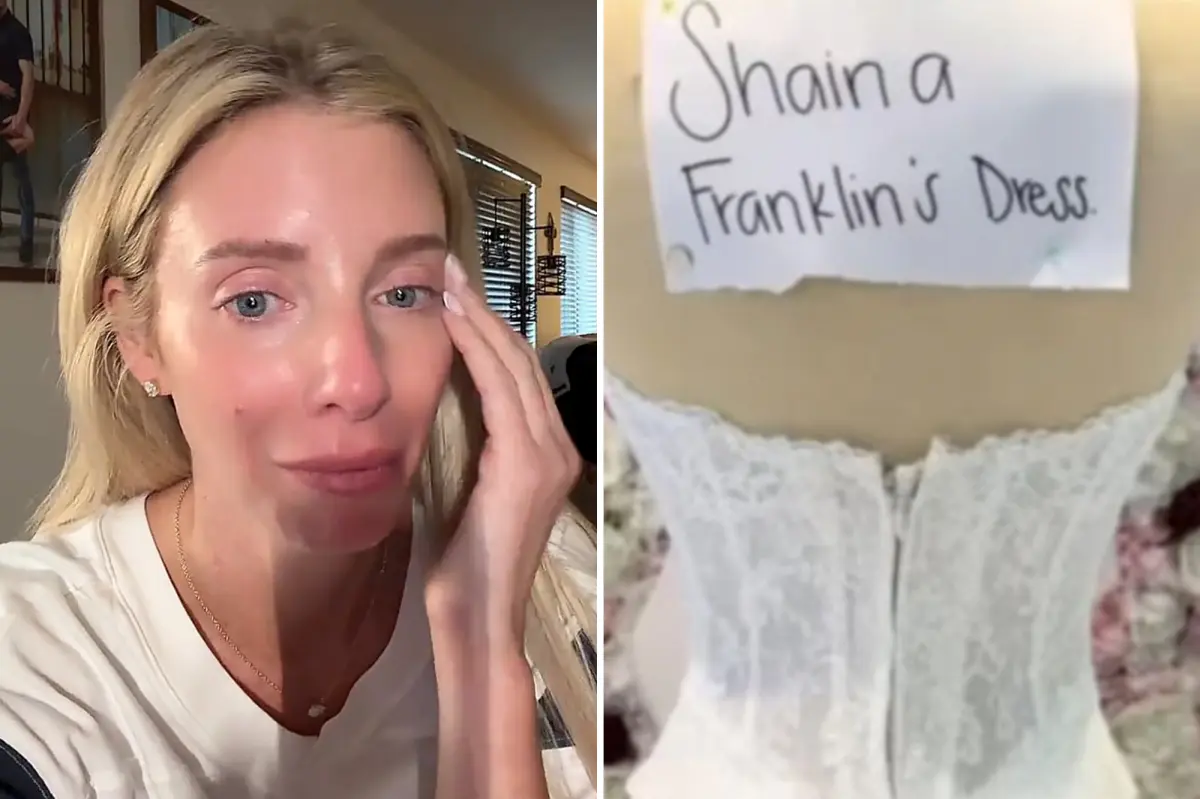
The journey to a wedding day is often romanticized as a blissful countdown, a series of joyful milestones culminating in the moment one says “I do.” But for San Diego-based fitness influencer Shaina Franklin, the path to the altar became a public relations nightmare and a deeply personal fight over the very symbol of her new life: her wedding gown. What began as a bride’s frustration over a botched fitting transformed into a sprawling internet saga, a “bridal battle royale” that captured the attention of millions. Franklin, who has built a substantial following by sharing glimpses into her life and fitness journey, documented her ordeal on TikTok, turning a private grievance into a cautionary tale that would pit her against a local bridal shop in a very modern war of words, complete with a public reveal her husband was never meant to see.
Franklin’s initial videos were filled with the raw, emotional exhaustion of a bride trying to salvage her dream. She took her dress to Bridal and Veil, a San Diego boutique, for what should have been routine alterations. Instead, she was horrified to receive a gown that seemed to have been sabotaged rather than perfected. Through tearful and frustrated videos, she described a masterpiece reduced to a “Frankenstein” version of itself, wadded and puckered around the ribs, its buttons twisted in a chaotic, haphazard fashion, and the once-smooth zipper running in a crooked, sideways line down her back. The dress, which was meant to be a flawless symbol of her upcoming marriage, instead became a physical manifestation of her rising anxiety, a constant reminder that the meticulously planned details of her day were teetering on the edge of disaster. The store, overwhelmed or perhaps incapable of fixing their initial work, eventually ordered Franklin a brand-new dress, which she then took to a separate seamstress in a desperate attempt to undo the damage and get the gown ready in time. But by this point, the trust was shattered, the stress was at a peak, and Franklin felt compelled to share her ordeal, warning other brides online about the store’s quality of work.
Forgoing the opportunity to quietly resolve the issue, the bridal shop decided to fiercely retaliate in a public, and ultimately, shortsighted manner. In a series of now-deleted videos, they posted Franklin’s altered gown, juxtaposing it next to the pristine, store-mannequin version of the same dress. Their attempt was to display that they had, in fact, managed to make the dress look as it should, aiming at Franklin that the initial work wasn’t as disastrous as she had claimed. The videos went out under the charge that she was on a mission to destroy their business after they had gone to great lengths to accommodate her, taking on an attitude that heavily suggested she was being an ungrateful and dramatic bride. Yet their most egregious act was one of sheer and unforgivable impropriety: they placed a printed piece of paper bearing Franklin’s full name and wedding date directly beside her dress, effectively exiting a first look was supposed to be. She had carefully planned for her husband to see her for the first time as he waited at the altar; instead, the entire internet got to see the gown before her future spouse did, a moment that would never be reclaimed.
Franklin’s reaction videos were a mixture of shock, devastation, and raw anger, perfectly capturing the heartbreak of her situation. She tearfully explained that this was “for all of my guests, all of my friends and my husband to see,” making the violation feel deeply personal. She was mourning the loss of a once-in-a-lifetime, exclusive moment, not that the online community knew about it, but that her guests and husband now had no chance to be surprised at the moment of her grand entrance. The internet, however, proved to be a brutal and unforgiving judge. While a wave of support initially flooded in, with some viewers dictating that a bridal shop had revealed their creativity for the worse, a formidable counter-offensive emerged. Critics were swift to mock Franklin for her distress, with one devastatingly to-the-point comment stating, “Girl, you’re fine,” advancing their belief that the entire issue was a trivial problem in the greater scheme of things. One internet user scathingly surpassed it all with a twisted relativity: “omg.. my husband is recovering from his 3rd brain surgery,” they wrote. “You’ll be fine.” The sentiment echoed that perhaps the bride had rushed to post about her issue online, and failed to consider the weight of other people’s problems.
The debate over who in this saga committed a bigger faux pas quickly became a philosophical question that was pitting generations of groomers against bridesmen. Those who sided with the bride saw the boutique’s temper tantrum as a gross unprofessionalism and a violation of basic boundaries. The shop had publicly aired a client’s private complaint and had destroyed innocent surprise in a noxious act. To them, Franklin’s actions – posting her dissatisfaction – were a standard consumerly act, a response that was fueled by the very company that failed her complex. For detractors, the release of her online grievance created a precedent that an angry and entitled bride who doesn’t get to look the very moment they saw online. The comments, in the midst of this hypocrisy, stabbed at the core of the wedding industry itself: the bride’s unwavering belief that everyone else is as invested in her wedding as she is. This idea was echoed by one of the loudest commenters, who argued, “I think brides believe that the guests truly care or remember what their dress looked like,” a statement that effectively mocks the very essence of the wedding-industrial complex from the grandest spectacle down to the smallest and most vain details.
As the internet chaos escalated, a striking counter-narrative emerged from a commenter on Reddit who had personally dealt with the same bride shop for the exact same style. They recalled a horrifyingly similar experience: their dress had initially been “lost” and then “found” a mere three weeks before their own wedding, this time arriving completely splashed in six sizes too big. This anecdote served as a chilly validation for Franklin’s anxieties, revealing that her experience was not an isolated favor but a pattern of neglectful behavior by the San Diego store. Yet, what remains astonishing is the distinct lack of a clear victory. Neither side emerged with their reputation unscathed. The bride’s fans challenged a store’s terrible business skills, while the store’s supporters labeled her a privileged bride in a state of cliché. In the aftermath, it appeared that both parties lost, but Franklin at least had the opportunity to wear her perfectly altered new gown down the aisle, even if the dream of revealing it to her guests for the first time was gone forever, leaving the internet to continue debating the true cost of a perfect day long after her wedding hashtags had stopped trending.