


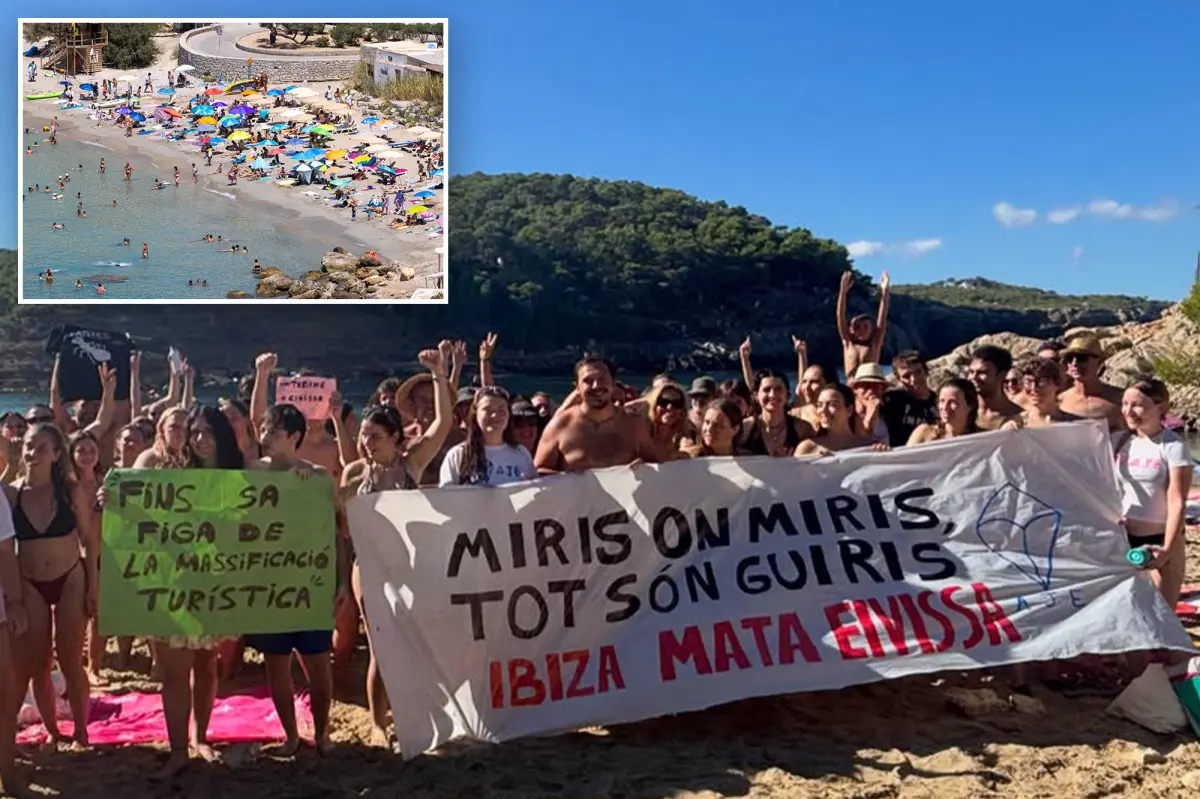
In the heart of the Balearic Sea, where the Mediterranean glows an ethereal turquoise and the sun seems to paint the world in shades of gold, the island of Ibiza has long been synonymous with two things: hedonistic escape and serene beauty. For decades, the promise of legendary nightclubs and sun-drenched beaches has pulled millions of visitors to its shores. But beneath that veneer of perpetual summer, a deep and tangible resentment is rising. Recently, on a picture-perfect Sunday, the postcard backdrop of Cala Saladeta beach was transformed into the site of a very different kind of gathering. Roughly one hundred residents, their faces etched with determination rather than vacation leisure, gathered not to sunbathe, but to protest. They are part of a growing demographic of locals who feel their island is slipping through their fingers—a battle not against the sea, but against the crushing, inescapable tide of mass tourism that threatens to drown the very essence of their home. The smell of sunscreen and saltwater was replaced by the electric tension of a community fighting for its survival.
The demonstration, organized by the newly formed Ibiza Youth Association, was a cry of desperation from a generation that feels they have been rendered invisible in their own homeland. These are not anti-capitalist malcontents looking for a fight; they are the sons and daughters of Ibiza—waiters, lifeguards, shop clerks, and artists—who are watching their futures being priced out of existence. Their frustration is not born of hatred for foreigners, but of a gnawing sense of loss. The conversation with a visitor is always polite, the service always with a smile, but the cost of that hospitality is a life of penury for the host. The association’s website articulates the painful paradox with sobering clarity: a local can work, but only in a service role catering to others; they can seek leisure, but only to the soundtrack of thrumming house music; they live on their island, but it is a land that no longer belongs to them. It’s the feeling of being a permanent guest in the home you grew up in.
However, to assume this is a unique quirk of Ibizan culture would be to miss the forest for the trees. The unrest that simmered on that Spanish beach is a raw, open wound that runs along the entire southern coast of Europe. From the cobblestoned alleys of Italy to the sun-drenched promenades of the French Riviera, the story is drearily familiar: a relentless influx of visitors is overwhelming infrastructure, pricing out the middle class, and erasing local identities. Last summer, the world watched in shock as Barcelona locals, armed with water pistols, took to the streets to spray tourists who were simply sitting down for dinner, a visceral symbol of a desperation that had finally boiled over. These are not random acts of aggression but a furious, desperate reaction to an economic system that has made housing a commodity to be flipped for profit, and cities a spectacle to be consumed, rather than a home to be lived in and nurtured.
The deeper tragedy of the Ibiza protests is the human cost that is so often obscured by the statistics of hotel occupancy and visitor spending. Simon Grannville, a seasoned travel industry expert who lives in Spain, voiced a sentiment that cuts through the noise: the problem isn’t the traveler, but the unregulated economic machinery they fuel. He points out that the very people who create the magic of the “Ibiza experience”—the chefs, the DJs, the villa managers—simply cannot afford to live there anymore. The island’s seasonal rental market has become a dark comedy of astronomical proportions, where the annual cost of rent devours salaries whole, forcing employees to sleep in cars or leave the workforce they prop up. The protest, he notes, is a symptom of a housing crisis, a local cry for the basic right to shelter, which has been repackaged as a war against holidaymakers.
There is also a fierce battle for the soul of the culture itself. This is particularly potent in the Balearic Islands, a region with a proud Catalan heritage that fought tooth and nail to preserve its language and customs. Under the repressive dictatorship of Francisco Franco, that identity was nearly extinguished. To see it now commodified, watered down for mass consumption, and sold in souvenir shops, is a painful postscript to a long-fought struggle. It’s not about resenting someone for not knowing the local history; it’s about watching your own history become a museum exhibit that you can no longer afford to visit. Kevin Schrenck, a travel advisor with family roots in Ibiza, poignantly articulates the dual frustration of the modern local: they are fighting for their very culture against a globalized tide, while watching their friends and family be displaced by wealthier foreigners. It is the existential fear of watching your hometown transform into a generic theme park devoid of its former soul.
The question that now hangs over the island, and indeed across tourist-weary destinations worldwide, is whether there is a way back to equilibrium. The Ibiza Youth Association has already upped the ante, calling not just for better behavior, but for radical “tourism degrowth” and opposing the expansion of the island’s airport. The message is no longer a polite suggestion; it is a stark warning. The long-term survival of these places depends on a fundamental rethinking of the current economic model. It’s a fight to de-commodify housing, to diversify the economy beyond the sun loungers, and to reclaim public spaces as sacrosanct arenas for residents, not just backdrops for visitor selfies. The narrative is shifting from the simple edict of “sun, sea, and sangria” to a much more complex conversation about the future of community. The battle for Ibiza is not just about an island; it’s a battle for the meaning of home, identity, and belonging in an increasingly transient world. The world is watching, and the echoes of this protest will be felt long after the summer crowds have gone home. The question is no longer whether tourism is a force for good or bad in these communities—the question is how much is too much, and whether we have the collective will to answer before it’s too late.