



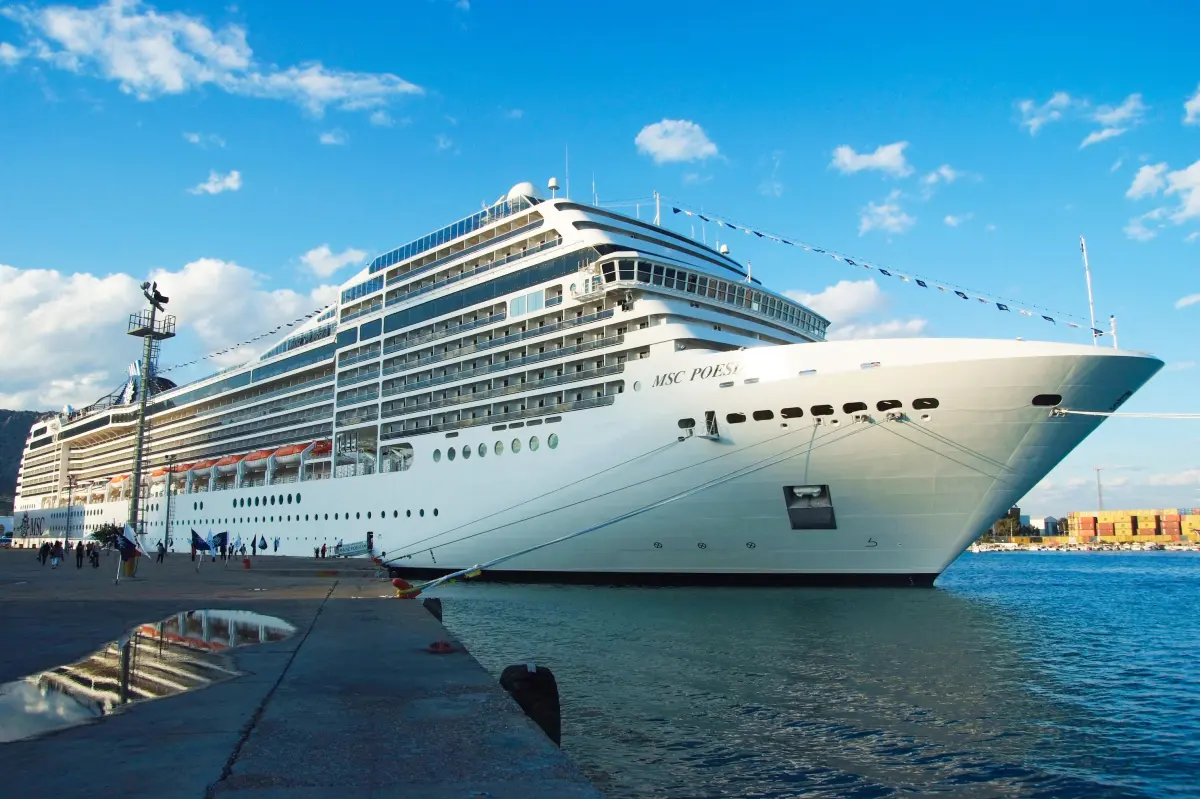
The glimmering white hull of the MSC Poesia sat motionless against the vibrant blue waters of the Port of Miami, a stark symbol of sudden uncertainty for the thousands of passengers who had boarded her. The air, usually filled with the festive anticipation of departure, was instead thick with confusion and frustration. An 11-night Caribbean dream voyage, slated to visit sun-drenched ports in Jamaica, Colombia, Panama, Costa Rica, Honduras, and Belize, had been abruptly canceled. The reason, as announced by the U.S. Coast Guard, was a formal detention of the vessel due to unspecified deficiencies in its systems. For the men, women, and children who had packed their bags and prepared for a week and a half of tropical escape, the news was a crushing blow, transforming a highly anticipated vacation into an unexpected logistical and emotional nightmare, all before the ship had even managed to leave the harbor.
The U.S. Coast Guard’s decision, announced on November 3rd, was a significant and serious action. Captain Frank Florio of the Coast Guard Sector Miami stated that they had identified deficiencies that needed to be addressed, though he refrained from detailing the specific nature of the problems. This lack of public detail only fueled a whirlwind of speculation and anxiety among the stranded passengers. The Portland State Control examination, a routine yet rigorous inspection process for foreign-flagged vessels, had uncovered issues significant enough to warrant the rare and severe step of detaining the entire ship. For the passengers, who had boarded with high hopes and sun hats ready, the official language of regulatory compliance felt distant and cold. All they knew for certain was that their journey had come to a standstill, and they were now confined to a stationary ship or faced with the sudden, massive logistical challenge of returning home, leaving them to wonder what “significant deficiencies” were discovered that could ground a vessel carrying so many people.
MSC Cruises, the operator of the vessel, was forced to make the difficult announcement that the sailing was canceled. In a statement, a spokesperson conveyed their disappointment and offered a sincere apology for the disruption to their guests’ holidays, yet the explanation remained vague. They mentioned a “regulatory matter” that had arisen before departure, one that, despite their best efforts, could not be resolved in time for the voyage to proceed. The company stated that all guests would receive a full refund of their cruise fare and that they would provide support for their journey home. While the promise of a refund addressed a financial aspect of the problem, it did little to mitigate the profound disappointment of a lost vacation, the non-refundable expenses for flights and hotels, or the days of precious paid time off that were now wasted. For many, the compensation felt like a small bandage on a deep wound, failing to cover the true cost of a dream that had evaporated.
This incident highlights the invisible but powerful authority wielded by the U.S. Coast Guard. Their Port State Control program is designed to ensure that all foreign-flagged commercial vessels calling on U.S. ports, including the massive cruise liners that dominate the Miami skyline, meet stringent safety, security, and environmental standards. This authority extends unequivocally to cruise ships, regardless of their flag state. While inspections are not uncommon, the detention of a ship with over 2,000 passengers on board is an extreme measure, a fact underscored by maritime attorney Alex Perez. He explained to Fox News Digital that when the Coast Guard takes such a step, it indicates they have found something significant enough to deem the vessel unseaworthy or a threat. The decision to hold the ship, preventing it from sailing into international waters, is a clear message that safety takes precedence over commercial schedules and passenger convenience, no matter the disruptions it causes.
The ripple effects of the detention quickly moved beyond the initial shock, casting a long shadow over the passengers’ immediate futures. The primary concerns on everyone’s minds were the additional costs and logistical hurdles: rebooking or purchasing new last-minute flights, securing alternative accommodations for the extended wait or for their new arrival home, and grappling with the loss of non-refundable vacation time from work. For those who had booked back-to-back cruises, the cancellation meant not just a shortened trip but the complete evaporation of a month-long adventure. One Reddit user, who had been on board since late September, described realizing at dinner that the ship had not departed the harbor at the scheduled time. While expressing disappointment at the final cancellation, they acknowledged the practical help and compensation offered by MSC, but their message carried an undercurrent of the immense inconvenience they were enduring. The online forums buzzed with speculation, one commenter wryly noting that it must have been a “heck of an error” for the Coast Guard to take such a drastic measure. The lack of specific details about the deficiencies fueled endless theories, with many assuming the details of the story would eventually emerge.
For the passengers seeking recourse, the legal avenues are severely limited. While individuals can file claims for damages, they are barred from joining together in a class-action lawsuit. This is due to the binding passenger ticket contract that all major cruise lines, including MSC, enforce. These contracts universally contain clauses requiring all disputes to be resolved individually, effectively prohibiting passengers from consolidating their claims. Maritime attorney Alex Perez confirmed this, explaining that passengers waive their right to group litigation with their ticket purchase. This legal structure places the burden squarely on each individual passenger to pursue their own, often financially unviable, claim for a relatively minor amount of money. This makes banding together for a unified, powerful legal challenge impossible, leaving many with the grim realization that their only practical recourse is to accept the refund and move on, a sobering thought that adds a layer of helplessness to an already frustrating situation. The singular voice of 2,000 aggrieved passengers is rendered silent, one by one, under the terms of a contract most never read.