


Solo and Together: The Complex, Enduring Marriage of Charles and Anne Morrow Lindbergh
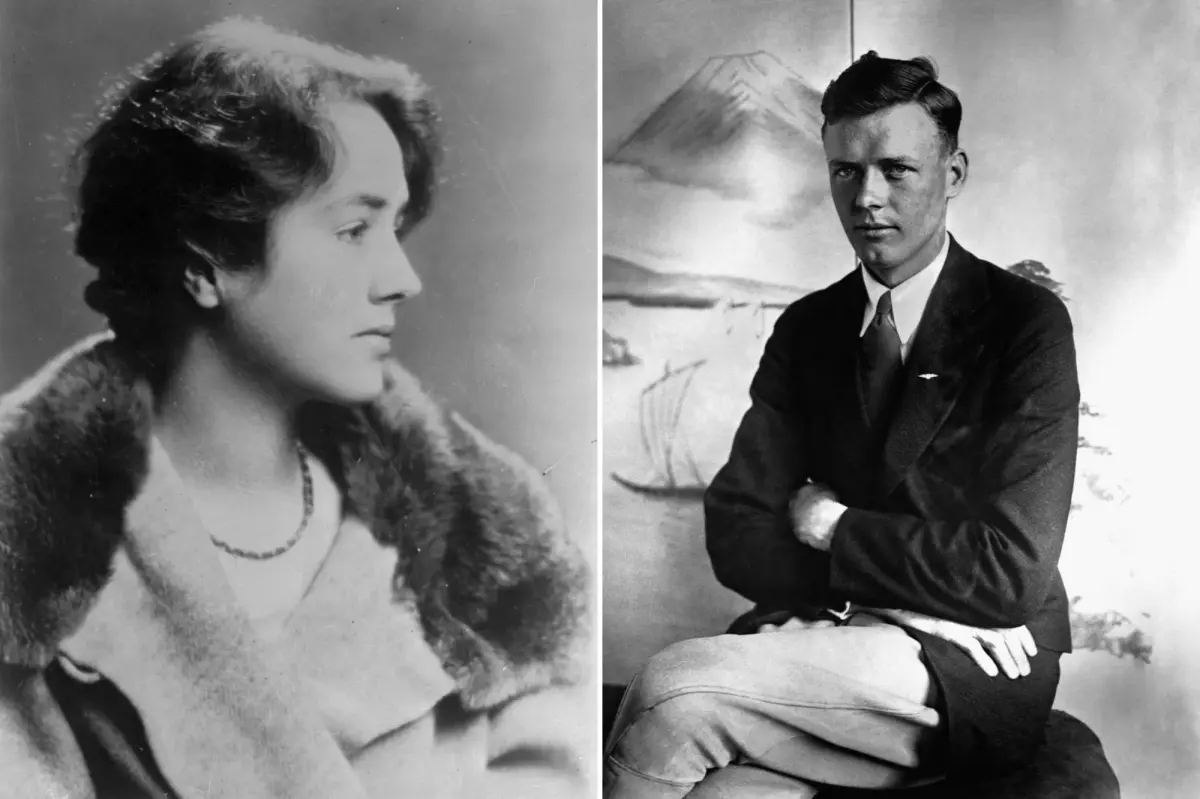
Charles Lindbergh and his wife, Anne Morrow Lindbergh, stand as two of the most remarkable figures of the twentieth century—he, the daring aviator who captured the world’s imagination, and she, an accomplished writer whose literary voice would eventually surpass his fame. Their union, which lasted forty-five years until his death in 1974, was itself an extraordinary feat of endurance and complexity. Far from being a meeting of kindred spirits or a marriage of perfect harmony, their relationship was marked by profound challenges, emotional distance, and moments of deep connection that defied easy explanation. James R. Hansen, the author of this revealing biography, approaches their story not with judgment but with understanding, recognizing that what made their marriage remarkable was precisely its intense humanity rather than any idealized perfection. As Hansen himself noted, the triumphs and failures in their lives were so deeply intertwined that they could hardly be separated, making their shared journey a testament to the complicated nature of love, commitment, and human endurance.
The romance began with the stuff of legend, when Lindbergh became an overnight global sensation at just twenty-five years old after completing his historic solo flight across the Atlantic in May 1927. The young aviator, suddenly the most famous man in America, found himself besieged by admirers and pursued by countless eligible women, yet his thoughts kept returning to a quiet, lovely twenty-one-year-old named Anne Morrow, whom he had met during a goodwill tour in Mexico over Christmas of that same year. Anne, the daughter of Dwight Morrow, the American ambassador to Mexico, was immediately smitten upon meeting the tall, handsome flier in Mexico City, though she was convinced that Charles preferred her livelier older sister Elisabeth. Back at Smith College, she poured her heart into her diary, describing how this clear, direct, straightforward boy had eclipsed every other man she had ever known, sweeping away all the pseudo-intellectuals and sophisticated pretenders who had previously captured her attention. When Lindbergh unexpectedly called her for a date in October 1928, she was astonished, and even more so when he took her flying in a two-seater de Havilland Moth over Long Island, letting her take the controls for a time. From the very beginning, they found their greatest happiness and ease together in the air, a pattern that would define their early relationship and set the stage for everything that followed. Their courtship was brief, and soon Lindbergh asked Anne to become his wife, with the wedding taking place quietly in the drawing room of the Morrow mansion in Englewood, New Jersey, attended only by family to avoid the relentless publicity that dogged every aspect of Lindbergh’s life. Yet even on her wedding day, Anne noted with some discomfort how everyone congratulated her for capturing the hero of the hour, and she saw herself as a devoted page to Charles’s knight, a foundation she later admitted was hardly the ideal basis for marriage.
Their early years together were marked by shared adventure and genuine partnership, as Anne trained rigorously as a radio operator and navigator to serve as her husband’s co-pilot during a hazardous three-month expedition in 1931, surveying air routes over Canada and Alaska to the Far East. This journey became the subject of Anne’s first book, “North to the Orient,” which earned a National Book Award and established her as a serious literary voice in her own right. But the agonizing events of the following year would test the couple in ways they could never have anticipated, when their toddler son, Charles Lindbergh Jr., was kidnapped from his nursery in their New Jersey home in March 1932. The tragedy revealed a fundamental rift in how the two coped with unimaginable grief. Charles dealt with the crisis by attempting to control everything around him—the investigation, the public response, and most of all his own emotions, suppressing his feelings behind a wall of stoic determination. Anne, by contrast, needed to grieve openly, needed to talk through her pain and find solace in connection, only to find her husband retreating further into emotional isolation, building walls that would never fully come down. The discovery of their son’s dead body in nearby woods in May only deepened this divide. Fleeing the media circus surrounding the investigation and the eventual trial of Bruno Hauptmann, who was convicted of the murder and executed, the Lindberghs left America to live abroad, first in England and later on a remote island off the coast of Brittany, seeking the privacy and seclusion that had been so brutally stripped from them.
The couple’s years in Europe brought a new and troubling chapter to their story, as Charles was asked by the American government to assess the growing air power of Nazi Germany. Lindbergh traveled there repeatedly and came away deeply impressed by what he described as the “organized vitality” of the country, convinced that Germany’s military buildup was so formidable that no other European nation could—or should—challenge it. Anne was far more sensitive than her husband to how his admiration for the Nazis would be received back home, and when Charles was awarded a swastika-studded medal by Luftwaffe commandant Hermann Goering, she immediately dubbed it “the albatross.” Yet when Lindbergh joined the America First Committee and began giving speeches across the United States accusing Jews of undermining the national interest by agitating for American entry into the war against Germany, Anne defended him publicly and privately, telling her disapproving mother that Charles stood for integrity. In the fall of 1940, she even published a short book titled “The Wave of the Future,” which she later disavowed, expressing her view that fascism wasn’t worth fighting. Hansen observes that this period represented the darkest chapter of their life together, second only to the kidnapping, and he notes with insight that Anne never asked why Charles failed to examine his own prejudices in shaping his view of America’s path, nor why she had failed to examine her own. Despite the public criticism and private condemnation they faced, the Lindberghs remained united in their defiance, though the cost of that unity would weigh heavily on Anne for years to come.
By 1950, Anne, now forty-four and the mother of five children, began to contemplate divorcing her husband, a dramatic shift that reflected the cumulative weight of years of emotional strain and neglect. During the war, Charles had been mostly away, advising the Air Force in the South Pacific, flying combat missions despite being technically a civilian, and even shooting down a Japanese plane. After peace arrived, he chose to continue working in distant corners of the world, leaving Anne alone in Darien, Connecticut, for months at a time to supervise their growing family. His frequent absences continued to hurt deeply, and so did his rigid and harshly critical style as a father, issuing each child a to-do list upon his departure and expecting strict compliance before his return. When Anne began seeing a psychiatrist, Charles fiercely disapproved and stopped speaking to her for six months, a punishment that revealed the limits of his emotional flexibility. Anne later told her daughter Reeve that she was waiting for her youngest to turn ten before leaving Charles, but her resolve was complicated by her growing closeness to her internist, Dr. Dana Atchley, a warm, witty, and nonjudgmental man who likely became her lover for a time. The book she wrote during this strained period, “Gift From the Sea,” a meditation on solitude, work, and human relationships, became an immediate bestseller when published in 1955 and has since sold millions of copies worldwide, cementing her reputation as a writer of genuine depth while also providing her with a measure of independence and self-definition she had long sought.
Perhaps the most stunning revelation in the Lindberghs’ story concerns Charles’s secret life, which Hansen explores with thoroughness and sensitivity. Lindbergh began an intimate relationship with his German secretary, Valeska von Arnim, who bore him a son in 1958, and at roughly the same time, he embarked on affairs with two of her friends, the sisters Brigitte and Marietta Hesshaimer, eventually fathering seven illegitimate children by these three German women. He maintained this tripartite secret life with the same discipline he had honed as a flier, making regular visits to see his lovers and offspring while keeping his other existence carefully compartmentalized and hidden from the world, and likely from Anne as well. Hansen believes Anne had her suspicions but chose not to probe too deeply, knowing something was up but not wanting to know exactly what, an avoidance born of self-protection and perhaps also of acceptance of her husband’s fundamental nature. When Lindbergh fell mortally ill with cancer in 1974, he was determined to die in his favorite place on earth, the rustic A-frame he and Anne owned on the remote southeastern coast of Maui, despite doctors warning that he might not survive the long journey from his Manhattan hospital bed to Hawaii. Anne supported his wish, going along with how he was and how he wanted everything done, a final act of devotion that Hansen describes as so typically Anne. Her husband instructed that his grave be dug in the church cemetery in Kipahulu, with room for Anne to be buried beside him, but in the end, she declined that option. When Anne died in 2001, her body was cremated as she had requested, and her ashes were scattered in numerous places she had loved, with Maui among them—a final gesture of independence and a fitting conclusion to a life that had been both constrained and enriched by her extraordinary, enigmatic marriage to one of the most famous men of his era.