







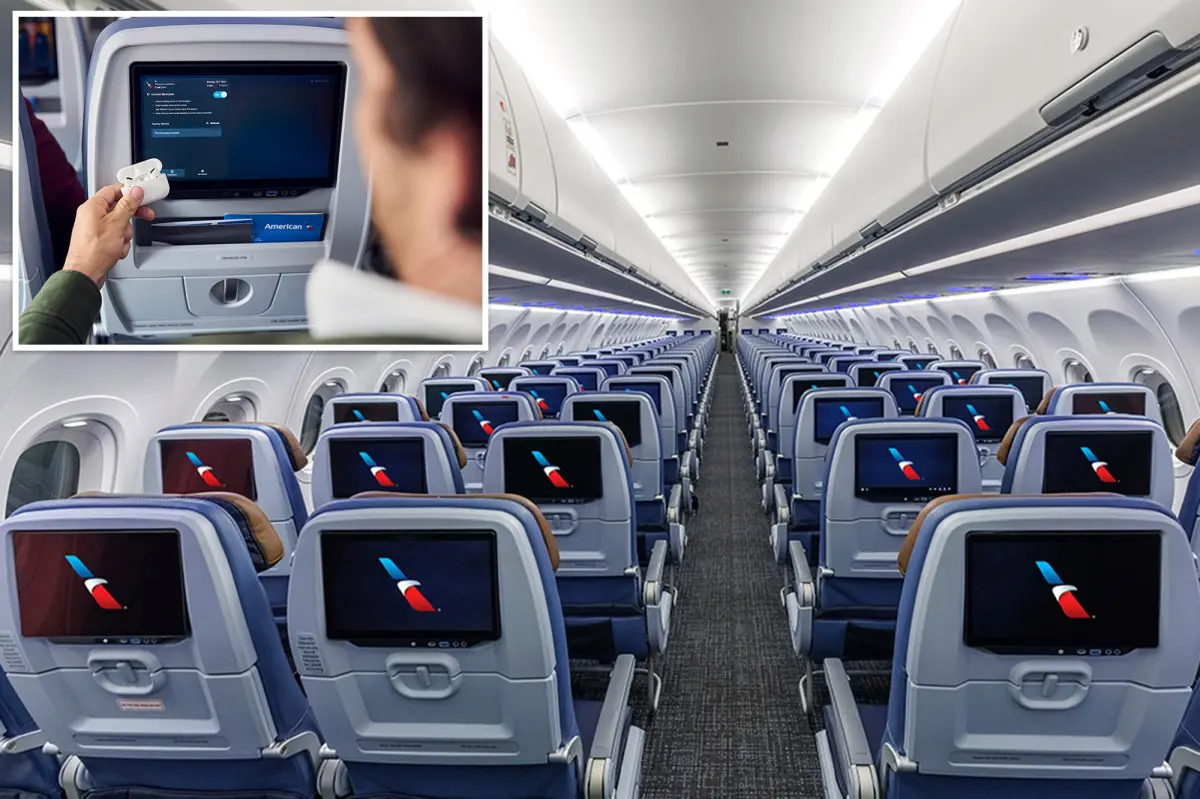
American Airlines Shifts Strategy: Premium Seats and Seatback Screens to Transform Passenger Experience
In a bold move that signals a major transformation in air travel, American Airlines has announced a comprehensive overhaul of its narrow-body fleet that promises to fundamentally reshape the flying experience for millions of passengers. The centerpiece of this ambitious initiative is a dual-pronged approach: significantly expanding premium seating options while simultaneously bringing back seatback entertainment screens that were once considered a relic of the past. This strategic pivot represents far more than a simple fleet upgrade — it reflects a profound shift in how airlines understand and cater to passenger preferences in the post-pandemic travel landscape.
The decision to reimagine the onboard experience comes at a critical juncture for American Airlines, which has found itself trailing behind its chief rivals in the race for profitable premium revenue. By reconfiguring aircraft to increase premium seating from roughly a quarter to 40 percent of total capacity, the airline is making an unmistakable statement about where it believes the future of air travel lies. This transformation, which will touch more than 800 narrow-body aircraft with new seat designs and expanded seating options, represents one of the most significant fleet modernization efforts in the airline’s history. The scale of this undertaking cannot be overstated — we are talking about a complete reimagining of the aircraft interior experience that will touch virtually every aspect of the passenger journey.
What makes this announcement particularly noteworthy is its acknowledgment that the airline industry’s previous assumptions about passenger behavior have fundamentally changed. Just a decade ago, American Airlines made a calculated bet with its “Project Oasis” initiative that passengers would prefer to use their own personal devices for entertainment rather than having seatback screens taking up space and adding weight to aircraft. That bet, which involved increasing cabin density and shrinking lavatory space, seemed logical at the time — after all, who hasn’t flown with a bag full of charging cables and a tablet loaded with movies? However, the airline industry’s evolution has revealed that passengers, particularly younger travelers, actually desire a more integrated entertainment experience that combines the convenience of personal devices with the reliability and visual quality of built-in screens.
The financial implications of this strategic shift are substantial and speak to the changing economics of commercial aviation. Premium travelers, despite representing less than one-third of available seats, now generate close to half of American Airlines’ ticketed revenue — a statistic that has not gone unnoticed by airline executives. This disparity between seat share and revenue share has created a powerful incentive for the airline to maximize the amount of premium cabin space on its aircraft. By expanding from 25 percent to 40 percent premium seating capacity, American Airlines is essentially betting that the high-margin revenue from these seats will more than offset any potential loss of economy class capacity. It’s a calculated risk that reflects a broader industry trend toward segmentation and personalization in an era when passengers increasingly expect tailored travel experiences.
The competitive pressure driving this decision cannot be underestimated, particularly when examining the broader landscape of American aviation. Delta Air Lines and United Airlines, American’s two biggest competitors, have both made significant investments in premium travel experiences and have seen their profitability soar as a result. This has created a widening earnings gap that American Airlines CEO Robert Isom has acknowledged directly, conceding that the gap between American’s current performance and where the airline should be relative to its competitors is “significant.” The pressure on Isom to demonstrate that his strategy can deliver results has intensified as shareholders and industry analysts watch closely to see whether this bet on premium travel will pay off or whether it represents yet another example of the airline industry’s tendency toward reactive rather than proactive strategy.
Looking toward the future, the implementation timeline for these changes reveals a careful, methodical approach to this transformation. The retrofitting of narrow-body aircraft with seatback screens is scheduled to begin in 2028, with completion expected in the early 2030s — a timeline that suggests the airline is taking a measured approach to what is arguably its most significant fleet transformation in decades. Newly delivered aircraft from both Airbus and Boeing will come with screens pre-installed, providing an immediate boost to the program before retrofits begin in earnest. The airline has remained tight-lipped about the total investment required, but industry experts estimate the cost will run into the billions of dollars when all is said and done. For passengers, this means the 1990s-era experience of watching free shows on long flights is making a comeback, but with a modern twist that includes high-speed Wi-Fi, personalized content recommendations, and the ability to move seamlessly between personal devices and seatback screens throughout the journey.