





Paragraph 1: The Shattered Golden Boy
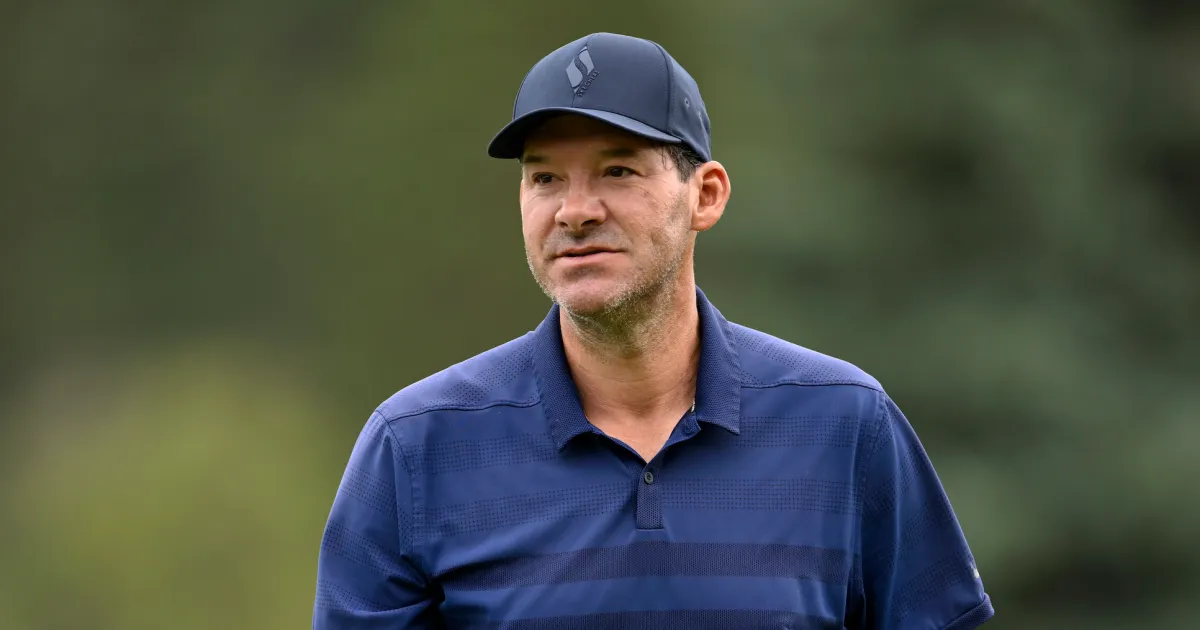
Before the night of July 23rd altered his trajectory, Tony Romo’s life had been a masterclass in the American sports fairytale. Undrafted out of Eastern Illinois University back in 2003, he spent years buried on the Dallas Cowboys’ depth chart, holding a clipboard and watching from the sideline before a breakout opportunity in 2006 turned him into a Pro Bowl quarterback, a charismatic franchise leader, and a folk hero, despite the infamous botched field goal hold in Seattle that haunted his early career. When his playing days ended, he made a seamless and unprecedented transition to the broadcast booth, becoming the highest-paid color analyst in television history. His uncanny ability to predict defensive schemes and running plays before they unfolded, combined with an infectious, boyish energy alongside the velvet-voiced Jim Nantz, turned Sunday afternoons into required viewing. He was the unflappable genius who seemed to hold a direct line to the football gods—a clean, polished, all-American icon. This was the man the public worshipped. This was the man who, on a warm summer night in Wisconsin, found himself pulled over on a minor traffic violation, forced to perform roadside sobriety tests under the unforgiving glow of a police officer’s body-worn camera. The glaring contrast between the suave, spotless television persona and the disoriented, vulnerable motorist is precisely why this story has captivated the sports world with such a potent mix of shock, schadenfreude, and genuine sympathy. It is a stark reminder that celebrity is merely a thin veneer over very fragile human fallibility.
Paragraph 2: The Unraveling Night in Milwaukee
The trouble began quietly. Romo had spent the day participating in the Wisconsin Amateur Championship, a genteel pastime of pristine fairways and low scores—hardly the precursor to a mugshot. But at approximately 8 p.m., as he drove his Jeep through the streets of Milwaukee, a police officer observed a traffic violation that warranted a standard pull-over. What should have been a routine stop quickly escalated when the officer approached the vehicle. According to official citations later released, the officer noted that Romo had “red, glassy eyes” and detected a distinct “odor of an intoxicating alcoholic beverage” emanating from the driver’s side of the Jeep. The officer, a woman who asked if he had been drinking, noted that his behavior suggested a lack of motor control. When asked to perform the standard field sobriety tests—the walk-and-turn, the one-leg stand, the horizontal gaze nystagmus—Romo allegedly failed them, his coordination betraying him at every step, all of it captured on the officer’s body camera. However, the incident compounded dramatically when Romo refused to submit to a chemical test, either a breathalyzer or blood draw, to determine his blood alcohol content. In Wisconsin, such a refusal is a critical tactical and legal error, triggering automatic administrative penalties independent of any criminal conviction. The officer then searched the vehicle, discovering an open bottle of an alcoholic beverage on the passenger’s seat—a blatant violation of open-container laws. As if traversing a minefield of citations, Romo was also written up for an obscure yet dangerous moving violation: driving through a “gore area.” For the uninitiated, a gore area is the painted triangular demarcation zone at highway exits and merges, designed to separate moving traffic from the off-ramp; driving over it is functionally illegal. In a single stop, Romo was issued citations for operating while intoxicated (a first offense), an open container, illegal gore-point crossing, and refusal to submit to testing. It was a laundry list of errors that transformed a quiet summer evening into a legal quagmire and a public relations catastrophe.
Paragraph 3: Legal Repercussions and Personal Humiliation
In the immediate fallout, the silence from Romo’s camp was deafening before a carefully crafted statement was released through his spokesperson to numerous media outlets. The statement acknowledged the gravity of the situation, admitting that Romo “accepts full responsibility for his actions and has taken proactive steps to ensure that this isolated civil matter is properly resolved.” The phrasing was deliberate, reframing a potentially criminal DUI as an “isolated civil matter” while hinting at behind-the-scenes remediation. These “proactive steps” almost certainly involve entering a counseling program, retaining a high-powered legal defense team, and preparing for the upcoming court date scheduled for September 21st—ironically, just one day after CBS’s Week 2 NFL broadcast slate. For Romo, the legal ramifications are significant. Under Wisconsin law, even a first-offense OWI is a criminal offense, and the refusal to submit to a chemical test triggers an automatic administrative license suspension, separate from any criminal penalties, ranging from six months to a year. The open container adds an additional fine, and the gore-point crossing is another moving violation. While no one was injured, the optics are devastating for a man who built his brand on intellect, precision, and clean living. The human element cannot be overstated. To have your every movement recorded by a police officer’s body camera, to be subjected to the humiliation of roadside exercises while being filmed, and to know those moments could be leaked or requested via open records requests is a deeply degrading experience. The emotional toll on Romo, his wife Candice, and their young children must be immense. The man who spent his entire NFL career avoiding injury and controversy, who was ruthlessly efficient on the field, had finally been tackled by his own flawed humanity, and the world was watching the replay in slow motion.
Paragraph 4: CBS’s Corporate Tightrope Walk
CBS Sports acted with the swift, pragmatic ruthlessness typical of modern media conglomerates. Within days, the network announced that Romo would be placed on administrative leave “until further notice,” effectively benching him for the start of the NFL season—a season where he was supposed to be the crown jewel of their broadcast coverage. The decision was not rooted in moral outrage but rather in cold risk management. A network cannot have its lead analyst explaining complex defensive formations while juggling pending criminal charges and uncomfortable public scrutiny. CBS Sports President David Berson addressed the situation publicly at an NFL on CBS media day, attempting to walk a tightrope between supporting their star and protecting the network’s integrity. “It’s an evolving situation and we are still assessing,” Berson stated, adding that “there is no timetable or final decision at this time.” He also said, “We have to consider the impact on our image and our brand. That’s very important to us. The focus should be and needs to be on our presentation and this great product and not on any others.” Berson’s corporate language subtly reinforces that Romo’s seat is not guaranteed. The network’s primary concern is clearly the “product.” Berson’s reassurance that “fortunately, we have a deep bench” sent a clear message through the industry: Tony Romo, despite his broadcasting genius, is replaceable. The sudden absence forced producers to reassign games, recalculate the announcer depth chart, and awkwardly explain the situation to advertisers and partners. While rival networks like NBC and Fox certainly felt a pang of competitive schadenfreude, CBS had to project stability. Berson’s carefully chosen words about focusing “on the presentation” hinted at an internal edict: the show must go on, regardless of the personal lives of the personalities.
Paragraph 5: J.J. Watt Enters the Lion’s Den
That “deep bench” turned out to be none other than J.J. Watt. The legendary former NFL defensive end, having just retired from the league, was essentially thrown into the deep end of the broadcasting pool. Watt, at 37 years old, had no prior professional broadcast experience as a color analyst, yet he was tasked with filling the impossibly large shoes of Tony Romo for the opening weeks of the season. Watt took to social media platform X to address his complicated new role with remarkable grace. “Haven’t said much because it’s not the circumstances you’d hope it would happen under, but I’m incredibly excited about this opportunity and look forward to working with a legendary team in Jim Nantz, Tracy Wolfson, Jim Rikhoff and the entire CBS lead crew,” Watt wrote. “See you in Minnesota!” Watt’s statement was classy, acknowledging the awkwardness while embracing the pressure. Forced to walk a tightrope, Watt must show respect for Romo’s situation without ignoring it entirely, prove his own capabilities without appearing eager to steal a colleague’s job, and deliver a flawless performance under an immense microscope. As a three-time NFL Defensive Player of the Year, Watt undeniably possesses a football intellect that rivals Romo’s; he spent his career on the defensive side of the line, reading quarterbacks and predicting plays with a similar prescience. However, translating that knowledge into a fluid, engaging broadcast while simultaneously navigating the narrative of being the replacement for a man currently out due to legal troubles is a unique psychological challenge. Nantz, Wolfson, and the production team provide a legendary support structure, but the pressure is immense—every syllable Watt utters will be dissected and compared unfavorably to the man he replaced by legions of critical fans.
Paragraph 6: The Universal Lesson in Human Fallibility
Ultimately, the saga of Tony Romo’s arrest is far more than a tabloid headline or a week’s worth of sports talk radio fodder. It is a poignant reminder of the fragility of reputation and the universal nature of human error. We live in an era of high-definition scrutiny, where a single lapse in judgment, captured on ever-present cameras, can permanently alter a life’s narrative. For Romo, the road ahead is uncertain. He will face a judge in September, navigate the legal system, and likely accept a plea deal involving fines, mandatory classes, and a lingering stain on his public record. Yet, this story is not entirely tragic. Romo’s immediate acceptance of “full responsibility” is a critical first step on the road to redemption. In the unforgiving court of public opinion, particularly among the NFL fans who idolize him, honesty and humility are the quickest routes back to grace. We have seen countless athletes stumble—from Terry Bradshaw’s early-career controversies to the personal tragedies of Tony Dungy—and emerge with their careers intact, often strengthened by the experience. The question is not whether Romo will return to the CBS booth, as he almost certainly will given time and a legal resolution, but how he will handle the interim. Will he shrink into the shadows, or will he use this as an opportunity to show the world he is not the infallible, robotic play-caller they watch on television, but a real person with real weaknesses? The humanization of Tony Romo might, paradoxically, make him a more relatable communicator. The polished, flawless analyst who never made a mistake may be replaced by a humbler, more reflective version who understands that life, unlike a scripted football play, doesn’t always go as planned. As CBS watches its “deep bench” warm up and J.J. Watt tries on a headset for size, the most important lesson comes from Romo’s silence. In the quiet of his own reflection, Tony Romo is learning that the most important game he’ll ever have to win is the one taking place in the courtroom and in the mirror. And hopefully, for a man who brought so much joy to millions of fans, he finds that victory, one sober, responsible, and humbly human step at a time.