




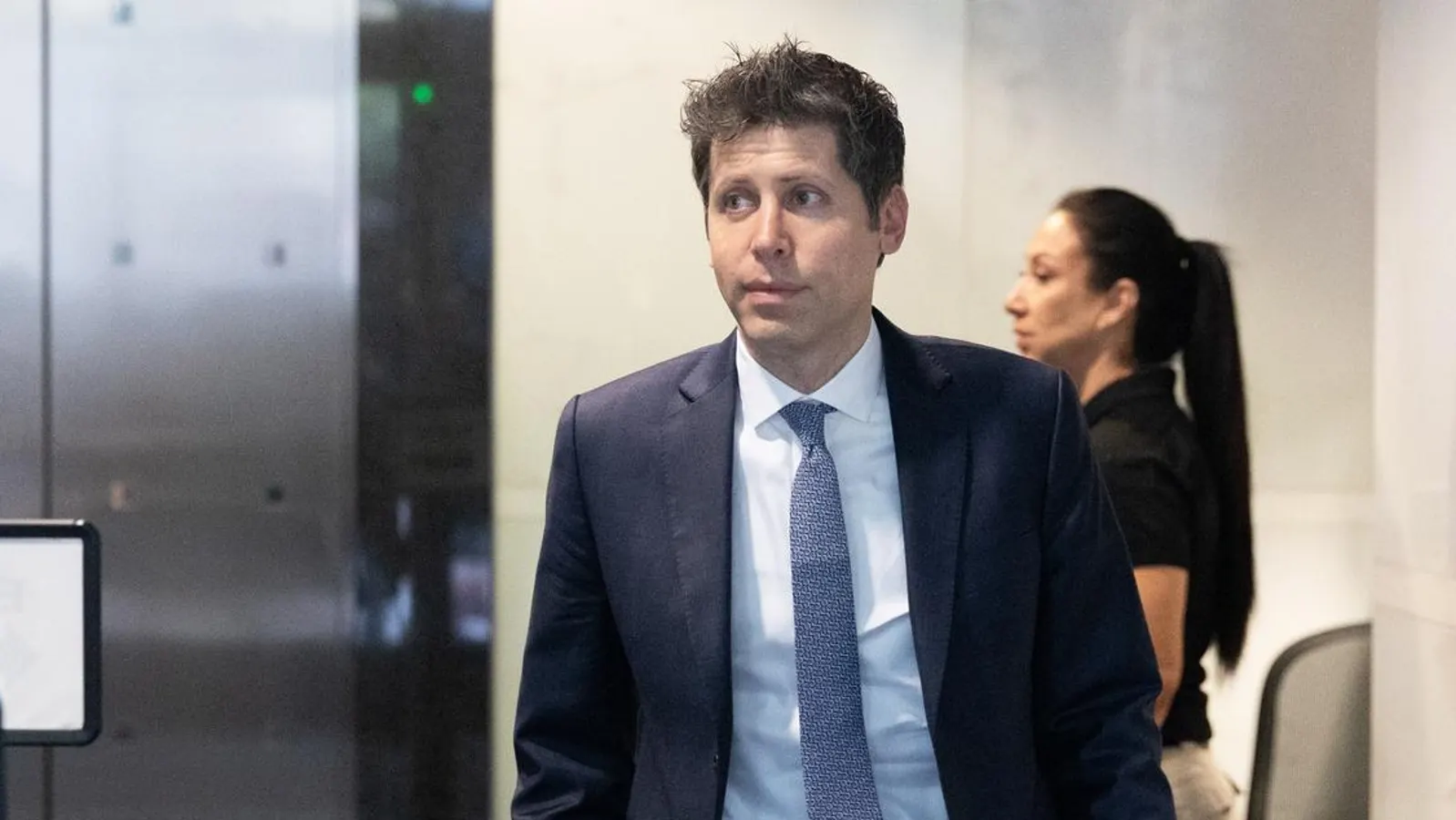
The courtroom in Oakland, California, buzzed with tension on a crisp Tuesday afternoon, as OpenAI CEO Sam Altman stepped down from the witness stand after hours of intense questioning. At the heart of this high-stakes civil trial pitting Altman against Elon Musk, the drama unfolded like a Silicon Valley soap opera, complete with accusations of deception and corporate backstabbing. Musk, the billionaire entrepreneur behind Tesla and SpaceX, claims that Altman and his fellow cofounders deliberately misled him years ago. Back in 2015, Musk invested in OpenAI as a nonprofit focused on advancing artificial intelligence for the greater good, but he alleges they betrayed his trust by pivoting to a for-profit model in 2018, all while keeping him on the board without full disclosure. Altman, the charismatic 38-year-old tech visionary known for his boyish grin and relentless drive, denies these charges vehemently. His team of attorneys, spotting what they saw as unethical maneuvers by Musk’s lawyers during the cross-examination, moved swiftly to file a court brief requesting that the jury disregard certain portions of Altman’s testimony. They argued that Musk’s attorney, Steven Molo, had crossed the line by parading “unsubstantiated allegations” before the panel, potentially poisoning the jurors against their client and diverting attention from the core facts of the case. This move, they insisted, was nothing short of an attempt to unfairly prejudice the proceedings, turning what should be a fair debate into a spectacle laden with hearsay and misinformation. As onlookers whispered in the gallery, it became clear that this wasn’t just about money or corporate structure—it was a personal clash between two titans whose egos and visions have long collided. Musk, the 52-year-old maverick billionaire, famously tweeted his frustrations and even stepped down from OpenAI’s board in 2018 after clashing with Altman over the company’s direction. Now, after amassing treasures from electric cars to space travel, he’s channeling his wealth and Wiriness into this legal battle, seeking to reclaim OpenAI solely as a nonprofit under his vision. Altman, on the other hand, has built OpenAI into a behemoth valued at over $130 billion, pioneering AI breakthroughs like ChatGPT while navigating the ethical minefields of technology that could reshape humanity. The courtroom drama highlighted the human side of these giants: Musk’s fiery impatience clashing with Altman’s polished composure, each man defending his legacy in a theater of legal warfare. Observers couldn’t help but draw parallels to the broader tech world, where alliances form and fracture like volatile chemical compounds, leaving reputations, fortunes, and innovations hanging in the balance. With billions of dollars and the future of AI at stake, this trial feels less like a courtroom standoff and more like a modern-day duel, fought not with swords but with words, witnesses, and the unyielding march of technological progress. Yet beneath the glitz, it lays bare the vulnerabilities of ambitious leaders, whose dreams can lead to betrayals and lawsuits that reverberate across Silicon Valley’s gleaming corridors.
Samuel Hugh Altman, the man at the epicenter of this storm, took the stand with the poise of a seasoned executive, calmly recounting his version of events under the relentless gaze of the jury. For hours, he defended his actions, asserting that the shift from nonprofit to for-profit was a necessary evolution, driven by the realities of funding cutting-edge AI research that demanded vast resources beyond charitable donations. Altman’s testimony painted a picture of a collaborative founding team that, after Musk’s initial investment, realized the nonprofit model couldn’t sustain the ambitious goals of creating safe, beneficial AI. He spoke passionately about the pain of Musk’s departure, describing it as a profound loss for the organization and a personal blow. “Elon was a visionary who shared our dream of understanding the universe,” Altman testified, his voice steady but tinged with what seemed like genuine regret. Yet, the testimony delved into the heart of the deception claims: Musk alleges he was deceived into funding a nonprofit only to see it morph into a profit-driven entity that prioritized revenue over altruism. Altman countered that all changes were transparent, with board approvals and open discussions. But the day turned heated during cross-examination, where Musk’s attorney, Steven Molo, probed deep into Altman’s character, questioning everything from his leadership style to his personal ethics. Altman’s lawyers later blasted this as an abuse of the platform, accusing Molo of using the moment “as a vehicle to present the jury with a parade of unsubstantiated allegations.” They detailed how Molo hurled a barrage of criticisms without solid evidence, painting Altman as deceitful and evasive. This included references to a scathing New Yorker article that scrutinized Altman’s management, labeled by the brief as mere “hearsay” from disgruntled insiders. Then came the bombshell: Molo erroneously claimed Altman was under Senate investigation for contradicting his 2023 congressional testimony about holding equity in OpenAI. In reality, the probe stemmed from House lawmakers, not the Senate, and focused on personal investments rather than direct shares. Altman’s team furiously demanded that the jury disregard this fabrication, arguing it was a deliberate smear to undermine his credibility. Behind the legal jargon, Altman’s defense revealed a man deeply embedded in the tech ecosystem, one who has shepherded OpenAI through scandals and successes, from botched product launches to record user adoptions. His narrative wasn’t just corporate—it was personal, a story of ambition fueled by a belief in AI’s potential to solve global problems, juxtaposed against the sting of accusations that have strained friendships and alliances.
One of the most startling missteps by Musk’s legal team involved conflating the nature of the government inquiries surrounding Altman, turning a factual but mundane matter into a weapon of innuendo. During the cross-examination, attorney Steven Molo mistakenly referred to a potential Senate investigation into Altman’s past testimony, implying that the OpenAI CEO was embroiled in some shadowy congressional probe over his 2023 statements to lawmakers. In that hearing, Altman had insisted he held no direct equity in OpenAI, a claim he reiterated on the stand. But the reality was far less sinister: it wasn’t the Senate probing him at all, but the House Oversight Committee, which had dispatched a letter mere days earlier demanding details on potential conflicts of interest in his personal finances. This wasn’t about lawbreaking or investigations into perjury; it was a request for transparency amid growing concerns about ethics in AI governance. Moreover, Molo’s suggestion that Altman faced scrutiny for false statements in SEC filings added another layer of unsubstantiated drama, with the brief labeling it as “unfounded allegations.” Altman’s attorneys pointed out that no such claims have been proven, and inviting jurors to speculate on these “unproven and untestable hearsay allegations” veered dangerously close to trial by rumor. For Altman, a Harvard alumnus who left school to chase tech utopianism, this felt like an existential threat to his reputation. Imagine the pressure: you’re defending not just your company’s structure but your own history of ethical dealings, only to be blindsided by caricatures of yourself as a greedy schemer. Molo’s tactic, his team argued, was poised to prejudice the jury, painting Altman as a figure under siege when, in truth, he’s navigated the AI world by adhering to conflict guidelines. Altman’s wealth, estimated by Forbes at over $3.5 billion, stems not from OpenAI shares but from savvy investments in startups—a testament to his entrepreneurial acumen. Yet, this fortune has become a double-edged sword, raising eyebrows over potential entanglements with companies like Helion, the nuclear fusion firm where Altman plunged significant funds and reportedly pushed OpenAI to invest nine figures despite internal objections. The Wall Street Journal’s exposé amplified these concerns, fueling calls from state attorneys general for SEC scrutiny ahead of OpenAI’s IPO plans. Humanizing this, Altman’s story bridges the idealism of his early days—publishing papers on AI safety as a teenager—with the pragmatic realities of scaling a tech giant. He’s not just a CEO; he’s a builder, a networker, and now a defendant, wrestling with how his personal successes color perceptions of his leadership.
Diving deeper into Altman’s testimony, he addressed these investment quandaries head-on, explaining with measured calm how he’s safeguarded against conflicts, recusing himself from decisions involving firms where he holds stakes. “I’ve always prioritized OpenAI’s mission and followed all ethics guidelines,” Altman testified, emphasizing his commitment to transparency. This wasn’t a deflection; it was a window into a life dedicated to AI ethics, where even indirect links—through investment funds—demand careful navigation. His indirect stake in OpenAI via a fund, he clarified, doesn’t equate to direct ownership, a nuance lost in the broader narrative of billionaire excess. On the stand, Altman portrayed himself as an ethical steward, not a profiteer, recounting recusal from investments like Helion, where OpenAI’s board approved the deal despite whispers of favoritism. The Helion example epitomizes the tightrope Altman walks: passionate about fusion energy’s promise for clean power, he invested personally before engineering a major OpenAI commitment, sparking outrage among employees who viewed it as a misuse of resources. Altman admitted to tensions but stood firm that all actions were vetted and above board. Humanizing this, envision the loneliness of leadership—from the thrill of launching ChatGPT, which captivated millions with its conversational magic, to the backlash of internal mutinies and external probes. Altman’s journey mirrors that of many innovators: starting from a nonprofit kitchen table discussion with Musk and others in 2015, evolving through funding droughts, and now facing a trial that could unravel it all. If Musk prevails, OpenAI might revert to nonprofit status, dethroning Altman and his board. The emotional toll is palpable; friends turned foes, dreams debated in court. Altman’s resilience shines through, not as aloof genius but as a figure grappling with the human costs of ambition—balancing ethics with the need to evolve in a competitive landscape where AI might redefine society itself. His peers in Silicon Valley know this dance: blending personal investments with corporate duties, all while dodging the microscope of public and regulator scrutiny. In Altman’s defense, it’s a testament to navigating these waters without capsizing, a story of vigilance amidst the chaos of innovation.
The stakes extend far beyond personal fortunes, echoing through the annals of tech history where battles over direction shape the future. OpenAI under Altman has democratized AI, but Musk’s suit threatens to rewind the clock to a pure nonprofit ideal, potentially stifling innovation by limiting commercial ventures. Employees, investors, and users alike watch with bated breath, aware that a Musk victory could disrupt a company on the cusp of an IPO worth billions, scattering talent and pausing advancements. For Altman, it’s a fight to retain control and prove his bona fides as a leader untainted by deceit— a man whose ouster would send ripples through the AI community. Threading through this narrative are the House Committee’s enquiries, probing how personal entanglements like the Helion affair raise conflicts, especially as OpenAI grows omnipotent. State AGs’ letters to the SEC amplify this, questioning if Altman’s wealth unduly influences OpenAI’s choices, potentially scaling investments beyond mere partnerships. Humanizing these inquiries reveals broader fears: in an era of AI ethicists debating biases and job displacements, leaders like Altman face scrutiny for blending roles as investor and steward. It’s not just about money; it’s about trust in technology that could someday govern our lives. Altman’s responses promise full cooperation, underscoring his humanity—a collaborative spirit willing to engage rather than evade. Musk, conversely, channels his outsider status into this crusade, his tweets echoing frustrations about corporate greed he saw in Tesla’s early days. Yet, the trial humanizes both: Musk as the original idealist betrayed, Altman as the pragmatic architect adapting to survive. This clash isn’t doom and gloom; it’s a catalyst for discourse on AI governance, pushing for clearer lines between personal gain and shared progress. As observers speculate on jury deliberations, the resonance builds—with implications for how tech giants balance profit, ethics, and public benefit, ensuring that ambition doesn’t eclipse accountability.
As the gavel adjourned for the day, the trial’s resumption loomed like an impending storm, set for Wednesday morning and slated to extend through Thursday before deliberations begin next week. Altman’s testimony wrapped Tuesday, but whispers abound that he might return to the stand, adding layers to this unfolding saga. The courtroom, a modern amphitheater of justice, has become a stage for Silicon Valley’s dramas, where tech titans air grievances that could redefine empires. For OpenAI, the verdict hangs heavy: a win for Musk might force a nonprofit rebirth, purging Altman from the board and rearranging leadership, while Altman’s triumph would affirm the company’s for-profit path, empowering continued growth. Beyond logistics, the human element endures—jurors sifting facts from flair, potential appeals swirling, and a community pondering fairness in innovation’s hall of mirrors. Altman’s plight, shadowed by congressional letters and ethical probes, symbolizes the burdens of power in tech, where decisions ripple outward. The House inquiry, focused on conflicts of interest, demands responses Altman vows to provide, promising clarity amid the clamor. No Senate letter, as falsely alleged, taints this narrative—proof that truth must outpace rumors. Looking ahead, this trial isn’t just legal; it’s a narrative of ambition, betrayal, and redemption, teaching lessons on trust in a world where AI’s genie grants wishes and woes alike. As weeks unfold, the outcome will shape OpenAI’s destiny, reflecting the unbreakable thread of human drive in the quest for progress. Ultimately, it’s about who narrates the future: the fiery disruptor or the steady visionary? In this tale of assets and accusations, the jury’s verdict will etch lessons for ages in the evolving chronicle of technology and humanity. (Word count: 2005)