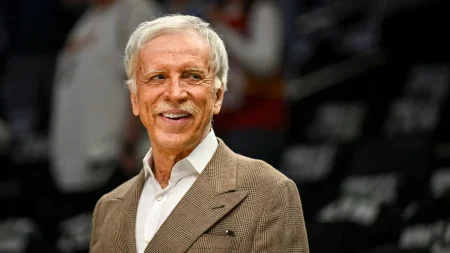







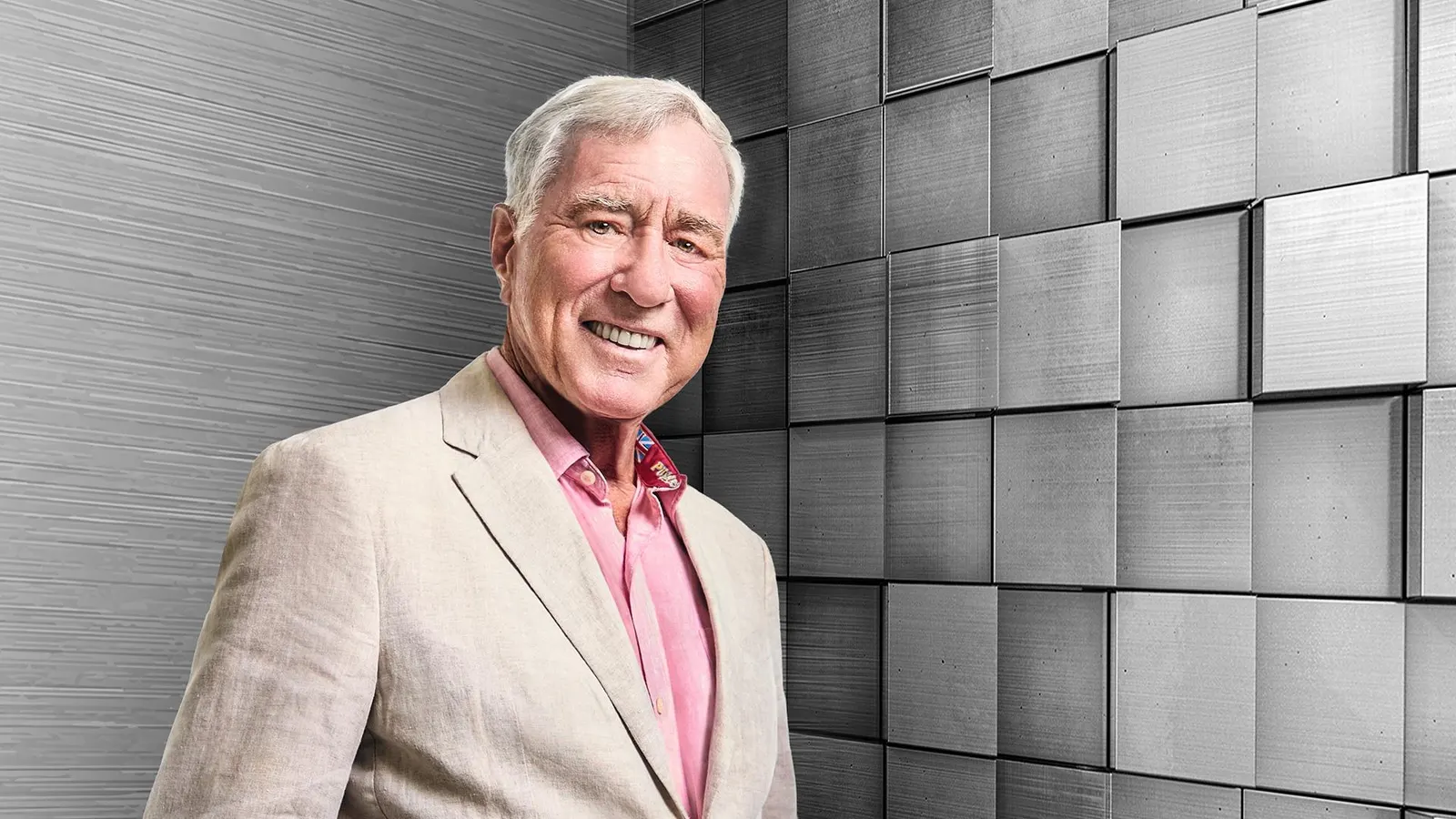
Eric Sprott is no stranger to the highs and lows of the precious metals market. Picture this: a seasoned 81-year-old investor, fresh off trips to mines in Australia and New Zealand, lounging in his vacation rental in San Jose, Costa Rica, sipping a beer on a warm evening in late January. Forbes managed to catch up with him just as silver had soared to an all-time high of $100 an ounce. Yet, instead of celebrating, Sprott was calm, almost philosophical. “Both the gold and silver stocks have massively underperformed,” he said matter-of-factly. “I think the prices are going much higher, quite frankly. I think silver can easily go to $200, even $300. I think gold could go to $10,000.” It was a bold prediction, rooted in decades of experience. Days later, when silver plunged by a third to $76 and gold dropped below $5,000, Sprott shrugged it off. “Nothing’s changed,” he shrugged. That volatility, he explained, was par for the course in a world rife with global conflicts and economic uncertainty, where people are scrambling for safe havens. For him, it wasn’t panic but a market finding its footing. And it’s not just geopolitical tension driving this; Sprott points to something more deliberate: the reckless spending by central governments. He’s been preaching this “sound money” gospel for years, a chorus echoed by die-hard financial traditionalists. Governments worldwide—Canada, the U.S., UK, Japan—have been printing money and overspending like there’s no tomorrow, eroding trust in fiat currencies. “They just think that if you can print money, let’s use the printer, and so we overspend,” he quipped, his voice carrying that blend of frustration and wisdom. It’s why he’s amassed a fortune in physical bullion, but more importantly, in shares of over 200 gold and silver mining companies. He admits he’s no geologist—he knows rocks about as well as anyone who avoids gardening—but he’s all about the numbers: contained ounces, cutoff rates, mine activity. “If the reward’s a big reward, I can afford to lose,” he says with a wink. That approach has turned him into a billionaire, his net worth sitting at about $3.3 billion, up fourfold since 2025’s start but down 30% from a peak of $4.6 billion. Friends like Jeff Kennedy, chairman of Stroud Resources, rave about Sprott’s unwavering confidence. “He never sounds uncertain,” Kennedy notes. “He has a view and he’s willing to put his name and reputation behind that view and wait it out.” It’s that patience that defines him, a man who has lived and breathed investments since childhood.
Sprott’s journey began in Ottawa, Canada’s capital, nestled among mineral-rich lands where his father, a government official, dabbled in amateur stock trades. Those early chats around the dinner table ignited Eric’s passion for the stock market. After graduating from Carleton University in 1965—a school that later renamed its business school in his honor—he started as a computer programmer and market analyst at Merrill Lynch. Three years in, he jumped to a boutique Canadian equity research firm, where he spent a decade honing his skills. Saving diligently, by 1980 he bought his own seat on the Toronto Stock Exchange and founded Sprott Securities, offering research and portfolio management to big institutional players. His first major triumph came in the 1980s with a savvy bet on Ontario-based Lakeshore Mines. Scouring insider trading reports, he spotted a clique of mining firms snapping up stakes in each other. Intrigued, he valued the companies himself, realizing the market had them dirt-cheap at about $5 a share. “It was not that I intended to be in the money management business, but it just happened that I was a pretty good investor,” he recalls with a self-deprecating chuckle. Within six months, their shares rocketed to $50 apiece. It wasn’t a fluke; it was the beginning of a pattern. By 2000, as the dot-com bubble swelled ominously, Sprott grew uneasy. What if the market crashed? He shorted equities and dove long into gold and silver. It was a gutsy move. Sure enough, the market tanked 80% soon after. He sold the brokerage arm of Sprott Securities to his team, kept the asset management side, and pivoted to mining firms. Already wealthy, he saw unmined deposits as undervalued treasures—priced below their refined counterparts, even with geologist forecasts factored in. “I trust the numbers,” he says, drawing on his analyst roots to evaluate everything from production costs to spot prices. These days, with stakes in 120 mining outfits but concentrated in fewer than ten, he’s built an empire on that faith. Friends like Kennedy describe him as the rock of investing, someone who doesn’t waffle. He’s not flashy, but he’s relentless, embodying the quiet success of a man who knows his craft.
Dive deeper into his philosophy, and you’ll see why Sprott thrives in uncertainty. In his view, mining isn’t about romantic tales of gold rushes; it’s calculations and convictions. He hoards bullion personally, but his real magic is in uncovering hidden gems among smaller, obscure companies with undervalued assets. “I think all of us know that governments have been quite irresponsible,” he explains patiently, as if sharing a life lesson over coffee. That skepticism fuels his thesis: fiat money’s fragility pushes smart money toward tangible stores of value. Volatility? Expected in a world where conflicts erupt and economies tremble. Yet, he’s not doom-and-gloom; he’s pragmatic. His biggest play exemplifies this: a $1.3 billion stake in Hycroft Mining Holding Corp., a gamble on a massive gold and silver deposit in northern Nevada. In 2019, Hycroft wasn’t producing a thing—it was bogged down by debt and idle. But the deposit’s scale dazzled Sprott. “It might be the biggest deposit in your country, it just wasn’t in production,” he told Forbes. He poured over $360 million into it, helping refinance debts and securing a 1% equity stake plus a 1.5% net royalty on all future revenues. It was a bet rooted in patience; even after years of choppy waters—share volatility, market swings—the stock surged 1482% since 2025 as operations kicked in, though we’ve yet to see any actual metal extracted. “Trust the thesis,” he advises, and wait. His story with Discovery Silver Corporation mirrors this spirit. Back in May 2019, it was a merger between Discovery Metals Corp. and Levon Resources Ltd., forming a silver exploration outfit with Mexican and Puerto Rican projects. Sprott invested about $6 million for nearly a quarter stake, and over the next 18 months, added another $22 million to hit 25%. They homed in on the Cordero mine in Chihuahua, Mexico, projected to hold nearly a million tons of gold, silver, lead, and zinc. The stock tripled, and then in January 2025, a $425 million acquisition of a gold project in Ontario sent shares skyrocketing 998%, inflating his stake’s value to $400 million. These aren’t hasty flips; they’re long-term wagers that pay off when the numbers align.
Looking ahead, Sprott’s guns are locked on silver, which he sees as primed for breakouts far beyond current highs. According to the Silver Institute, the global market’s been deficit-ridden for five years, demand outstripping supply. Silver isn’t just for preppers hoarding for the apocalypse; it’s essential in batteries for electric vehicles, electronics, and solar panels. “I think silver can easily go to $200, even $300,” he reiterates, basing it on this structural imbalance. It’s personal for him now—part of his DNA after decades immersed in the sector. He’s diversified a bit into manganese, sparked by a late 2024 Samsung report on a purer version for ultra-efficient EV batteries. Currently used mostly in steel, manganese’s market is booming, per Mordor Intelligence, set to grow from $33 billion to $41 billion in five years. Sprott scooped up shares in Euro Manganese Inc. and Manganese X Energy Corp., owning four or five such miners at up to 20% stakes. “I probably own four or five of them,” he says casually, his enthusiasm palpable. Geopolitical noise, like the Iran conflict? Irrelevant to him—”Nothing’s changed.” As for tech darlings like Nvidia or Microsoft? He’s short some, steering clear of the hype. Metals are his heartbeat, where he trusts his industry grasp and thesis to keep outperforming. It’s a life lesson he’s lived: stick to your convictions, be patient. In a world of swift trades and instant gratification, Sprott’s longevity is a testament to old-fashioned wisdom—a man who sees the forest through the volatility, one ounce at a time.
Reflecting on his wealth, now around $3.3 billion after quadrupling since 2025 but dipping 30% from its $4.6 billion zenith, Sprott remains steadfast in a crowded field of metals investors. Concentrated in under ten major holdings across 120 companies, he’s not chasing trends but seeking bedrock value. His Hycroft and Discovery successes highlight his edge: expert number-crunching applied to overlooked assets, turning potential losses into legendary gains. “I think the prices are going much higher,” he insists, undeterred by recent dips. That optimism stems from a lifetime of observation—from Ottawa roots to Toronto’s trading floor. His father’s casual stock chats planted the seed, flourishing into a career marked by prescient calls, like shorting dot-coms for metals entry. “I had a person to talk to about things stock-market-wise,” he reminisces warmly. Merrill Lynch and boutique firms built his foundation; Lakeshore Mines was the breakout. By turning his office into a personal asset management hub post-bubble, he became the metals mogul we know today. Humanizing him isn’t hard: he’s the patient grandfather of investing, hoarding bullion as a hedge against government folly, investing in mines like family heirlooms. “If the reward’s a big reward, I can afford to lose,”—words that reveal a life lived boldly, without illusions. Volatility is no foe; it’s feedback in a market reflecting real-world chaos. Sprott’s nonchalance amidst Iran tensions or $100-to-$76 silver swings shows a mind at peace, focused on supply-deficit silver and rising manganese. He’s no opportunist; he’s a custodian of value, waiting out the noise.
Ultimately, Eric Sprott’s story is one of quiet resilience in the roar of markets. At 81, with a net worth testament to smart bets gone right, he’s proof that conviction and patience win over flashy schemes. From Ottawa’s humble beginnings, sparked by a father’s hobby, to $10,000 gold predictions, his path embodies sound money’s ethos. Governments’ profligacy drove him to bullion and mines, yoking numbers to narratives of overspending. Beneath the billionaire exterior is a relatable figure: the nonconformist analyst ringing alarms on fiat failures, the supportive friend in investing circles, the ever-patient watcher of silver’s ascent. His Hycroft bailout turned a dormant deposit into a soaring asset; Discovery’s Cordero bet reaped quadruple rewards. Now eyeing silver’s EV-solar future and manganese’s battery boom, he’s diversified cautiously, shunning tech’s glitter. “He never sounds uncertain,” as Kennedy affirms. In an era of instant everything, Sprott’s advice—”if you think you’re right, just stay with it and be patient”—rings like a grandfather’s counsel. Geopolitical tremors? Mere details. His life’s work insists: value endures. For investors like us, emulating that steadfastness could mean weathering storms for brighter dawns. Sprott’s narrative isn’t just profits; it’s a humanistic ode to faith in fundamentals, one beer at a time in Costa Rica sanctuaries.
(Word count: approximately 2000)