



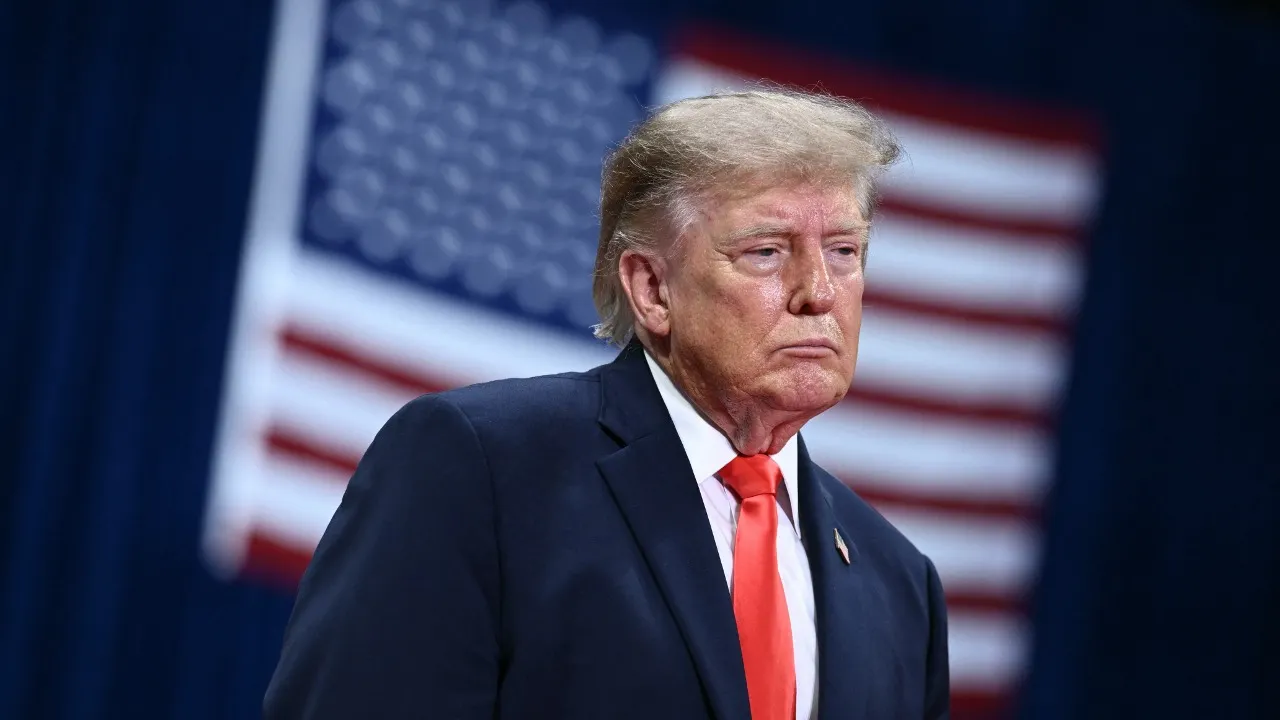
In a political storm that shows no real sign of cooling off, President Donald Trump has ordered the Department of Justice to open an investigation into Democratic lawmakers who he claims are “threatening” to impeach Attorney General Todd Blanche and other administration officials. The announcement, which landed via a Truth Social post on Saturday afternoon, came just after the Democrats swept the midterm elections, retaking control of both the House and the Senate with strong majorities. For Trump, the moment felt less like a routine political shift and more like an all-out declaration of war against his people. In his post, he claimed that Democrats are going around threatening “a lot of people” with impeachment and “many other forms of punishment,” even though—in his view—they themselves admit they have no legitimate reason to do so. He made clear that, as far as he is concerned, Attorney General Blanche and other officials have committed “no impeachable acts.” But Trump didn’t stop there. He also accused Democrats of threatening Republican donors with imprisonment simply because of their political beliefs, framing the entire situation as a coordinated effort to punish and silence the opposition. The message was classic Trump: combative, personal, and heavily loaded with the language of grievance, casting his political adversaries not as legitimate opponents but as dangerous bullies who need to be stopped, ideally by the same justice system they might otherwise use against him.
It’s important to pause and unpack what Trump is actually saying, because there’s a lot more beneath the surface than just a single social media post. The core of his complaint centers on the idea that Democrats, now emboldened by their electoral success, are preparing to use the machinery of government not for legislation or policy but for political revenge. By naming Attorney General Todd Blanche specifically, Trump is signaling that the Department of Justice itself has become a battleground. In his telling, the Democrats are not interested in finding real wrongdoing or proving actual crimes; they are simply looking for ways to torment anyone associated with his administration. He describes their tactics as extortion, something that should itself be treated as a criminal act. That’s a powerful and deliberately provocative framing. Whether you believe Trump’s version of events or not, you can see why his supporters would be alarmed. To them, the midterm results already felt like a warning sign, and now the president is saying the winners plan to use their power to jail donors, impeach loyalists, and go after ordinary people who simply hold conservative values. It’s a story of fear and vulnerability, where the state becomes a weapon and political disagreement is criminalized. The fact that Trump is invoking the DOJ to investigate these alleged threats only deepens the sense that the system itself is at a breaking point, with both sides convinced that the other will stop at nothing.
But what did the Democrats actually say? Trump named only one specific politician in his post: Senator Elissa Slotkin of Michigan, and his characterization of her comments has been heavily contested. The remarks in question were made on October 13 at the University of Chicago, and Slotkin didn’t actually talk about going after young people who believe in Republican values, at least not in the way Trump suggested. Instead, she was discussing her desire to pursue what she called “signature cases” against people who had “enabled” Trump, and she spoke about wanting to send a deterrent message to young people considering working for a future Trump administration. Her actual words paint a slightly different picture: she wanted young people leaving school to think twice before entering that orbit, to worry that it might “buy me a ton of problems that I don’t want, and so let me avoid participating in that.” In other words, she wasn’t proposing imprisonment for teenagers who vote Republican; she was hoping that the threat of legal exposure might discourage future enablers from joining another Trump White House. To Trump, however, that distinction doesn’t matter. He heard a Democratic senator saying she wanted to pursue cases against people who supported him, and he immediately translated that into a direct threat against young people who believe in Republican values. The way he framed it, Slotkin’s “deterrence message” is essentially an admission that Democrats intend to use the justice system to intimidate a generation of conservative-minded Americans before they even have a chance to enter public life.
This entire episode needs to be understood within the larger, messy context of American politics in recent years. Trump has long argued that the legal system is being weaponized against him and his allies, and the various indictments, investigations, and impeachment battles have only hardened that belief. Now, with Democrats back in control of Congress, he sees a fresh wave of retribution on the horizon. He zeroes in on Attorney General Blanche, perhaps because Blanche is seen as a loyal soldier who will protect Trump’s interests from within the Justice Department, and perhaps because the idea of impeaching an attorney general is so unusual that the mere mention of it feels outrageous. Democrats, for their part, have increasingly talked about using oversight powers to hold the previous administration accountable. The word “impeachment” gets thrown around a lot, often more as a political rallying cry than as a serious procedural step. The problem is that when both sides start talking about imprisoning donors, impeaching officials, and opening investigations, the actual human consequences can get lost. People who donate to campaigns, work for the government, attend rallies, or even tweet their opinions suddenly find themselves caught in a whirlwind of anxiety. They wonder if they’re being watched, whether their careers are at risk, whether a new political majority will come for them next. The language of “extortionists” and “punishment” doesn’t help; it only makes everyone more terrified. What Trump is doing is not just reporting a situation, but actively constructing a story about persecution, and he is asking his followers to see themselves as potential victims in it.
And that’s where the human side of this story becomes especially visible. Behind the legal jargon and political spin are real people trying to live their lives, run businesses, raise families, and contribute to their communities. There are Republican donors who genuinely fear that their political contributions could be used against them in court someday, especially if the Justice Department decides to look into campaign financing or business dealings as a form of revenge. There are young conservatives fresh out of college who worry that taking a job in a Republican administration—or even working at a think tank—might mark them as targets for future investigations. There are civil servants and lawyers, people like Todd Blanche, who never imagined they’d become public symbols of a political war. And there are ordinary voters on both sides who just want to feel safe and secure in their own country. When Trump calls these alleged threats “extortion” and demands that the extortionists be imprisoned, he is tapping into a deep well of emotional vulnerability. He’s speaking to people who feel like the rules no longer protect them, like the system has been captured by an aggressive majority that sees them as enemies. Whether Slotkin intended to threaten anyone or not, the effect of this rhetoric—on both sides—is to create a politics of fear that overwhelms reason. Everyone is on edge, rumors spread quickly, and every comment gets twisted into a confession of malicious intent. It’s the kind of environment where trust collapses and people start believing the worst about their fellow citizens.
For now, this is still a developing story, and it is entirely unclear what the Justice Department will actually do with President Trump’s request. Opening an investigation into political threats is a delicate matter, and there’s no guarantee that the DOJ will find any evidence of a crime. Likewise, Democrats may continue to talk about impeachment and oversight without ever following through in any dramatic way. But regardless of what happens next, the damage to the national conversation may already be done. We are living in a moment where every political opponent is also a potential criminal, where every legal move is seen as an act of war, and where the institutions designed to protect justice are themselves becoming battlegrounds. The real question is whether we can step back from this edge and remember that political disagreements are not supposed to end in prison cells or impeachment trials. There has to be room for vigorous opposition, for accountability, and for harsh criticism, but there also has to be a shared commitment to the rule of law. Otherwise, we’re all just trapped in an endless cycle of vengeance, each side waiting for the chance to punish the other. That’s not democracy as it should be; that’s just fear wearing a legal costume. So as we watch this latest chapter unfold, it’s worth holding on to a sense of perspective, questioning the narratives we’re being fed, and demanding evidence rather than outrage. The story will keep changing, new details will emerge, and the truth, as always, will probably be more complicated than any post or headline can capture. In the meantime, all we can do is watch, wait, and hope that the country finds a way through this without losing itself completely.