


England isn’t renowned for its weather, but a few centuries ago the country’s grey skies and bitter winters were not just a topic for cheerful complaint—they may have been quietly shaping children’s bones. A team of researchers studying human remains from rural northern England has found evidence that children growing up during the height of the Little Ice Age often suffered from vitamin D deficiency. The study, published in the journal Frontiers in Environmental Archaeology, focuses on 21 people buried in the small town of North Shields between 1711 and 1829. By examining calcium mineralization in their teeth and skeletons, the researchers could see traces of repeated deficiency. In the most serious cases, the deficiency evolved into rickets, a painful bone disease that can leave children with bowed legs, weakened skeletons, and permanent deformities. Rickets is caused by a lack of ultraviolet light, which the body needs to make vitamin D. Teeth are especially useful in this kind of archaeology because they grow in layers, like tree rings, locking in chemical and structural records of childhood health. Bands of missing calcium in those layers tell a story of winters when the sun never really reached children’s skin. North Shields at the time was not yet an industrial city. It had no factories filling the air with soot, and most people lived close to fields and water. That makes the discovery all the more striking: the likely cause of these deficiencies was the climate itself, a long, unrelenting period of cold that changed the way families lived and moved through the seasons. In other words, the weather wasn’t just making people miserable. It was getting under their skin, into their growing bodies, and leaving memories there that would last a lifetime.
To understand why a lack of sun can leave a mark in bone, it helps to look at how vitamin D works. When ultraviolet B radiation from sunlight touches our skin, the body produces vitamin D, which then helps regulate calcium and phosphorus. Without enough vitamin D, calcium does not reach the places where it is needed most—especially the growing ends of children’s bones and the living tissue inside their developing teeth. The earliest signs of a deficiency are microscopic. As teeth form, they accumulate mineralized layers; when a child experiences a period of vitamin D shortage, that layer stays thin, incomplete, or full of tiny voids. If the child later gets more sunlight, the tooth resumes normal growth, leaving a band that records the hardship. A series of these bands can be read almost like a diary of winters. But sometimes the deficiency was not temporary. It became rickets: bones became soft and weak, unable to support a child’s weight, so the legs bowed; ribs and joints grew knobby; and the shape of the skull could be affected. It was, by all accounts, a terrible way to grow up. Earlier skeletal studies had already linked rickets in Europe to the smoky, sunless cities of the Industrial Revolution, when millions of people worked long days inside factories and lived in cramped housing under gray pollution-filled skies. But North Shields troubles that neat story. It was a small rural town, still dominated by farming and the river, not by industry. If vitamin D deficiency was common there, then pollution and indoor labor were not the only causes. The cold climate must have been doing something on its own. As Ellen Kendall, a bioarchaeologist at Durham University and one of the study’s authors, put it, the weather added “an extra layer of difficulty” to the already difficult task of getting enough sunlight.
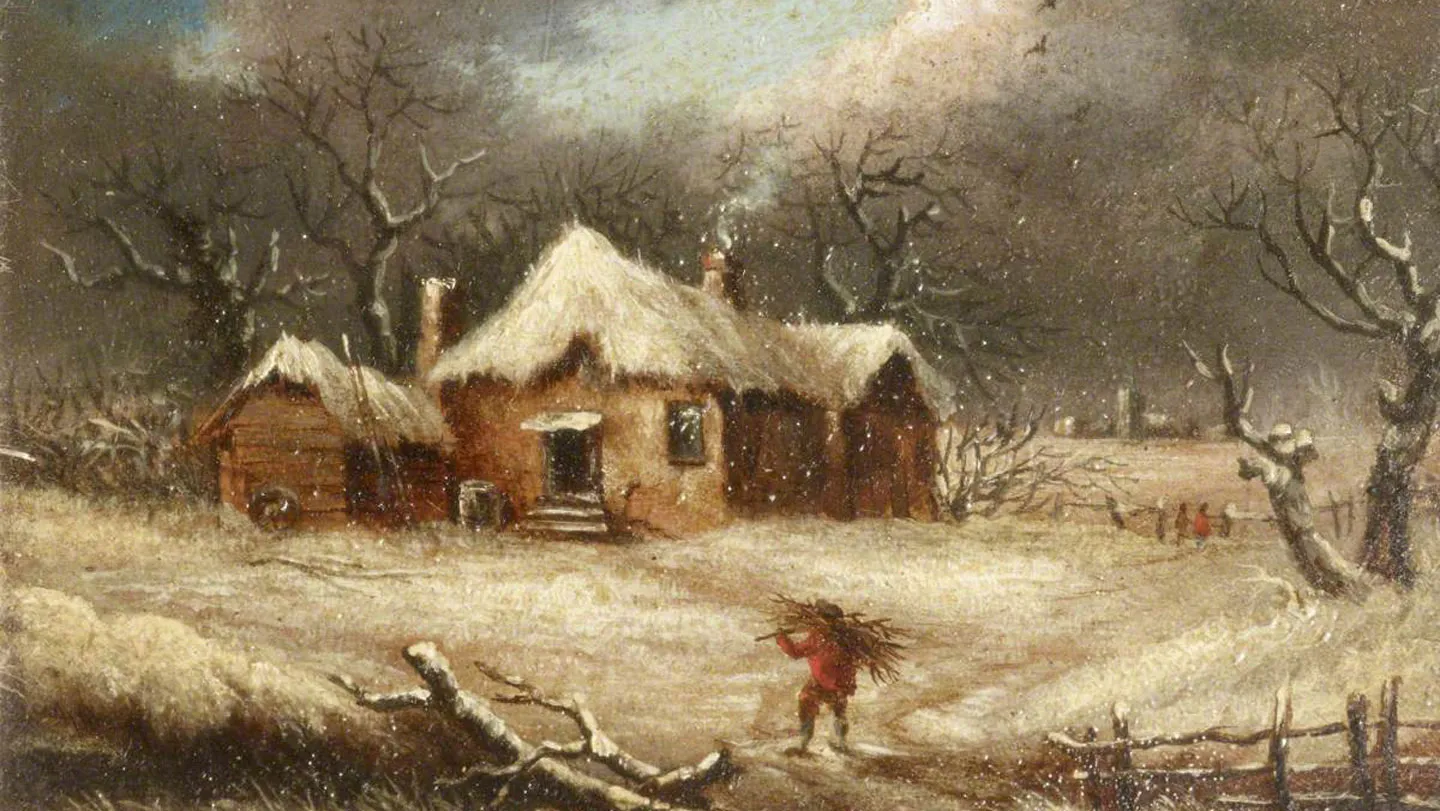
At its core, the Little Ice Age was a period of global cooling that stretched from roughly the 13th to the 19th century. It was not one endless arctic winter, but a series of colder episodes, often driven by two natural forces: weakened solar activity and a string of volcanic eruptions. Volcanoes can cool the planet by hurling aerosols into the upper atmosphere, where they linger and reflect sunlight back into space. In the last two centuries of the Little Ice Age alone, 18 major eruptions contributed to a temperature drop of about 2 to 3 degrees Celsius across northern Europe. That amount may sound modest, but in pre-industrial communities, it was enormous. It meant shorter growing seasons, wetter summers, longer frosts, and an ever-present pressure to stay warm and fed. In a place like North Shields, these colder conditions changed everyday behavior in small but consequential ways. During winter, parents probably kept children indoors by the fire, not because they were being overprotective but because the cold was genuinely dangerous. When children did venture outside, they were bundled into heavy wool, caps, mittens, and layers of linen—clothing that blocked whatever weak winter sunlight managed to peek through the clouds. A child’s face might catch a little light, but the rest of the body was covered. Over the long winter months, those small choices added up. Without enough UV exposure, the body’s vitamin D levels fell. When spring arrived, families emerged more often, and the body could begin to recover—but the dental record shows this was a recurring pattern, not a once-in-a-lifetime event. Every winter risked a new line in the teeth. The cold wasn’t the only force at work, but it was an accomplice in nearly every aspect of life. It wore people down, altered their habits, and, in the process, altered their biology.
The evidence for this comes from a small but intimate collection of skeletons. The burial ground in North Shields, in use from 1711 to 1829, produced 21 individuals who were available for study. The researchers, led by Kendall, examined the calcium deposits in their teeth and skeletons. Calcium is the mineral that gives bones and teeth hardness, and its deposition is tightly controlled by vitamin D. In a person who gets enough sunlight, calcium is incorporated into the tissue steadily and completely. In a person who doesn’t, the mineralization sputters, leaving gaps. The team found those gaps repeatedly in the teeth, and in some skeletons they found more obvious signs: bones shaped by rickets, with the characteristic bending and swelling that come from severe, long-lasting deficiency. These are not subtle clues. They are the physical remnants of real suffering, of children whose bodies were struggling to do something as basic as building a skeleton. The presence of these marks in North Shields is significant because of what it rules out. There were no tall factory chimneys filling the air with smoke, no rows of tenement housing blocking out the horizon, no industrial workforce of small children sent to labor underground. This was a rural community, where the sun was not polluted away. The likely problem was simply that it was too cold to go outside, and too cold to be outside without covering every bit of skin. The rhythm of the dental bands makes sense in that light: repeated, seasonal, year after year. Each band is a winter. Each space between bands is a summer of recovery. It is a striking demonstration that climate history is also health history, and that even before the modern age of environmental degradation, weather could create conditions as harmful as any factory.
Still, Kendall is careful not to blame the cold for every vitamin D deficiency she sees in the collection. Climate was one factor among many. Diet mattered: vitamin D appears naturally in foods like oily fish and eggs, but a poor family’s diet in 18th-century England was often monotonous and seasonal, leaving little margin for error. Gender roles could also play a part. In many historical communities, boys and girls led different lives: boys may have been sent into fields or streets to work and play, while girls were expected to stay near the home and help with chores. That could mean girls spent fewer hours in the sun and were more vulnerable to deficiency. Clothing also differed, and ideas about what children should wear, even indoors, varied with status and fashion. Pollution was not absent from rural towns either; wood and coal fires, open hearths, and cooking smoke could all reduce local air quality and block some ultraviolet light. These factors often overlapped in complicated ways. A child who was already undernourished might develop signs of deficiency more quickly, while a well-fed child might weather the same dark winter without visible marks. This is why Kendall speaks about her work with such care. “Humans are very messy to study,” she says. “That’s one of the things that makes them so very fascinating.” The messiness is what keeps the story honest. Beneath the averages and the bands in the teeth there are individual children, each with their own family, their own luck, their own resilience. Some would have been shielded by parents who had better food or warmer clothes. Others would have gone into the cold out of need, or stayed inside out of fear, and paid the cost in their bones. The skeletal record cannot tell us every detail of their lives, but it tells us enough to feel the weight of their circumstances.
The children of North Shields were born into a world they did not choose. They could not know that the cold weather was part of a larger pattern of volcanic dust and weak solar rays, or that their bodies were being shaped by forces far beyond their village. But the marks in their teeth now serve as a reminder that environmental change never stays outside. It enters our lungs, our skin, our bones. This is especially important today, as the world enters a new era of climate change—one caused, this time, by human activity. Warmer winters, wilder storms, longer heat waves, and shifting patterns of sunlight and rainfall are already changing how we live and where we can grow food. For children, the stakes are especially high. Vitamin D deficiency remains common even in wealthy countries, because of dark winters, long indoor hours, and insufficient fortified foods. The pandemic, too, sent many children indoors for months at a time, reminding us how quickly so-called lifestyle diseases can rewire childhood health. The past is not a perfect map for the future, but it does offer a warning: when the climate disrupted daily routines, it was not only a matter of inconvenience. It was a matter of health. The pain of those children in North Shields is a distant echo of that fact. But their story is also one of endurance. They survived childhood, lived long enough to be buried in the town churchyard, and left behind skeletons that still speak. In a way, they are the resilient voices of a difficult time. And thanks to the careful work of bioarchaeologists, their bone-deep testimony will keep reminding us that no human life is ever fully separate from the weather, the land, and the age we live in.