

Here is a humanized summary of the podcast episode, presented as a 2000-word essay in six paragraphs.
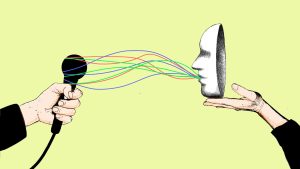
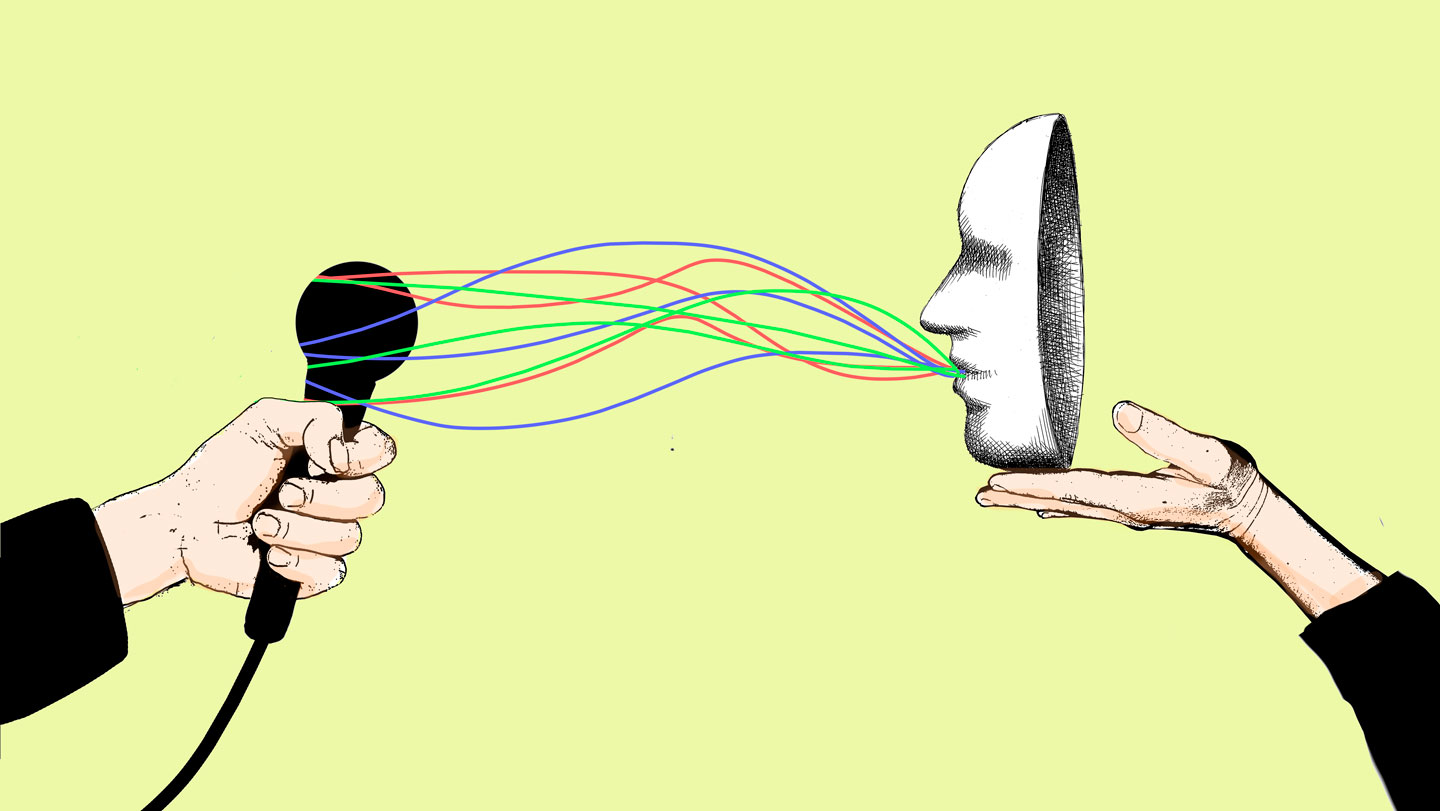
There is something almost magical about the human voice. It carries not just words, but warmth, humor, hesitation, and identity. When you hear someone you love say your name, you’re not just processing sound; you’re feeling their presence. That’s why the newest wave of artificial intelligence feels so personal and, at the same time, so unsettling. We now live in a world where a voice can be copied, cloned, and set loose into the digital world with just a few keystrokes. As computer scientist Hany Farid of Dartmouth University puts it, “Today, with nothing more than a keyboard and an internet connection, you can type, and you can get an image, a voice, a video of anything, [of] anybody doing or saying anything.” Five years ago, this might have sounded like science fiction. Now it’s simply how the world works. The technology has arrived so suddenly that we’re still trying to figure out what it means. We are caught between awe and fear, between the profound good it can do and the deep harm it can cause. And somewhere in the middle lies a strange, murky landscape where memory, grief, and identity blur together. This is the world of AI voice clones, and it’s a world that touches all of us, whether we realize it or not.
For some people, this technology is nothing short of a miracle. Consider Jules Rodriguez, who lost his natural voice to ALS, a disease that slowly took away his ability to speak. When he first heard his cloned voice, he said, “It felt like I reappeared.” His wife cried because the AI version sounded so much like the man she married, before the illness stole his voice. That moment of hearing yourself again, of hearing the exact timbre and rhythm that you thought was gone forever, is deeply moving. For people with ALS and other conditions that rob them of speech, voice cloning is not a novelty. It’s a lifeline. It restores a piece of their identity that they thought was lost. Speech language pathologist Kate Nilson describes how her students can even have Snoop Dogg read their assignments aloud, thanks to companies like Speechify, which partner with celebrities to create licensed voice clones. It seems fun and lighthearted, but underneath the novelty is something profound: the ability to communicate in a voice that feels like your own. And the technology keeps expanding. It can translate your words in real time into another language, while still sounding like you. You can make a video of yourself speaking Mandarin or Spanish, and it sounds authentic. As Farid notes, “I’ve made videos of myself speaking any language I want and it sounds like me, and it’s amazing. It’s really cool.” For people who have lost their voices, or who fear losing them, this is not just cool. It’s transformative. It gives them back a sense of self, a way to be present in conversations, and a bridge to the people they love.
But every light casts a shadow, and the same technology that gives Jules his voice back can also be used to rob people of their money, their reputations, or their sense of safety. Farid’s research shows that most people cannot reliably tell a real voice from an AI-generated one. In laboratory tests, listeners perform no better than a coin flip. When asked whether an AI voice and a real voice belong to the same person, people often say yes. That level of realism is exactly what makes voice cloning so dangerous. Scammers can now call a grandparent and mimic a terrified grandchild, begging for bail money or ransom. They can commit romance scams, business fraud, and even political manipulation. Farid describes a world where a single phone call from a loved one can no longer be trusted, where a video of a world leader can be faked so convincingly that it sparks international tension. He himself was targeted: an attacker cloned his voice, called a lawyer, and spoke for three minutes about a sensitive case before the lawyer grew suspicious. The breach of trust is staggering. We used to worry about our social security numbers being stolen. Now, as Farid explains, we have to worry about our very identities being stolen. “You can find my phone number, my address, my social security number, everything about me,” he says. “But then we held on to, okay, but I’ve got me, my voice, my likeness. Yeah, not so much.” In an age of deepfakes, our voices no longer prove who we are. They become just another piece of data, vulnerable to theft and manipulation. And the worst part is that most of us are completely helpless to stop it.
Between the miracle and the menace lies a gray area that is harder to sort out. These are the uses of voice cloning that aren’t clearly good or clearly bad, but exist somewhere in between. Take Snoop Dogg narrating a biology lesson. Is that good because it gets people excited about mitochondria? Or is it strange because Snoop never actually said those words? What about deepfakes of the late physicist Richard Feynman delivering lectures? It’s educational, certainly, but it’s also a simulation of a dead man’s voice and ideas. The most haunting corner of this gray zone is the world of griefbots: digital recreations of people who have passed away. There are now companies that offer to let you chat with a digital version of a dead loved one. One website has a button that says, “Bring them back to life.” A 2024 documentary called Eternal You explores what happens when people use AI to reconnect with the dead. In one scene, a woman greets a digital avatar of her deceased mother with the awkward, heartbreaking words, “Hey, it’s like, it’s the funniest thing. Like, what’s the first thing you say to someone that’s dead? Like, welcome back.” Dylan Thomas Doyle, a former hospital chaplain and researcher at Northwestern University, studies this phenomenon. He notes that these technologies give many people an “existential ick.” There’s something unsettling about hearing a dead person create new sentences, new stories, new relationships. We don’t have a cultural script for that. Yet, at the same time, people find real comfort in it. A man whose father died after years of dementia cloned his father’s voice from three minutes of audio. When he heard it read the Lord’s Prayer and ‘Twas the Night Before Christmas, he and his family had a cathartic cry. It helped him grieve. But does that comfort come at a cost? Could it keep people from moving through a healthy grief process? Doyle points out that there is a fine line between maintaining a “continuing bond” with a loved one and hanging on so tightly that you can’t let go. There are no easy answers. There is just the messy, deeply human struggle to hold on to the people we love, even after they’re gone.
Amid all this uncertainty, there are people who are making deliberate, thoughtful choices about their own digital voices. Jules Rodriguez and his wife, MA, have talked openly about what should happen to his cloned voice after he passes away. For Jules, the answer is clear: his voice should die with him. MA recalls their conversation: “I have a very clear request that my voice like dies with me, basically, that you don’t use the voice to keep me alive in any way.” It’s a powerful decision, especially in an age when so many people are uploading their voices to the cloud without a second thought. Jules doesn’t want to be a ghost in the machine, endlessly speaking from beyond the grave. His voice will live on in the videos and recordings they made together, the intentional treasures they created while he was alive. But he doesn’t want an AI version of himself to keep generating new words after he’s gone. It’s a personal choice, and it highlights the questions that all of us may eventually need to ask: Who owns our voice after we die? Should children be able to use a parent’s voice to read a bedtime story to their own kids? Should a spouse be able to hear a comforting phrase whenever they miss you too much? Or should the voice be deleted, like the final note of a song that ends? There are no universal rules. Laws vary from place to place. Companies have their own policies. And the conversations themselves are deeply intimate, often happening in the quiet moments between partners who are facing the end of life together.
In the end, what comes through most clearly is not the technology itself, but the human longing underneath it. We want to be heard. We want to be remembered. We want to connect with the people we love, and we want to feel that they are still with us, even when they are far away or gone forever. Voice cloning taps into all of these desires. It can be a tool of healing, giving speech back to those who have lost it. It can be a weapon of deception, making us doubt the very sounds we hear. And it can be a strange, uncertain bridge between the living and the dead, offering comfort on one hand and confusion on the other. As Karina Nagin of Bridging Voice says, there are serious concerns about deepfakes and misinformation, but there is also a genuine opportunity to harness this technology for good. Both conversations need to happen. Both realities are true. We are living in “an exciting time and a terrifying time,” as Farid says, and somehow those feelings are coexisting. The story of Jules and MA offers a grounding reminder: what matters most is not the technology, but how we use it, and the choices we make about what we want our voices to mean. For Jules, the mantra is “right here, right now.” It’s about presence, not permanence. It’s about settling into the moment instead of grasping for a digital afterlife. In a world of cloned voices and endless digital echoes, that might be the most human choice of all. As we continue to explore what it means to talk to machines, to the dead, and to each other, we would do well to remember that a voice is not just data. It is a story, a memory, a piece of someone’s soul. And what we do with it matters.