


Paragraph 1
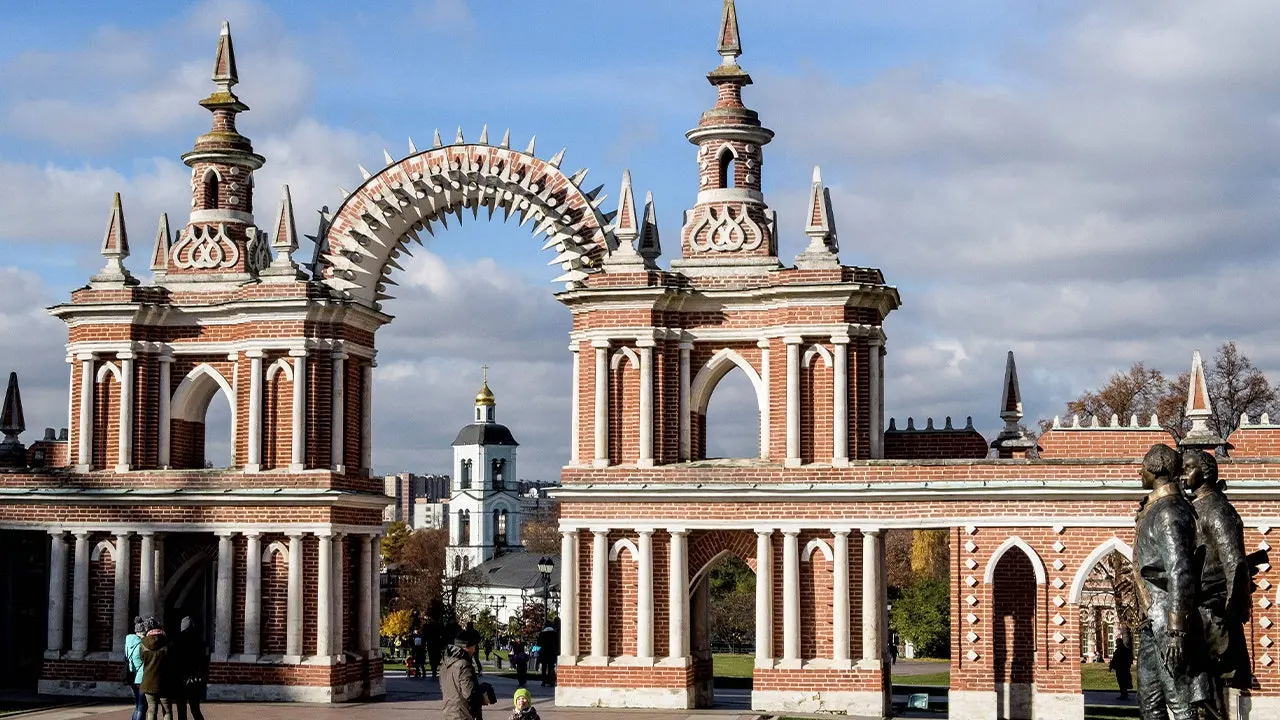
Imagine an ordinary Saturday in Moscow, the last day of October, when the city is slowly easing into the rhythms of autumn. Families with strollers wander through vast parklands, couples take selfies in front of grand palaces, and tourists from across the world marvel at the ornate beauty of a museum that once belonged to Catherine the Great. It is on such a day that a sudden, jarring alert from the U.S. Embassy cuts through the ordinary. The embassy issued a stark security warning, one that read with chilling clarity: there was a credible threat of a mass casualty event that very day, October 31, at the Tsaritsyno Museum Reserve. The address—Dolskaya Ulitsa 1, Moscow, Russia 11569—was printed like a solemn headline, turning a familiar destination into a place of potential danger. For the people who live nearby, for the visitors who had planned a pleasant afternoon, this was a moment of unnerving reality. The embassy did not offer many details, only a blunt command: avoid the area, stay alert, and steer clear of crowds. There was no way to know if this was an overabundance of caution or a genuine, imminent threat. Either way, the message landed like a stone in still water, spreading ripples of anxiety through a population already weary of war, uncertainty, and the constant hum of geopolitical tension. In a city where grand architecture stands as a testament to resilience, the sudden insistence on personal security plans and charged cell phones served as a sobering reminder that beauty and danger can coexist in the same space.
Paragraph 2
The advisory itself was simple, yet its implications were deeply unsettling. The U.S. Embassy encouraged everyone in the Moscow area to keep cell phones and other batteries charged—a small, practical act that speaks volumes about the kind of emergency one might face. It told people to stay aware of their surroundings, to review their personal security plans, and to avoid the Tsaritsyno Museum area entirely. For many, this kind of language is familiar from travel advisories in conflict zones, but to hear it about a beloved public park in the heart of the Russian capital is different. It transforms abstract geopolitical conflict into a tangible, personal danger. The embassy also noted that the U.S. government was coordinating with appropriate Russian authorities on a response. That phrase, diplomatic and measured, hints at the delicate, often tense relationship between Washington and Moscow, even in moments when their interests align around public safety. For ordinary Russians, many of whom have grown skeptical of official statements from all sides, the alert may evoke mixed feelings. Some will appreciate the transparency; others may see it as another instrument of political pressure. But for a parent who planned to take their child to see the museum’s famous fountains, or for an elderly woman who walks her dog along those paths every morning, the message is not a policy statement—it is a warning to change plans, to take a different route, and to hold their loved ones a little closer. The admonition to avoid crowds particularly stings, because community, mingling, and public life are the very things that make a city feel alive.
Paragraph 3
The Tsaritsyno Museum Reserve is not just any destination; it is a living piece of Russian history, a place where the past feels both grand and intimate. Founded in 1775 as a summer residence for Catherine II, the estate was designed to be a retreat from the pressures of court life, a whimsical architectural fantasy of brickwork, towers, and landscaped gardens. Over the centuries, it has weathered revolutions, neglect, restoration, and rediscovery. Today, it stands as one of Moscow’s most beloved cultural treasures, drawing more than two million visitors in 2022 alone, according to Moscow’s deputy mayor Natalya Sergunina. But the museum’s official numbers tell only part of the story. The surrounding grounds, as noted by The Art Newspaper, are even more heavily used by local citizens who come not to tour exhibitions but to jog, cycle, walk their dogs, and push their children on swings. In many ways, Tsaritsyno is the neighborhood’s backyard—a place where ordinary life unfolds against a backdrop of eighteenth-century splendor. The idea that such a place could be named in a mass casualty threat feels like an attack not just on a physical location, but on the very notion of normalcy. People who have picnicked there, celebrated birthdays there, or simply sat on a bench to read a book will find it hard to reconcile the serene image preserved in their memories with the urgent, alarming words of the embassy alert. It is a reminder that terror, real or threatened, seeks to steal not only lives but also the simple joys that make life worth living. When a beautiful place becomes associated with fear, something precious is lost, even if no harm occurs.
Paragraph 4
This security alert did not emerge in a vacuum. It came at a moment when the war between Russia and Ukraine continues to escalate, and when each new day seems to bring fresh volatility. Just the day before the alert, Russian drone and missile strikes in Ukraine had killed at least 27 civilians, according to the Wall Street Journal—a grim reminder that the conflict is exacting a brutal toll on ordinary people far beyond the front lines. And in a separate, seemingly contradictory development, President Donald Trump had announced an immediate energy ceasefire between Russia and Ukraine, a fragile arrangement designed to pause attacks on infrastructure. But that agreement was already fraying. On Friday, Ukraine struck an oil refinery in southern Russia, ending a two-week pause on energy infrastructure attacks that had been brokered by the former president. The sequence of events—ceasefire announced, pause broken, missiles falling, warnings issued—paints a portrait of a conflict that is both predictable and chaotic. For the U.S. Embassy to issue a mass casualty warning in Moscow under such circumstances is not an isolated anomaly; it is a reflection of the broader fog of war. When diplomats and intelligence agencies pick up pieces of information, they are often forced to act on incomplete data, knowing that the cost of silence could be catastrophic. This is why the alert to avoid Tsaritsyno feels so urgent: it is part of a larger, desperate effort to protect lives in a region where the unthinkable has become routine. Every bombed refinery, every civilian casualty, and every whispered threat adds to an atmosphere of collective anxiety that no ceasefire agreement can instantly erase.
Paragraph 5
From a diplomatic perspective, the issuance of a public security alert is a significant act. Embassies are generally cautious about sharing information that could be misinterpreted or that might strain relations with the host country. By going public, the U.S. Embassy in Moscow signaled that the potential threat was serious enough to warrant transparency, even at the risk of offending Russian officials or fueling propaganda. The statement carefully noted that the U.S. government was coordinating with appropriate Russian authorities on a response—a formulation that acknowledges the need for cooperation while leaving unspoken the deep mistrust that pervades bilateral relations. For American citizens living in Moscow, the alert might prompt a rush to check their own safety plans, to reach out to family members, and to keep their phones close. For Russian authorities, such alerts can be a double-edged sword: they may appreciate the warning, but they also face pressure to respond publicly, to deny or downplay the threat, or to accuse the United States of spreading panic. In the information war that accompanies the physical one, every statement is scrutinized, every word parsed for hidden meaning. Fox News Digital reached out to the U.S. Embassy for further information, but the story remained a developing one, with more questions than answers. What exactly was the threat? Was it specific or general? Had anyone been detained? Would the museum be closed? In the absence of concrete facts, rumors and speculation often fill the void, amplifying fear. For ordinary people, the only tangible guidance remains the embassy’s simple, blunt advice: avoid the area, stay alert, keep your batteries charged, and have a plan. It is not comfort, but it is something—a set of small, actionable steps in a world where so much feels beyond individual control.
Paragraph 6
As the hours pass and the alert becomes part of the day’s news cycle, one cannot help but think about the people who will remember this Halloween for the wrong reasons. The children who were supposed to see the golden leaves of Tsaritsyno’s park, the photographers who had hoped to capture the play of light on its palaces, the elderly couples who enjoy a slow stroll through its alleys—all of them have been touched by an invisible threat. Whether or not anything ultimately happens, the warning has already achieved one thing: it has forced people to look at a familiar place with suspicion, to see danger where they once saw beauty. This is the insidious nature of such threats, real or imagined. They plant seeds of fear that can outlast any particular event. Yet there is also a quiet resilience in the human response. In Moscow, as in any city, people will continue to live their lives, to love, to work, to find joy in small moments. They may avoid Tsaritsyno for a while, but they will not stop living. The same can be said for the people of Ukraine, who have endured far worse for months on end, and whose courage under fire has become a defining story of our era. Ultimately, security alerts like this are a reminder of how fragile peace truly is, and how easily the ordinary can be shattered. But they also remind us of our shared humanity—the desire for safety, the love of culture and community, and the hope that one day, no one will need a warning to avoid a beautiful museum on a crisp autumn afternoon. Until then, we hold our loved ones close, we keep our phones charged, and we hold our breath, hoping that vigilance will be enough to keep tragedy at bay.