


The quiet ritual of a guilty plea is one of the most consequential moments in the American justice system—a moment where a defendant stands before a judge, answers a few careful questions, and seals a fate that will follow them for the rest of their lives. But according to a sweeping new report from the Republican-led House Judiciary Committee, prosecutors across New York City’s five boroughs have been quietly rewriting the script of that ritual for a very specific group of defendants: noncitizens. The accusation is stark and unsettling. The committee, chaired by Rep. Jim Jordan of Ohio, argues that the city’s district attorneys have systematically engineered plea deals and conviction records specifically to shield undocumented immigrants and other noncitizens from deportation. This is not a matter of leniency in sentencing, the report insists, but of calculated manipulation—deleting weapons from written case histories, scrubbing the ages of child victims, and even crafting entirely fictional crimes so that foreign nationals can plead guilty, pay a penalty, and remain in the country indefinitely, all while appearing to have been held accountable. The human tension beneath this legal maneuvering is immense: for immigrant families, it may mean staying together; for crime victims and law enforcement, it may mean watching justice become a bureaucratic shell game.
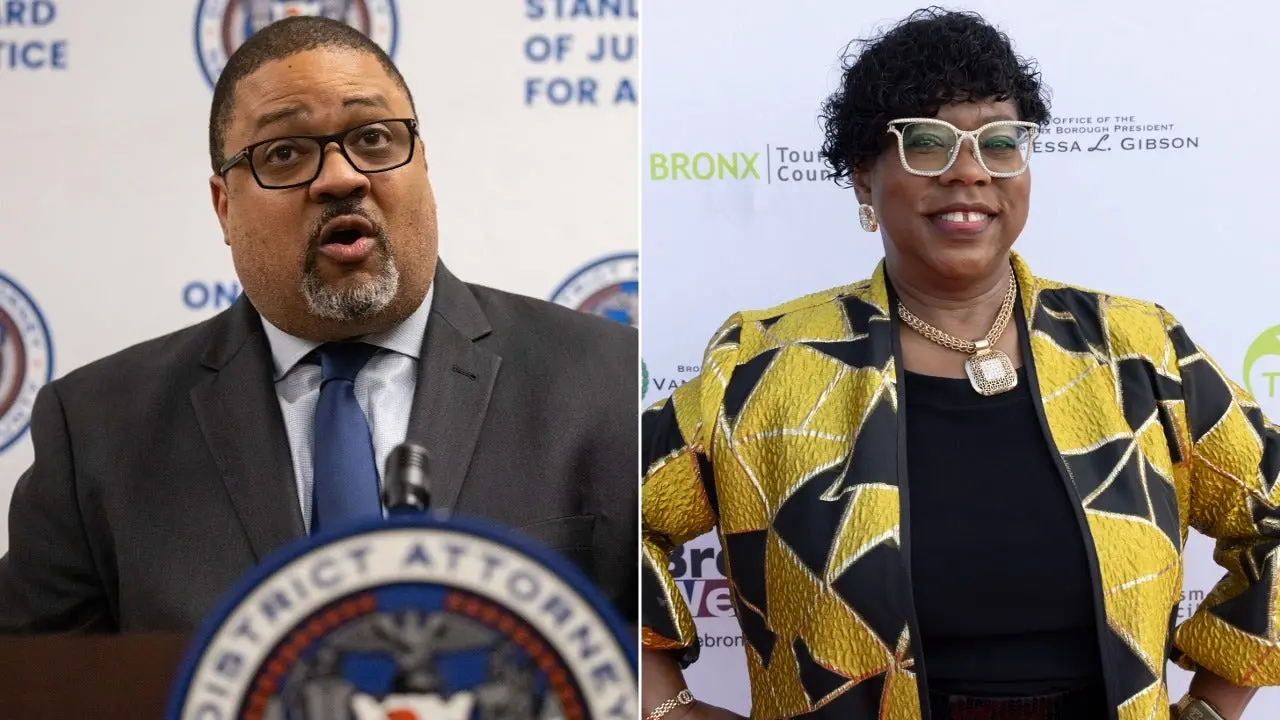
The most damning allegations in the report are aimed at the Bronx, where District Attorney Darcel Clark has held office since 2016. According to internal materials obtained by the committee, the Bronx DA’s office did not merely allow immigration-conscious plea bargaining; it institutionalized it, training new prosecutors in the art of concealing the very facts that would trigger deportation under federal law. In cases of domestic violence, prosecutors were reportedly instructed to erase the relationship between the defendant and the victim, transforming an intrafamily assault into an anonymous street altercation in the legal record. In cases involving crimes against children, they were told to leave the child’s age out of the charges entirely, no matter how central that detail was to the offense. If a firearm was recovered in a stop, the record would bend to omit it. The logic was simple: the Immigration and Nationality Act treats certain crimes as automatic deportation triggers, and if a conviction record does not clearly reflect those triggers, federal immigration authorities have little to hold onto. The report’s most striking example, however, is the practice of indicting noncitizens for “attempted reckless assault”—a charge the committee describes as legally impossible, since one cannot intentionally attempt to commit a reckless act. Yet the state’s highest court upheld such guilty pleas this year, and data from the Immigrant Defense Project shows 289 such convictions citywide over the last decade, including 50 in the Bronx alone. A plea to impossible crime may not change the jail sentence, but it keeps the immigration system from recognizing what really happened.
The pattern, the report charges, is not confined to the Bronx. Across the East River in Queens, District Attorney Melinda Katz’s office has reportedly taken a similar approach, with internal communications showing prosecutors bragging about designing pleas that were, in their words, “immigration safe” while still securing jail time. A May 2026 email cited in the report features a Queens prosecutor explaining to an NYPD detective that the office had arranged exactly such a deal—one that satisfied the court’s demand for punishment while slipping under the radar of federal deportation statutes. The office’s staff were instructed to “exercise extreme caution” whenever a defendant might be a noncitizen, consulting an in-house immigration specialist before striking any agreement. In Manhattan, District Attorney Alvin Bragg was cited for a 2022 memo that directed prosecutors to actively avoid immigration consequences for the entire spectrum of misdemeanors and for any felony case where they did not expect a defendant to receive jail time. When the committee confronted Bragg’s office, the response was notably quick: the policy was described as “outdated” and in the process of being revised to restore prosecutor discretion. Even in Brooklyn and Staten Island, the report says, analogous techniques were found. Taken together, the implication is that the five most powerful local prosecutors in the nation’s largest city have been working from an unwritten shared playbook, one that treats the immigration system not as a partner in public safety, but as an enemy to be outmaneuvered through creative paperwork.
To understand the gravity of these findings, one must grasp the staggering scale of the city’s refusal to cooperate with federal immigration authorities. The report notes that between July 2018 and June 2026, the NYPD declined a total of 20,255 immigration detainers—the formal requests from Immigration and Customs Enforcement asking local jails to hold an arrested noncitizen for up to 48 hours so federal agents can take them into custody. The city’s Department of Correction declined every single one of the 2,852 detainers it received during that same period, leaving ICE agents with no chance to collect individuals who had already been arrested and were sitting in city jail cells. Some of this is long-standing sanctuary-city policy, which mayors of both parties have defended for years as a way to encourage immigrant communities to report crimes without fear. But the committee highlights a striking shift in timing: nearly half of all the declined detainers—almost 10,000—were lodged between July 2025 and June 2026, a sharp spike indicating that the second Trump administration has pursued arrested noncitizens with far greater aggression, and that New York City’s officials have, in turn, pushed back with greater determination. The result is the sort of standoff that plays out in dark booking rooms every night: a local officer has a suspect, federal agents want that suspect, and a wall of policy and political will stands between them.
Beneath the legal jargon and committee findings lies a genuinely thorny human and moral conflict. The prosecutors involved would likely argue that they are protecting lives, not coddling criminals—that an undocumented immigrant charged with a minor drug offense or a shoplifting charge could face a life-shattering deportation for conduct that a citizen would answer for with probation. They might point to the family left behind, the children who are citizens, the working parent who made a mistake and paid the price in court, only to be unmoored from their entire existence by an ICE officer waiting outside the courthouse door. Their strategy, in this light, is a crude but earnest attempt to make the punishment fit the crime as they see it, to prevent the federal government from using their courtroom as a deportation trap. But the committee’s report counters with a darker portrait: one of public safety undermined by a culture of concealment. When a prosecutor scrubs the fact that a defendant beat his wife or molested a child from the official record, they are not merely protecting an immigrant; they are lying about the nature of the crime, distorting the very meaning of justice for the victim, and creating a clearinghouse of deceptive records that any future court, employer, or parole board may rely upon. The charge of “legally impossible” crimes is the sharpest needle—if the system requires a fictional offense to get a just result, the committee argues, perhaps the system itself has ceased to function honestly.
Politically, the report lands in the middle of an already fierce national fight over sanctuary jurisdictions, and House Republicans are clearly positioning it as ammunition for legislation that would strip state and local governments of their power to restrict cooperation with federal immigration authorities. In March, the House Judiciary Committee advanced the Shut Down Sanctuary Policies Act, a bill that has since stalled on the House floor but that advocates on both sides recognize as a new battlefront in the immigration wars. For Republicans, the report offers a visceral, case-by-case indictment of what happens when local elites choose ideology over law. For Democrats, it is an attempt to criminalize compassion, to force local police and prosecutors to become arms of a deportation machine they consider cruel and counterproductive. The five district attorneys have largely remained silent, though Bragg’s office has already sought to distance itself from the policies it adopted only a few years ago. What remains unresolved is the deeper question the report begs: can a city honestly administer justice when it feels compelled to hide aspects of a crime to protect one class of defendants? The people who man the courts, the victims who seek vindication, and the millions of ordinary New Yorkers who just want safe streets are left watching two levels of government play tug-of-war with their lives and their safety. Neither side is entirely wrong, and neither is entirely willing to admit that the other makes an uncomfortable point—which is perhaps the truest and most human tragedy of this entire, messy crisis.