


The streets of Tel Aviv tell the story before a single ballot is cast. Campaign banners bearing the stern or smiling faces of Israel’s political leaders drape across highway overpasses and cling to shop windows, flapping in the warm Mediterranean breeze. In coffee shops, in crowded living rooms, and in the endless family WhatsApp threads, the same anxious question keeps surfacing: Will Benjamin Netanyahu still be prime minister when this is all over? Israelis are going to the polls on Tuesday, and despite a campaign filled with slogans and promises, the country is bracing for a tightly contested race that could once again deliver political paralysis. Neither side seems assured of a clear path to power, and the outcome may remain uncertain for weeks. But what makes this vote unlike any other in Israel’s recent history is not simply the closeness of the race — it is that for millions of Israelis, this election has become a deeply personal reckoning. It is a referendum on accountability, on who should bear the weight of the worst day the country has ever known. On October 7, 2023, Hamas terrorists breached the border and carried out a massacre that killed roughly 1,200 people, shattering the nation’s sense of security and leaving wounds that have not come close to healing. Since that morning, the question of whether Netanyahu should accept personal responsibility for the security failures has followed Israelis everywhere. The prime minister, a man who has dominated the country’s politics for decades, has resisted every call to establish an independent state commission of inquiry into the disaster, instead pushing for a politically appointed investigation that critics say would be toothless. For many bereaved families, that refusal is an insult layered on top of unspeakable grief, and they have turned this election into a test of national conscience.
The rawest expression of that pain has come from the cemeteries and memorial gatherings that have marked the long months since the massacre. Shir Shai, standing over her brother’s grave on the anniversary of his death, delivered a message that cut straight through the political noise. Her brother, Yaron Shai, was an Israeli soldier killed while battling Hamas terrorists on that terrible morning. “If you nevertheless decide to vote again for the man who brought disaster upon us and his accomplices, I have one personal request: Don’t come here anymore,” she said, her voice carrying a mixture of fury, grief, and defiance. She reminded voters they had twenty days to “be part of the process of putting things right,” warning that anyone who chose to “perpetuate the failure rather than honor the fallen” would be better off staying home next year. The plea resonated across social media, living rooms, and dinner tables, forcing many Israelis to confront their own choices at a painful, personal level. But the bereaved are not a single voting bloc, and the tragedy has pulled families in opposite directions. Other parents and siblings who lost loved ones on October 7 have reached the opposite conclusion, crediting Netanyahu with standing firm through years of war on multiple fronts — in Gaza, in Lebanon, under the shadow of Iranian missile attacks — and pointing out that the military and intelligence establishment failed to anticipate the Hamas assault long before the prime minister ever made a wartime decision. They argue that replacing the leader in the middle of a storm would be a reckless gamble. And so the national debate has fractured along lines of grief, loyalty, and fear, with both sides convinced the other is betraying the memory of the fallen.
This polarization did not begin on October 7, and long-standing wounds run underneath the current crisis. In the months before the attacks, hundreds of thousands of Israelis poured into the streets to protest Netanyahu’s proposed judicial overhaul, a sweeping plan that critics said would gut the Supreme Court’s authority and undermine Israel’s democratic foundations. The protest movement spread into the military itself, where reservists threatened to suspend their volunteer service, triggering alarms about the country’s battlefield readiness. Some analysts have since argued that the internal turmoil projected weakness to Israel’s enemies; others insist the link is overstated and unproven. What is certain is that the divisions have only widened since the massacre, transforming Tuesday’s vote into something raw and intimate, sometimes even painful. Political allegiances have strained friendships and split families right down the middle. A sibling’s sticker of Bibi on a phone case, a parent’s solemn defense of the opposition, a cousin’s angry late-night post about government negligence — these small things now carry enormous weight. The national conversation has been reduced to a simple, binary question: Are you for Netanyahu, known to everyone as Bibi, or against him? There is hardly any room left for nuance or middle ground, and the atmosphere at family gatherings can turn icy within minutes. Israelis who once prided themselves on loud, rowdy political arguments now find themselves avoiding the subject altogether just to keep the peace. This is the emotionally charged landscape into which the election has arrived, with millions of voters carrying grief, anger, and hope into the polling stations.
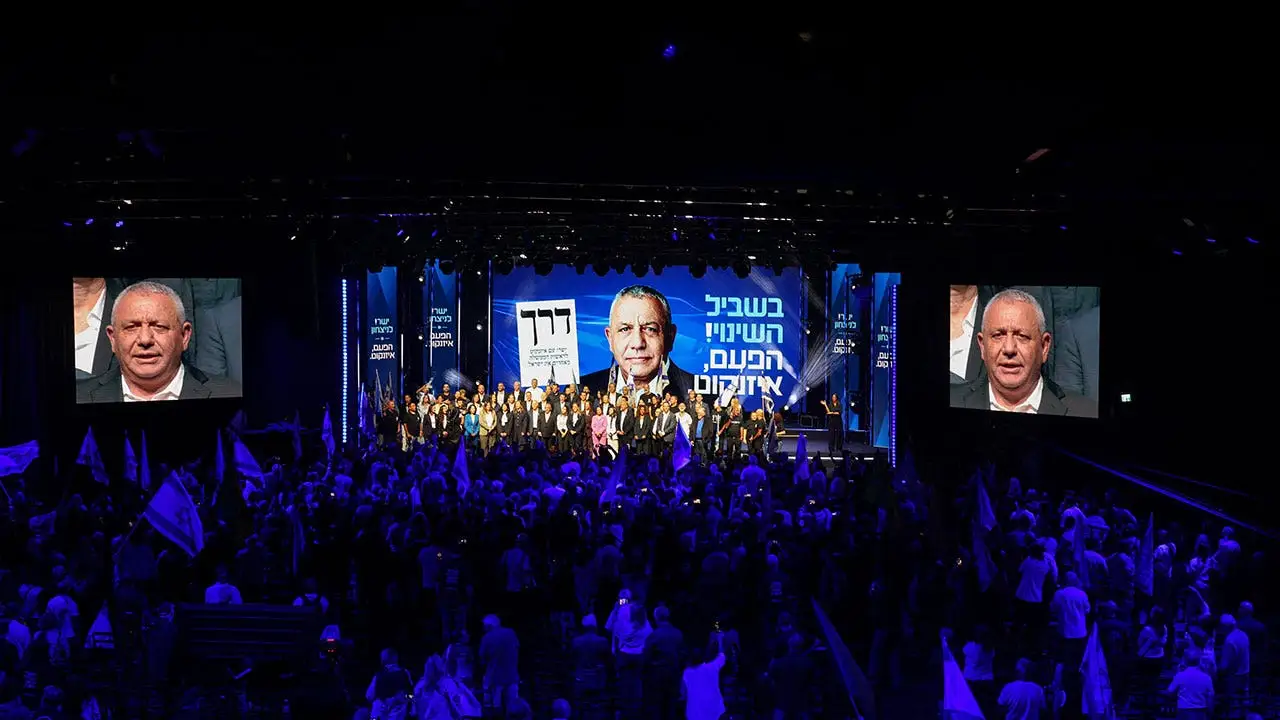
The campaign itself has been bitter, even by Israeli standards, and the rhetoric has grown sharper as Election Day approached. Just two days before the vote, Netanyahu shared an AI-generated image of a massive nuclear explosion over Tel Aviv, warning Israelis of the existential threat posed by Iran if they choose a leader who cannot stand up to Tehran. The image was a stark and unsettling illustration of how fear — both real and manufactured — has come to define the final stretch of the race. Concerns now reach beyond the outcome of the vote itself. Israeli police are preparing for possible unrest once the polls close, and experts have warned about the potential for disputes over the legitimacy of the results, with some drawing uncomfortable parallels to the January 6, 2021, attack on the U.S. Capitol. It is an extreme scenario, but one that no longer seems entirely unthinkable in a country this tense. The opposition, meanwhile, shares a common ambition to unseat Netanyahu but remains deeply fractured over how to govern afterward. Gadi Eisenkot, a former chief of staff of the Israel Defense Forces who leads the centrist Yashar party, has positioned himself as a steady, measured alternative. Naftali Bennett, the former prime minister who once managed to topple Netanyahu, is attempting a political comeback on a joint ticket with former leader Yair Lapid. Other figures circle the same limited pool of votes — Avigdor Lieberman, Yair Golan, and the right-wing populists Itamar Ben-Gvir and Bezalel Smotrich — and every fraction above the electoral threshold could tip the entire balance of power in Jerusalem.
Understanding what happens next requires a glimpse into Israel’s peculiar political machinery, which often baffles outside observers and sometimes confuses Israelis themselves. Voting takes place on Tuesday, October 27, with most polling stations open from 7 a.m. until 10 p.m. local time, which corresponds to 3 p.m. to 6 p.m. Eastern Time. Election Day is a national holiday, and eligible voters must be Israeli citizens at least 18 years old. The system is strictly parliamentary: Israelis cast their ballots for a party list, not for an individual candidate for prime minister. The Knesset, the country’s 120-seat parliament, is then filled based on each party’s share of the national vote. To enter parliament at all, a party must clear a 3.25 percent threshold, and failing to do so can reshape the political landscape by effectively wasting the votes of thousands of people. The magic number in Israeli politics is 61 — a bare majority of the Knesset. No party in the country’s history has ever won enough seats to govern alone, which means coalitions must be painstakingly assembled one negotiation at a time. After the official results are published, the president consults with all the newly elected factions, then selects a candidate — not necessarily the leader of the largest party — to try to form a government. That candidate gets 28 days, with a possible extension of up to 14 more. If the first attempt fails, the president can designate another lawmaker for a fresh 28-day window, and if that also fails, any 61 lawmakers can jointly nominate someone for a final 14-day push. If all efforts collapse, Israel heads back to the polls; historically, forming a government has taken anywhere from twenty to one hundred days, and the outgoing government simply remains in office until a new one is sworn in.
The stakes of this election stretch far beyond personality and political survival. The next Israeli government will have to grapple with the uncertain future of Gaza, the ongoing threat from Hamas and Hezbollah, Iran’s nuclear ambitions, the deeply contentious question of military conscription for the ultra-Orthodox community, and the delicate, vitally important relationship with the United States. There is also the quiet, grinding work of trying to restore some sense of national cohesion after a year of trauma and war. Pre-election polling suggests neither major bloc is assured of a parliamentary majority, meaning the outcome could remain unresolved for weeks, leaving the country in a nerve-wracking limbo while coalition negotiators work behind closed doors. For ordinary Israeli families, that uncertainty is exhausting. They have lived through war, hostage crises, international pressure, and the persistent feeling that the world is watching their nation argue with itself in public. Tuesday’s vote is a chance to push the country toward one vision or another, but it is also, for many, a moment of moral accounting. Will the election reward the man who promises to keep the country secure, or will voters demand a price for the failures of October 7? The answer will differ from ballot box to ballot box, but the voters share the same weight — the knowledge that their decision will ripple through the lives of soldiers, children, mothers, and fathers for years to come. That is what makes this election, more than any political contest, a human story: a nation trying to decide what it truly believes about leadership, blame, loyalty, and responsibility, all while the countdown clocks of the campaign and the region continue ticking together.