

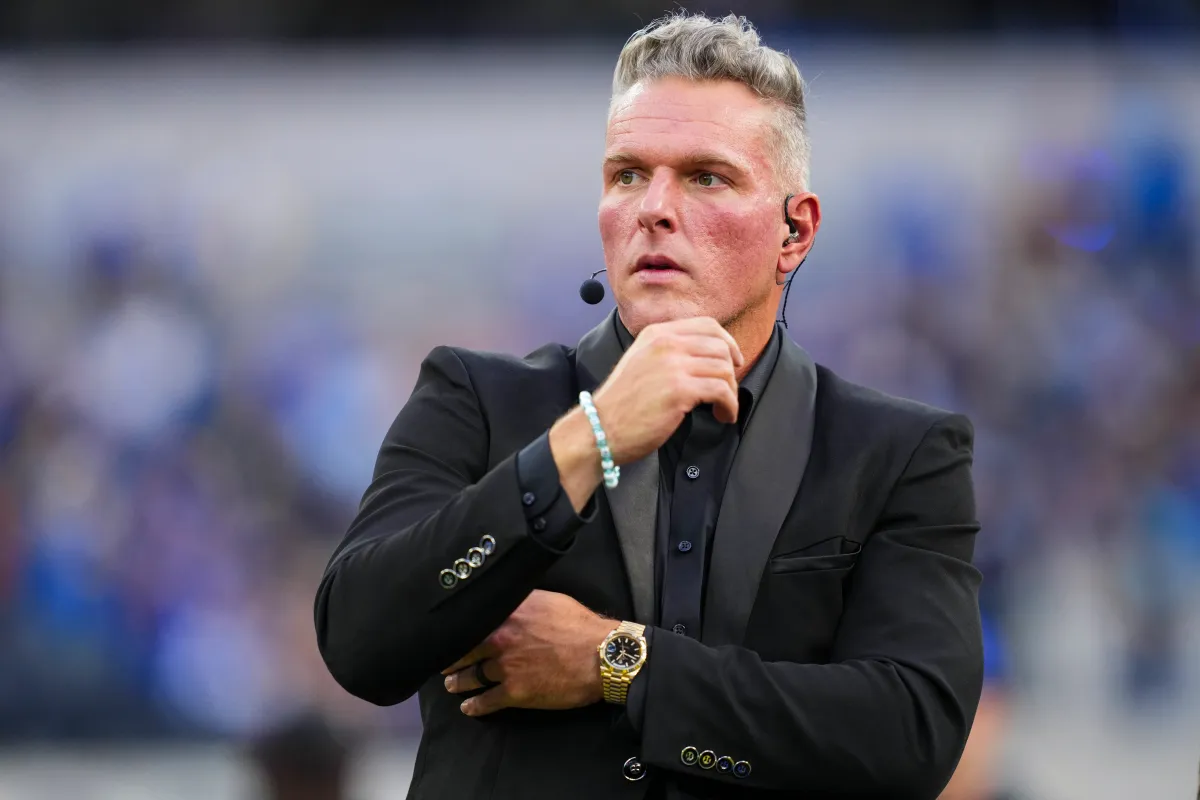
Pat McAfee is one of the most recognizable personalities in college football, and as part of the five-person panel on ESPN’s “College GameDay,” he has become accustomed to the chaos of Saturday mornings. Alongside Desmond Howard, Rece Davis, Nick Saban, and Kirk Herbstreit, he travels to campuses across America, feeding off the energy of fans, students, and marching bands. For the most part, he loves the experience. Even when he plays the villain, even when crowds boo him, he usually walks away with at least a grudging respect for the school and its fan base. That is why his reaction to last Saturday’s trip to Salt Lake City was so striking. The show set up in Utah for the Utes’ big matchup against No. 14 Houston, a game Utah ultimately won 21-13. But the score wasn’t what lingered in McAfee’s mind. On his show Monday, he didn’t hide his frustration. “Did not enjoy the University of Utah,” he said. He admitted that he usually has good things to say about the schools he visits, but this time was different. Something happened before he even walked onto the set that made him feel uncomfortable, unwelcome, and even unsafe. It wasn’t just the usual heckling. It was something the university itself did—something that made a scheduled appearance feel less like a celebration and more like an ambush.
McAfee explained that before he went out on set, he noticed the University of Utah’s official Instagram page had posted a video asking students and fans to do impressions of him. In the video, one kid said he was “corny,” and another called him “creepy.” For most public figures, that kind of comment would be easy to shrug off. McAfee is no stranger to criticism; he knows that his loud, opinionated style makes him a target. But this wasn’t coming from a random blog or a trash-talking fan account. It was coming from the university itself. McAfee was moments away from standing in front of thousands of people and doing what he described as an “infomercial” for the school. He was there to help shine a national spotlight on Utah, to generate excitement, and to celebrate college football. Instead, the university’s official platform was inviting people to mock him. McAfee said that if the students had done that on their own blogs, he would have had no problem. But when the institution puts it out publicly, it changes everything. It felt personal, deliberate, and unprofessional. He said the post made him feel “uncomfortable” and “weird.” He wasn’t hurt by the word “corny.” It was the word “creepy” that seemed to hit differently. Being called creepy by a stranger is dismissive and dehumanizing. Being called creepy by a university’s official account? That can feel like the whole school is telling you that you don’t belong.
McAfee continued to unpack the incident on his show, and it was clear he was still processing the emotions. He said he’s getting a lot of “shrapnel” from a lot of places these days, meaning he’s used to taking hits from critics, media watchdogs, and even other football personalities. But this was something he had never experienced in his entire life. He doesn’t mind being the bad guy. He has built a career on being a character, on provoking reactions, on stirring the pot. But there is a difference between playing a role and feeling genuinely unwanted. When a school invites you onto its campus, there is an implicit promise of hospitality. You expect to be treated like a guest, not like a target. McAfee said the Instagram post “set him off” and made him feel a little bit weird. It was the kind of feeling that sits in your stomach and doesn’t go away. He didn’t want to be dramatic. He didn’t want to complain about a few insults. But this wasn’t about a few insults. It was about the people in charge using their power to amplify negativity. In the world of sports broadcasting, relationships matter. Schools want to showcase their campuses. Shows like “College GameDay” want to bring a fun, entertaining product to viewers. When a school turns on the very person who is there to help boost its profile, it creates a strange and awkward atmosphere. McAfee was left with the sense that his presence was not welcome, and that feeling stayed with him long after the cameras stopped rolling.
But McAfee’s concern didn’t stop at hurt feelings. He went on to reference something much darker: the assassination attempt on Charlie Kirk at Utah Valley University last September. Kirk, the conservative activist and founder of Turning Point USA, was the target of a violent incident that shocked the state and the country. For McAfee, that memory shaped how he interpreted the university’s Instagram post. He thought to himself, “Has anything really scary happened at a college gathering in the state of Utah recently?” He said it plainly and seriously. If something violent has happened in your state, he reasoned, should your university really be amplifying reasons for people to hate someone who is about to step onto your campus? That might sound dramatic, but it comes from a real place of anxiety. Public figures today face threats that go beyond social media mockery. They receive death threats, they are followed, they are attacked in public. McAfee was not asking for sympathy. He was asking people to think about consequences. When a university uses its official voice to call a guest “creepy,” it doesn’t exist in a vacuum. It sends a signal to the most extreme fans and to the unstable individuals who might take that hatred too far. McAfee didn’t feel safe. He said the whole experience made him think about the worst-case scenario. He wasn’t just sulking about a mean video. He was thinking about his own security and the responsibility of an institution to protect the people it invites onto its campus.
McAfee’s experience with the hostile treatment was enough to turn him off to the University of Utah permanently. He made that clear in his closing comments. “I’ll hopefully never go to that place again,” he said. He even joked that he’ll claim to have COVID if “GameDay” ever returns to Utah while he’s still on the show. That comment was obviously a joke, but there was a lot of truth hidden inside it. He would rather fake an illness than walk back into a place where he felt publicly mocked and unwelcome. He didn’t enjoy the morning there. He didn’t enjoy the buildup. He didn’t enjoy the atmosphere. And because of one official social media post, he now associates the entire university with that negative experience. It’s a shame, because college football is supposed to be about bringing communities together, about rivalry, passion, and pride. It’s supposed to be a place where differences get set aside for a few hours and everyone gets to cheer for something bigger than themselves. But McAfee’s visit turned sour before the first whistle. Instead of remembering a great game in a beautiful setting, he remembers the feeling of being ambushed by the very people who were supposed to be his hosts. He still did his job. He still performed. But in his mind, he was already gone.
In the end, McAfee’s story is a lesson about hospitality, respect, and the power of official voices. College campuses love to have “College GameDay” in town. It brings national attention, excitement, and a sense of pride. But with that attention comes responsibility. Schools have to remember that the people who come to broadcast their games are human beings. They have families, feelings, and fears. They are not just cogs in a television machine. When a university decides to use its platform to mock someone—especially someone who is there as a guest—it risks crossing a line. It risks creating a hostile environment. It risks losing that person’s trust forever. McAfee may never return to Salt Lake City, and if he does, he says he’ll find a way to avoid it. That is a strong reaction, but it’s also a very human one. Nobody wants to walk into a room filled with people who have been told, by the host, to see you as creepy. Nobody wants to feel like a target before they even have a chance to speak. McAfee’s complaint isn’t just the whining of a rich broadcaster with a big platform. It’s a reminder that words matter, that institutions matter, and that a little kindness can go a long way. We all want to feel welcomed. We all want to feel safe. And when those feelings are taken away, no scoreboard, no crowd, and no television segment can fix that. For Pat McAfee, the University of Utah will always be the place that made him feel like an enemy instead of a guest—and that is not the kind of memory college football should ever create.