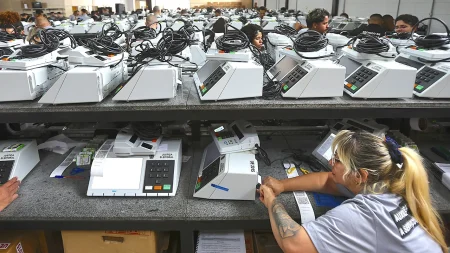



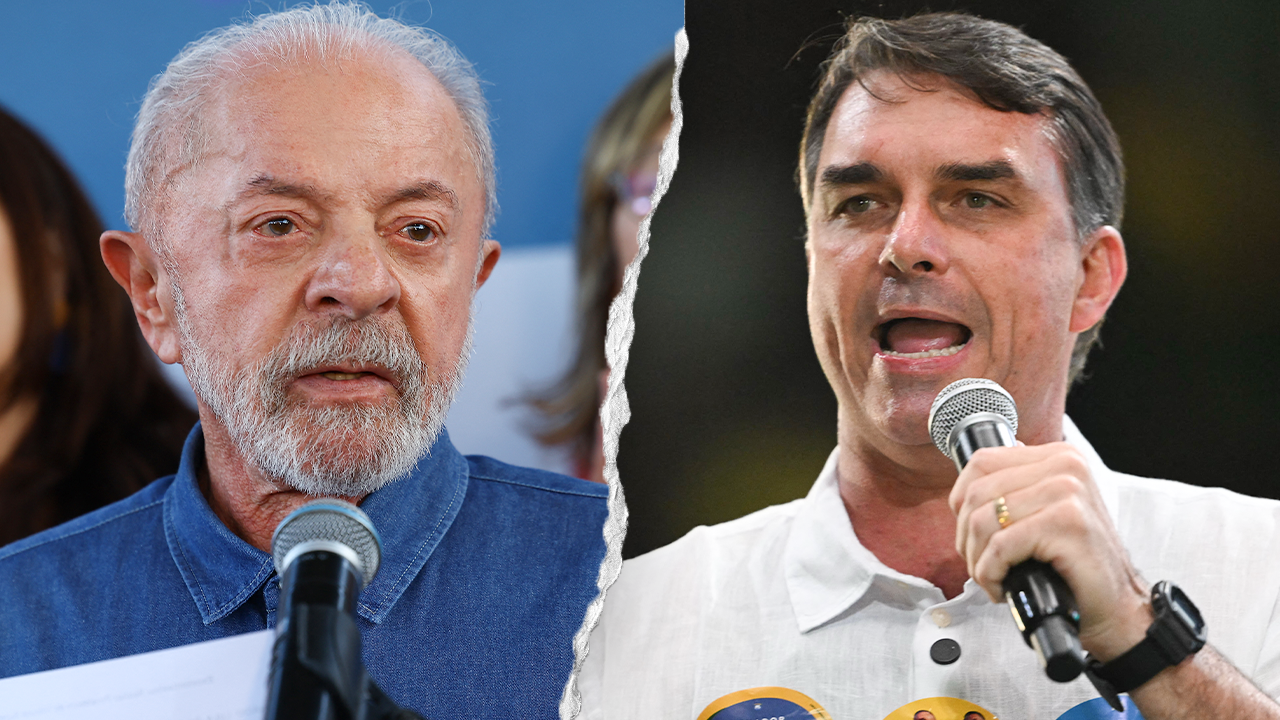
Brazilians are about to step into the voting booth one more time, and the entire hemisphere is holding its breath. Sunday’s runoff election in Latin America’s most populous nation is not just another political contest; it is a full-blown historical crossroads. An estimated 158 million voters are eligible to decide whether Brazil continues down the path carved by President Luiz Inácio Lula da Silva or pivots sharply to the right with conservative challenger Flavio Bolsonaro. If you had trusted the polls three weeks ago, you would have expected Lula to cruise into the second round with a comfortable lead. Instead, Bolsonaro shocked the establishment by winning the first round 47 percent to Lula’s 45 percent, proving that the pollsters had once again missed the mood on the ground. Because neither candidate secured a majority, the race moved to a second round, giving Bolsonaro a chance to do something that would have been unthinkable just a few years ago: pull off a conservative victory in the country that has long been the beating heart of Latin American progressivism. The stakes could not be higher, and the energy in Brazil feels less like a routine election and more like a planetary alignment of anger, fear, hope, and revenge.
To understand why this election matters so much, you need to zoom out and look at the whole region. Brazil is not an isolated story; it is the climax of a conservative wave that has been building across Central and South America for years. It all started in Argentina in 2023, when libertarian outsider Javier Milei stormed to victory, taking a chainsaw to the political establishment and proving that economic frustration could overpower traditional loyalties. That shockwave kept rippling. By 2025, the trend had become impossible to ignore, as Ecuador, Bolivia, Honduras, and Chile all chose conservative leaders. In 2026, Keiko Fujimori narrowly defeated a leftist rival to win the presidency in Peru, and then Colombia followed suit, electing conservative attorney Abelardo de la Espriella over left-wing Senator Ivan Cepeda. Each victory on its own might have seemed like a local quirk, but together they form a pattern. Latin America, once seen as a reliable battleground for populist socialism, has begun to swing hard to the right. And Brazil, with its massive population and outsized influence, is the final boss in this fight. Bolsonaro’s success in the first round, combined with his party’s strong performance in congressional races, means that Brazil will likely have one of the most conservative legislatures it has seen in decades. That matters not just for Brazil, but for the entire continent. It would give conservative movements a powerful new base of support from the Amazon to the Southern Cone. President Donald Trump has watched all of this with obvious delight, pointing to the electoral results as proof that his hardline approach to security, crime, and migration is what Latin American voters actually want. The Trump administration is also eager to see these governments align with its new Shield of the Americas initiative, which aims to tackle cartels and crime on a regional scale. Brazil, if it goes conservative, would be a much more reliable partner in that fight than Lula, whose party has traditionally taken a softer approach to U.S.-led security efforts.
But why is this happening? Why is Latin America, after years of left-wing dominance, suddenly falling out of love with progressivism? The answer is complicated, but at its core it comes down to fear and pocketbook anxiety. In Brazil and across the region, ordinary people have grown deeply worried about safety. Crime, street violence, and the terrifying power of drug cartels have made daily life unbearable in many cities. Leftist governments, with their emphasis on social programs and human rights, have often seemed unable or unwilling to get tough on criminals. Conservative candidates, by contrast, are promising to unleash the police, deploy the military, and fight crime with a visible, heavy hand. That message is resonating with working-class and middle-class voters who are tired of looking over their shoulders every time they leave the house. Meanwhile, the left has failed to deliver on the economic front. Inflation has eaten away at wages, and the cost of food, housing, and energy has soared. When people cannot afford to put dinner on the table, high-minded ideological arguments about cultural progress ring hollow. The Latin American right has been smart enough to seize on these daily burdens, positioning itself as the voice of the working class against a political elite that has ignored their struggles. It is a fascinating role reversal, since the left once claimed that mantle. But today, many voters see the inequality gap widening under progressive governments, and they are willing to try something new, even if that something is more conservative and more punishing when it comes to law and order. Still, it would be a mistake to think this wave is a landslide of enthusiasm. Many of these elections have been won by razor-thin margins, and Brazil is no exception. Lula beat Jair Bolsonaro in 2022 by just 1.8 percent, and the country remains deeply divided, almost down the middle. There is plenty of polarization, but the momentum is clearly with the right, and that is a powerful force heading into Sunday’s vote.
The final stretch of this campaign was intense, drama-filled, and maybe even a little exhausting. On Friday night, the two candidates met in Rio de Janeiro for the last debate before the election, and while they clashed over a range of issues organized around Brazil’s five regions, the exchanges were often personal and heated. Yet, for all the fireworks, the debate probably did not change many minds. In a race this polarized, voters tend to have already made up their minds, and they are watching less for information and more for confirmation. Bolsonaro enters the second round with some structural advantages that are hard to ignore. Most importantly, he has locked in the support of three of the other major candidates who were eliminated in the first round: self-help author Augusto Cury, former Goiás Governor Ronaldo Caiado, and former Minas Gerais Governor Romeu Zema all officially endorsed him. That is a huge boost, because their voters are naturally aligned with the conservative side of the spectrum. Even Renan Santos, the entrepreneur who ran for the Mission Party and said he would stay neutral, is considered likely to see his libertarian-leaning followers gravitate to Bolsonaro anyway. Lula, by comparison, faces a daunting challenge. He needs to win over a significant portion of voters who backed center-right or right-wing candidates in the first round, and that is not going to be easy when those same voters view Lula as the embodiment of everything they just rejected. In many ways, this election is not about choosing someone you love, but choosing someone you can tolerate. Brazilians are being asked to vote as much against a candidate as for one. The question hanging over the country is whether Lula has finally worn out his welcome, or whether Bolsonaro’s name and family legacy will be too heavy a burden to carry into the presidency.
And then there is the strange, looming shadow of the past. You cannot talk about this election without talking about Flavio Bolsonaro’s father, former President Jair Bolsonaro, who is currently serving a 27-year sentence under house arrest for allegedly plotting a coup in the wake of the 2022 election. Flavio has made no secret of his intention to free his father if he wins, and that promise has electrified the conservative base even as it terrifies the left. It turns the election into something more than a routine transfer of power; it becomes a legal and political battleground where the fate of a former president hangs in the balance. Lula, of course, has his own complicated legal history. He was sentenced to 12 years in prison on corruption charges tied to Operation Car Wash, only to be freed on a technicality by the Brazilian Supreme Court. Somehow, he rose from that political graveyard to win the presidency again in 2022, cementing his reputation as one of the most resilient figures in modern Brazilian history. The contrast between the two candidates is almost operatic. One is an aging leftist icon who has spent decades at the center of Brazilian politics, while the other is a conservative scion attempting to restore his family’s name and free his father. Both have been through hell and back, and both can claim a kind of martyrdom in the eyes of their supporters. But that also means this election is deeply personal for millions of Brazilians. For many, voting for Flavio Bolsonaro is a way to fight back against the courts and prosecutors that brought down the elder Bolsonaro. For many others, voting for Lula is a way to protect Brazilian democracy from what they see as an authoritarian threat. The legal cases are not just background noise; they are the engine driving the intense emotions of this campaign.
Finally, there is the question of Lula’s own legend and whether it can survive this moment. This will be Lula’s seventh time appearing on a presidential ballot in 40 years. He lost in 1989, 1994, and 1998, then won in 2002, 2006, and 2022. He is unquestionably the dominant figure in Brazilian politics over the past half-century, with a magnetic personality and a connection to ordinary voters that has outlasted scandal, imprisonment, and tragedy. But even legends can become tired. In 2022, when he ran to oust Jair Bolsonaro, Lula made a very public promise to serve only one term. On October 25, 2022, just five days before the second round of voting, he posted on his official X account: “If elected, I will be a single-term president.” That promise helped him win, but he did not keep it. Now, as he seeks an unprecedented fourth term, many voters feel betrayed. Polls have consistently shown that Brazilians are unhappy with the course of Lula’s third term, and even a substantial number of people who voted for him in 2022 are expressing pessimism about giving him another four years. At the same time, however, a large percentage of the electorate simply cannot bring themselves to vote for another Bolsonaro. The family name is too toxic for them, and the memory of the coup attempt is too fresh. So the election comes down to a collision of two negative choices. Brazilians are being forced to decide which bitter pill they can swallow. The right-wing surge across Latin America suggests that the winds are at Flavio Bolsonaro’s back, but Brazilian elections have a way of surprising everyone, and Lula has spent a lifetime defying the odds. As the country prepares to head to the polls, the only thing that feels certain is uncertainty itself. Will Lula’s charisma and institutional power be enough to withstand the conservative wave sweeping the continent? Or will Flavio Bolsonaro ride that wave all the way to the presidential palace, changing the course of Brazil and sending a signal to the entire world? The answer will come on Sunday, and it will be a moment that defines the future of Latin America for years to come.