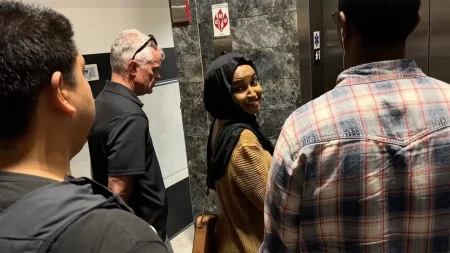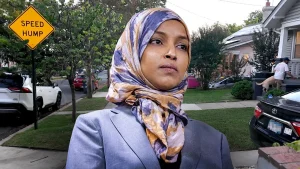



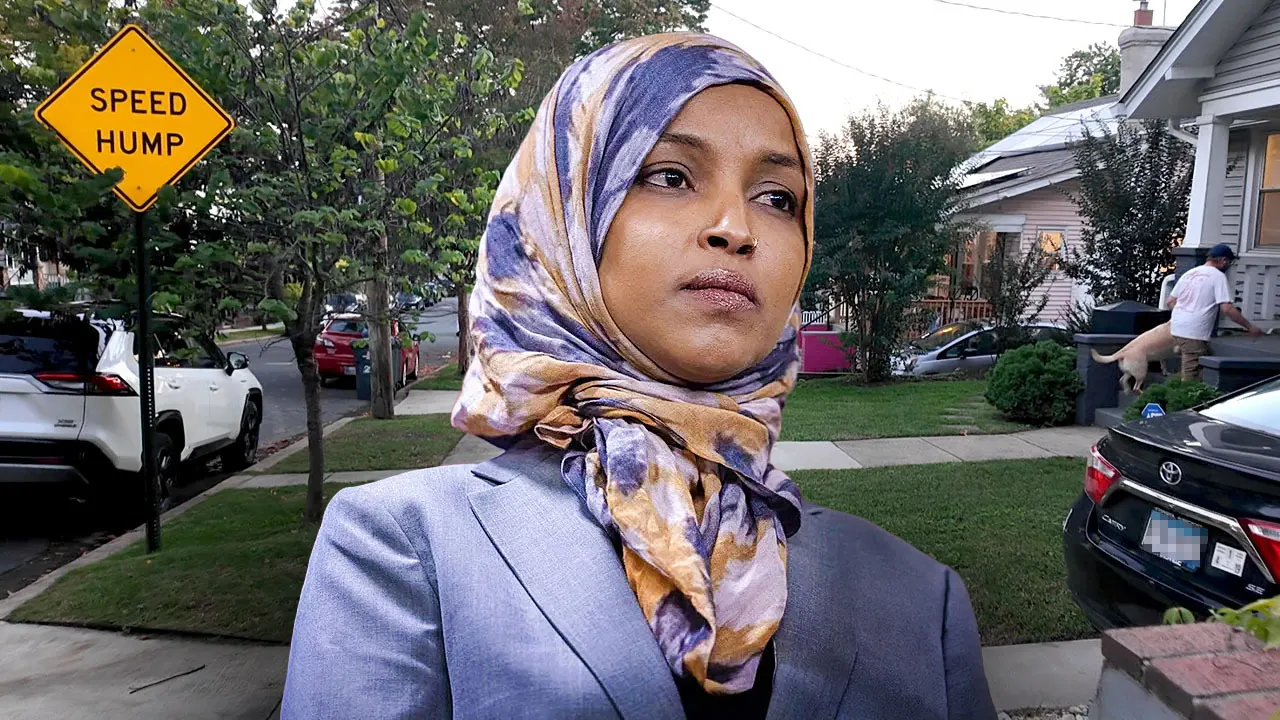
The morning after a federal court filing reignited a political firestorm around her name and personal history, Representative Ilhan Omar of Minnesota did not retreat. She came out swinging, and her target was President Donald Trump. In a sharp, expletive-free but deeply bitter post on X, Omar accused the president of weaponizing the Justice Department against her. “The pedophile protection party’s president is laundering right-wing conspiracy theories through the most corrupt DOJ in American history,” she wrote. That blunt phrasing, aimed squarely at the president and the Department of Justice, reflected the raw mood of a lawmaker who has spent much of her career under a microscope. But it was the next line that cut to the heart of what has become a painful, deeply personal ordeal. “Whenever the news turns bad, this creep reaches for one name: mine,” Omar continued. “So let’s make it crystal clear. My name has always been Ilhan Omar.” The message was a deliberate attempt to reclaim control over a story that has spiraled into a messy combination of federal investigation, political attack, family speculation, and old rumors—one that has made her the face of a fresh conflict between the White House and a progressive Somali-born member of Congress. By turning her attention to Vice President JD Vance and asking, “Maybe you should focus on what your VP’s real name is,” Omar was also signaling that she is not going to accept insults quietly. She was, in effect, telling her critics that if they want to question identity and ancestry, she is willing to play the same game, and that no one’s background is beyond scrutiny. For a congresswoman who has survived elections, personal tragedy, and scandal before, Friday’s outburst was not merely a defensive move; it was a reminder that she has learned to meet political attacks with raw, unfiltered resistance.
The confrontation did not emerge from nowhere. It was sparked by a Fox News Digital report the previous day, citing two people familiar with the ongoing federal investigation, including a law enforcement source, claiming that Omar’s birth name is actually Ilhan Nur Said Elmi. The revelation was contained in a Justice Department court filing linked to a search warrant for her Washington-area home. In that filing, the Minnesota Democrat was identified as “Congresswoman Ilhan Nur Said Elmi, a/k/a Ilhan Abdullahi Omar.” For Trump, this was an opening he had been waiting for. He took to Truth Social on Thursday with characteristic fury, claiming that it had just been revealed that Omar’s name is not Omar, accusing her of using a “fake name,” and demanding her immediate resignation. But he did not stop there. The president also revived an old and explosive allegation that has haunted Omar for years: that her former husband, Ahmed Nur Said Elmi, is actually her brother. This is not a new claim, but it is one with serious implications, especially given that federal investigators are now looking into whether Omar or her father made false statements on immigration paperwork. If the marriage between Omar and Elmi was not a real marriage but something arranged for immigration purposes, the consequences could be enormous. Omar has consistently denied the brother claim, and her office flatly disputed the Fox News report, insisting that “Ilhan Omar is her real name.” In an MS NOW interview this week, Omar was asked whether there was any familial relationship with Elmi, and she answered, “Not to my knowledge.” Her spokesperson later clarified that the answer was sarcastic, adding that Omar has “repeatedly and unequivocally” denied the allegation. Still, the combination of the name in the court filing and the reopened marriage questions created a perfect storm for her political enemies.
Omar’s retort to Trump and Vance was deliberately barbed. Her reference to the “pedophile protection party” echoes a line of attack Democrats have increasingly used against Trump, particularly in connection with his lies and bluster, though it also carries a certain crudeness that reflects how the tone of American politics has shifted. Her reference to the “most corrupt DOJ in American history” is equally pointed, given that the FBI and DOJ have been at the center of political controversy throughout the Trump presidency, with investigations into the president and his allies drawing accusations of weaponization from both sides. But beyond the political sloganeering, Omar’s choice to mention Vance’s name was a tactical jab. Vance was born James David Bowman and later took his stepfather’s surname, becoming James David Vance. That fact is not secret—he has written about his Appalachian upbringing and family in his memoir, “Hillbilly Elegy.” By asking “what your VP’s real name is,” Omar was flipping the script: under her critics’ logic, if changing or using a different name is grounds for suspicion and insult, then Vance’s own personal history could be fair game. It was a provocative, almost mocking reply, one designed to show that she refuses to be singled out as uniquely deceptive or un-American. For a woman who has been subjected to attacks on her patriotism, her religion, and now her very name, that rhetorical defiance is both a survival strategy and a plea for fairness: if names and family histories are going to be scrutinized, she seems to say, then let’s apply that scrutiny equally to those on the right.
Beyond the political theater, the underlying reality is serious. A federal investigation is indeed underway, and it is not purely a media invention. According to Fox News Digital’s reporting, agents searched Omar’s Washington, D.C., residence earlier this month, seizing her cellphone and her passport. Her sister has also been questioned as part of the inquiry. The Justice Department is probing whether false statements were made on immigration paperwork, and the central question appears to revolve around Omar’s name, her marriage to Ahmed Nur Said Elmi, and the possibility that there was something improper about how she or her father navigated the U.S. immigration system. It is important to note that Omar has not been charged with any crime. Her office has maintained that she is innocent, and no formal accusation has been made. But the existence of a search warrant, the FBI’s presence at her home, and the seizure of personal documents are unmistakably serious. For someone who rose from a refugee camp to the United States Congress, these legal troubles are a stark turn. Omar was a young child when her family fled Somalia’s civil war and eventually came to America. She has told a story that millions of immigrants share: displacement, struggle, hope, and the desire to build a new life. That story has been a source of political strength, particularly among progressive voters who see her as a symbol of what diversity and resilience can achieve. But it also makes her vulnerable to questions about how her family arrived, what records were kept, and whether any corners were cut. The investigation, no matter how it ends, threatens to undermine that narrative and to give her opponents a cudgel to use against her not just legally, but emotionally and politically.
Omar’s “turbulent week” extended far beyond the name dispute. The same week that the court filing surfaced, Representative Andy Ogles, a Republican from Tennessee, threatened to introduce a resolution to expel Omar from Congress. His promise to boot her from her seat was rooted in the ongoing DOJ investigation and created yet another front in her battle to remain in office. Expelling a member of Congress is an extraordinary act, reserved for the most serious of conduct, and it requires a two-thirds vote, meaning Ogles’ effort is unlikely to succeed. But the threat itself is a powerful political signal, feeding the narrative that Omar is an illegitimate lawmaker unworthy of serving. It also echoes a pattern that has followed Omar throughout her time in Washington. Since her election in 2018, she has been a lightning rod, drawing criticism for her statements about Israel, her social media presence, and her alignment with the progressive wing of the Democratic Party. She has faced accusations of antisemitism, sparked controversy with a remark about the U.S.-Israel relationship that she later apologized for, and frequently clashed with leaders in her own party. At times, she has appeared to relish the role of rebel, speaking her mind regardless of the consequences. But this latest controversy is different, because it reaches into her personal history, her family, and the foundational story of how she became an American citizen. For a public figure who has always grounded her political identity in her immigrant experience, having that story questioned by the president and investigated by the federal government is deeply destabilizing.
And yet, through all of this, Omar is asking the country to remember who she is. “My name has always been Ilhan Omar,” she insists. To her supporters, this is the essence of her truth: a woman who embodies the American dream, who came from a refugee camp to represent a district in Minnesota, who has faced down death threats, hate speech, and accusations, and who still refuses to be silenced. To her critics, though, the name question is not simply about a label. It speaks to a deeper unease about whether she has been entirely honest about her past. The phrase “a/k/a” in the court filing, the allegations about her marriage, and the immigration probe all feed into a narrative of suspicion that has followed her for years. The human reality is more complicated than a political slogan. Names change for many reasons: marriage, adoption, personal preference, simply making a new life in a new country. In Omar’s case, the exact details of her birth name and her married name remain tangled, and the federal investigation is still underway. No one outside of those involved truly knows what the evidence will show. But behind the legalisms and the tweets, there lies a person—a mother, a former legislator, a refugee, a woman of conviction—who is now fighting both in public and in private to protect everything she has built. As the investigation moves forward, the country will continue to watch, but Omar’s message is clear: she will not disappear, she will not resign, and she will not let anyone erase her identity. Whether the investigation clears her or deepens the controversy, her political and personal battle in the days ahead will undoubtedly shape her legacy. For now, she is standing her ground, as she always has, with the same defiant spirit that brought her from Mogadishu to the halls of Congress.