

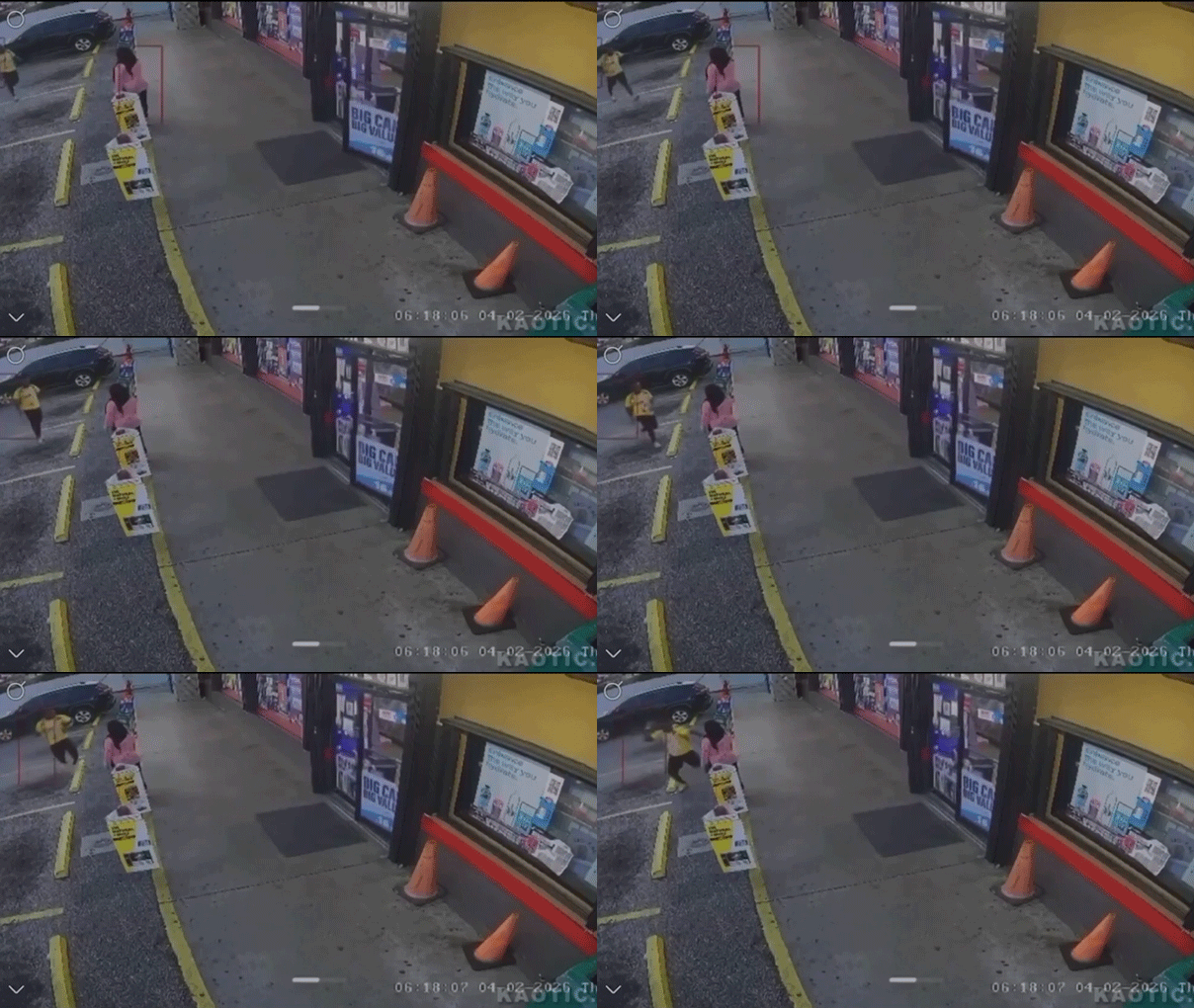
Fort Myers, Florida—a place of Gulf Coast sunsets, fishing boats, and tight-knit working families—is about to become the center of the political universe. President Donald Trump is scheduled to headline a midterm rally at Florida Gulf Coast University’s Alico Arena on Friday, just days before voters head to the polls. The arena will be packed with supporters eager to see the president, but the White House wants the nation to remember something far darker: a brutal murder that happened just a few miles away, in a gas station parking lot, in broad daylight. A mother of two teenage daughters, a clerk who was simply doing her job, was attacked by a man wielding a hammer. Surveillance video captured the horrific scene—the suspect smashing the woman’s windshield before turning the weapon on her, striking her head repeatedly. The woman died there, leaving behind two daughters who will never be the same. For her family, the pain is raw and unending. For the White House, the case has become a symbol of everything wrong with the previous administration’s border policy. As the president prepares to speak, his team is highlighting this tragedy to make a powerful political point: this is not abstract policy; this is a life lost, a family shattered, and a community in shock.
The details of the case are as stark as they are disturbing. According to the Department of Homeland Security, the accused attacker is a Haitian national named Rolbert Joachim. He entered the United States in August 2022 and was released into the country under the Biden administration. That November, a federal judge issued a final removal order against him—meaning he was legally required to leave the country. But that did not happen. Instead, Joachim was granted Temporary Protected Status, a program designed to allow foreign nationals from designated countries to stay and work in the U.S. because of dangerous conditions at home. TPS is not a path to permanent residency; it is meant to be a temporary shield. But for Joachim, according to federal authorities, it became a stay of execution for his victim. He was allowed to remain free, walking the streets of Fort Myers, until he allegedly carried out one of the most vicious attacks local law enforcement had ever seen. Police eventually enlisted ICE to help track him down, and he was arrested on Mango Street. But it was too late. A mother was gone, and a community was left to ask a painful question: Why was this man ever allowed to be there in the first place?
The White House is not shying away from that question. In an exclusive statement to Fox News Digital, White House spokeswoman Lauren Bis delivered a searing message. “A few short months ago, an illegal alien barbarically killed a woman outside of a gas station in Fort Myers by hitting her on the head with a hammer multiple times,” she said. “This heinous murderer was RELEASED into the country by the Biden administration. Not only did the Biden administration release him into the country, but they then gave him Temporary Protected Status. This is the result of Democrats open-border policies. If you import the third world, you become the third world.” The words are blunt, intentionally so, and they are designed to resonate in a region where border security is not an abstraction. President Trump himself had previously condemned the killing on Truth Social, calling the surveillance video “one of the most vicious things you will ever see.” He blamed the Biden administration for allowing the suspect to remain in the country and pointed to the case as a reason why judges should stop blocking his immigration policies. For the people of Fort Myers, the video is not just political rhetoric—it is a nightmare captured on film, a moment in time that ended a woman’s life and changed the course of her daughters’ futures forever.
The legal aftermath has been swift and severe. After Joachim’s arrest, ICE lodged an immigration detainer against him, signaling that he would face deportation regardless of how the criminal case unfolded. DHS was explicit: even if he were somehow acquitted of murder, he would not be allowed to remain in the United States. Prosecutors later announced that they would seek the death penalty, a reflection of the extraordinary brutality of the alleged crime. But while the legal system moves forward, the controversy surrounding the case has expanded into a larger political fight. Some Democratic lawmakers have pushed to extend Temporary Protected Status for Haitians, citing dangerous conditions in their home country. But this killing has sparked outrage, with critics pointing to the horrifying contradiction in the system: how can a person receive a final removal order in 2022 and then later be granted protective status, allowing him to remain free and in the country? The White House argues that the case exposes the fundamental danger of open-border ideology—that compassion without enforcement is not compassion at all, but negligence. And in this instance, they argue, that negligence ended with a hammer striking a mother in a gas station parking lot. It is a devastating example, and one that has changed the way many people in southwest Florida view the immigration debate.
Politically, the timing is no accident. Florida has been a stronghold for Donald Trump across all three of his presidential campaigns. In 2016, he won the state by just about one percentage point, but by 2024, his margin had grown to more than thirteen points. In Lee County, home to Fort Myers, Trump won 63.6% of the vote in 2024, compared to 35.3% for Kamala Harris. The crowd at Friday’s rally will be made up of his most devoted supporters, but midterm elections are a different challenge. The president’s team knows that to keep control of Congress, they need to energize voters and turn anger into action. That is why the White House is highlighting cases like this one, using the memory of the victim to underscore their message on immigration enforcement. The administration points to its record: 17 straight months with zero releases at the border, and more than 3 million people deported. To those voting in Fort Myers, these are not just statistics. They are promises kept. They are the difference between feeling safe in your community and fearing the worst every time a car pulls up beside you. The president will walk onto the stage at Alico Arena and repeat that message, urging voters to remember what happened in their own city and to make sure it never happens again.
But beneath all the politics, the speeches, and the policy debates, there is a human story that cannot be ignored. A mother is gone. A woman who worked hard, who raised daughters, who had a life filled with ordinary moments and quiet dreams, was killed in the most violent way imaginable. Her name may not be on everyone’s lips years from now, but for her children, the loss is permanent. They will grow up without her. They will have to go through birthdays, graduations, and the quiet middle moments of life while carrying a grief that never fully disappears. The White House has used her death to highlight the dangers of failed border policy, and that is a legitimate and powerful argument. But at the end of the day, she was not simply a symbol. She was a loved one. She was a person who deserved a safe place to work and a long life with her family. The politics of immigration will continue to rage on, with each side drawing lessons from this tragedy. But for the family, there are no politics, only pain. For the community, there is fear and anger. And for the nation, there is a reminder that policy decisions made in Washington have consequences in real places like Fort Myers—consequences that can be measured in heartbreak, in loss, and in the silence left behind when a mother’s voice is no longer there.