


OpenAI Maps Road to 2027 IPO Amid Record AI Computing Splurge and Heated Rivalry with Anthropic
Investors Come Calling as OpenAI Seeks New Capital and Gulf Compute Deals
OpenAI has quietly set in motion what could become the defining initial public offering of the artificial intelligence era, fielding fresh investment proposals while simultaneously negotiating with the United Arab Emirates for the computing muscle its models must have to compete. Talks with prospective backers opened in September, when multiple investors approached the ChatGPT developer with offers of additional financing, according to sources familiar with the discussions. The overtures underscore the extraordinary premium that Wall Street and sovereign wealth funds now place on ownership in a company whose technology has moved from research curiosity to global productivity staple in record time. The funding conversations remain fluid, insiders caution, but the sheer weight of incoming interest signals a capital market conviction that the generative AI boom is still in its early innings rather than approaching a peak.
The UAE talks are equally telling. OpenAI is reported to be working toward a commercial agreement that would guarantee it additional computing capacity from the Gulf state, a partner that has emerged as one of the most aggressive investors in global AI infrastructure. Through vehicles such as MGX and the AI firm G42, the UAE has committed billions to everything from advanced chip development to massive data center construction, and a formal tie-up with OpenAI would cement its status as a central hub of the next-generation technology economy. The sums involved in OpenAI’s broader infrastructure strategy, meanwhile, are almost impossible to contextualize. The company has told investors it anticipates spending approximately $600 billion on computing infrastructure by 2030 — a figure larger than the annual economic output of many developed nations and a stark illustration of the brutal economics of frontier AI. Training state-of-the-art models requires clusters of tens of thousands of specialized accelerators running for months at a time, and deploying those models to hundreds of millions of users demands cloud capacity on a scale the world has never seen. For OpenAI, securing low-cost, reliable computing capacity is no mere procurement detail; it is the strategic equivalent of an oil company locking in reserves. The September financing approaches and the UAE negotiations are thus two sides of the same coin: capital to build, and the physical capacity to grow.
A Confidential Filing, an Ambitious Timeline, and a CEO’s Word of Caution
The financing push follows a decisive administrative step that had been anticipated for years. OpenAI submitted a confidential IPO filing with the U.S. Securities and Exchange Commission in June, formally beginning the lengthy regulatory process that precedes any public listing. Confidential filings allow companies to work through the SEC review with their financial details shielded from public view until closer to the targeted offering, a mechanism increasingly favored by large technology firms unaccustomed to exposing their numbers while still in a high-growth, high-spend phase. Inside the company, the intended destination was made explicit within weeks. Chief Financial Officer Sarah Friar told employees in August that OpenAI expects to go public in 2027, laying down a timeline that would place the offering near the end of the decade’s first half and give the company several more years to mature its revenue base, expand its enterprise business and, crucially, demonstrate a credible path to profitability amid staggering infrastructure outlays.
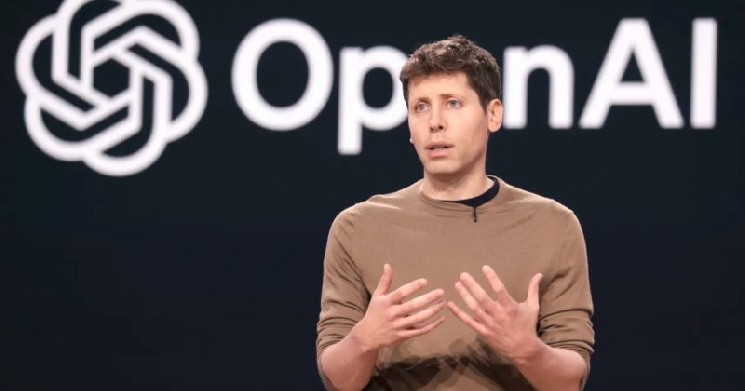
Yet even within the executive suite, there is an awareness that the road to a public listing is rarely a straight line. In September, Chief Executive Sam Altman struck a conspicuously cautious tone, telling those close to the company that current market conditions made an immediate listing inadvisable. His comments were not a retreat from the long-term objective but rather a recognition that timing is everything in public markets, where volatile interest rates, geopolitical shocks and shifting sentiment toward high-valuation technology stocks can abruptly close the window of opportunity. The distinction between the CFO’s confident 2027 target and Altman’s palpable wariness reflects a mature strategic discipline: the company wants to list on its own terms, in a stable market climate, with a balance sheet — and a compute supply chain — capable of withstanding the scrutiny that comes with quarterly reporting. For investors watching from the sidelines, the message was clear: OpenAI is committed to an eventual public debut, but it will not be rushed by impatience, speculation or competitive pressure.
Anthropic Prepares Its Own Wall Street Debut
OpenAI does not, however, have the luxury of moving alone. Across the competitive landscape, its chief rival is preparing a strikingly parallel journey to the public markets. Anthropic, the AI safety-focused startup founded by former OpenAI researchers, also filed its IPO prospectus confidentially with the SEC in June, placing the two companies on a collision course for investor attention and institutional capital. Since that filing, Anthropic has held a series of meetings with prospective investors, laying out its growth narrative and fielding pointed questions about valuation, margins and the durability of its competitive position. According to Reuters, the company is seeking a valuation between $1.5 trillion and $2 trillion — a staggering figure for a business that, not long ago, was regarded as the more cautious, academically oriented alternative in the AI field.
The sheer scale of investor confidence in Anthropic was made evident earlier this year. In May, the company raised $65 billion at a valuation of $965 billion, a round that itself ranked among the largest private financings in corporate history. Taken together with OpenAI’s parallel fundraising discussions, the two companies are absorbing capital at a pace unprecedented outside the pages of central bank stimulus programs. This mutual escalation extends beyond money and into the architecture of the AI industry itself. Anthropic has assembled a constellation of strategic partners — including deep involvement from Amazon and Google, which have both committed enormous resources to support its model development and cloud operations — while OpenAI has forged its own alliances with Microsoft and, increasingly, with Gulf-state capital. The dueling IPOs, should both come to fruition, would hand investors a rare opportunity to bet on two pure-play AI leaders at once, but they would also force a brutal comparison of business models, safety philosophies, enterprise traction and, not least, the ability to convert swollen revenue figures into actual bottom-line earnings.
The Ultra-Expensive Arena of AI Infrastructure
What makes the public listing ambitions of both companies genuinely historic is the scale of capital expenditure attached to them. OpenAI and Anthropic are not merely spending heavily on research and marketing; they are committing hundreds of billions of dollars to the physical foundations of artificial intelligence — sprawling data centers, custom silicon, fiber-optic networks, energy generation and the cloud-platform capacity required to serve customers across the globe. Demand for advanced AI models shows no signs of abating: enterprises are integrating generative tools into software development, customer service, drug discovery, legal research and a thousand other workflows, and each new wave of model release seems to raise the computing requirements another order of magnitude. The result is an infrastructure arms race in which waiting is equivalent to falling behind. For OpenAI, the projected $600 billion spend by 2030 is the headline number, but it is only the most visible part of a broader industrial transformation that is redrawing the geography of technology investment.
The UAE negotiations are a window into that new geography. With energy supplies constrained in many Western jurisdictions and permitting processes slowing data center construction, AI companies are looking toward regions where capital and electricity flow more freely. The Gulf states, blessed with abundant energy resources, vast sovereign wealth reserves and an explicit political ambition to become technological powers rather than mere hydrocarbon exporters, have emerged as natural partners. A commercial compute agreement between OpenAI and the UAE would represent one of the first large-scale manifestations of that alignment — a deal that provides the company with critical capacity while giving the Gulf a tangible stake in the infrastructure that powers global AI. Such arrangements are not without controversy; they raise questions about data sovereignty, national security and the export of advanced technology to foreign jurisdictions. Yet for companies competing on a global stage, the calculus has become stark: secure the compute wherever it exists, or watch a rival pull ahead in the race to build increasingly capable systems.
Wall Street Braces for a Capital-Hungry Moment
As both companies move deliberately toward their listing windows, the tone of the conversations they are having with prospective investors has shifted subtly. The early growth story of ChatGPT — explosive user adoption, viral product launches, breathless enterprise demand — is now giving way to a more sober examination of unit economics. Where will the $600 billion come from, investors are asking, and what proportion of that spending will translate into durable competitive advantage rather than commodity infrastructure? These are the questions that will frame the IPO roadshows, and they carry echoes of earlier technological epochs. The dot-com era taught investors that billions in revenue growth could coexist with spectacular value destruction. The social media era taught them that monetization can arrive late and then arrive ferociously. The cloud computing era taught them that massive capex can, in the end, produce enormous returns but only after years of painful margin compression.
The market’s verdict on OpenAI and Anthropic will also be shaped by the broader environment for new listings. After a subdued period for IPOs, punctuated by high-profile successes and equally memorable disappointments, institutional appetite for large-cap technology offerings appears to be returning. An offering of OpenAI’s magnitude — one that could rank among the largest in U.S. history — would require a deep bench of investors willing to look through several years of heavy spending to a mature, AI-driven future. With interest rates potentially normalizing and investor confidence in foundational platform companies growing, the conditions may indeed be aligning for the 2027 target that Sarah Friar outlined. But the margin for error is thin. The two companies will be scrutinized as closely for their governance structures, safety frameworks and geopolitical entanglements as for their financial forecasts. Every new partnership, every data center deal, every concession to regulatory demands will be parsed for its implications on valuation.
A Defining Countdown for the AI Era
The next few years will determine whether the promise of generative AI matures into an investment thesis as robust as the technology itself. OpenAI’s confidential filing, its anticipated 2027 listing and its intensive compute negotiations all point in one direction: the company intends to be a permanent, publicly accountable pillar of the global economy, not a fleeting research phenomenon. Anthropic, with its own filing and a jaw-dropping valuation target, is staking an identical claim. Between now and the expected listing windows, both companies must navigate a labyrinth of challenges — rapid technological change, fierce competition, regulatory scrutiny over safety and antitrust, global chip export controls, and the immense operational complexity of building infrastructure at a scale never before attempted in the private sector. The outcome of that navigation will define not only the two companies involved but the shape of an AI industry already reshaping labor markets, scientific discovery and national security.
For now, the opening moves are carefully choreographed: funding discussions begun in September, confidential filings lodged in June, internal timelines set for 2027, and quiet assurances offered to the sovereign funds and institutional giants whose capital will be needed to finish the job. The public markets, meanwhile, can sense the arrival of something enormous — a pair of companies treating money and electricity as interchangeable fuels for the same revolutionary engine. Whether the story ends in triumph or overreach, the countdown has begun. By the end of the decade, investors will finally have a chance to own a piece of the two organizations racing to build the world’s most powerful minds, and history will record that the era of artificial intelligence went public not with a single listing, but with a duel.