


In the chaotic swirl of the National Football League, where fortunes shift with the bounce of a pigskin and the slip of a cleat, the New York Giants find themselves in a peculiar and deeply precarious position as they enter Week 7. They sit atop the NFC East with a record of 3-2-1, yet there is an undeniable, almost tangible sense that this standing is less a testament to their own dominance and more a concession to the collective mediocrity that currently plagues their division rivals. The G-Men are, by any reasonable measure, the least impressive of the NFL’s current division leaders—a team that has stumbled into first place rather than surged into it, carried more by the uncertainties of the teams around them than by their own sustained excellence. Philadelphia has been a portrait of offensive inconsistency, unable to find a rhythm for three quarters at a time. Dallas has hemorrhaged talent to the injury report, leaving a defense that once looked ferocious now resembling a sieve. Washington, for all its youthful energy, remains a team of maddening ups and downs, unable to put together four complete quarters of competent football. In the Giants’ locker room, this knowledge gnaws at the players. They are keenly aware that they are holding a position that feels borrowed, a throne built on quicksand. Each victory has been met with a sigh of relief rather than a roar of triumph, and each draw feels less like a point earned and more like an opportunity squandered. The confident swagger that typically accompanies a division leader is conspicuously absent, replaced by a nervous, buzzing anxiety that the other shoe is about to drop—a feeling exacerbated by the brutal reality that their franchise has not been a legitimate contender in over a decade.
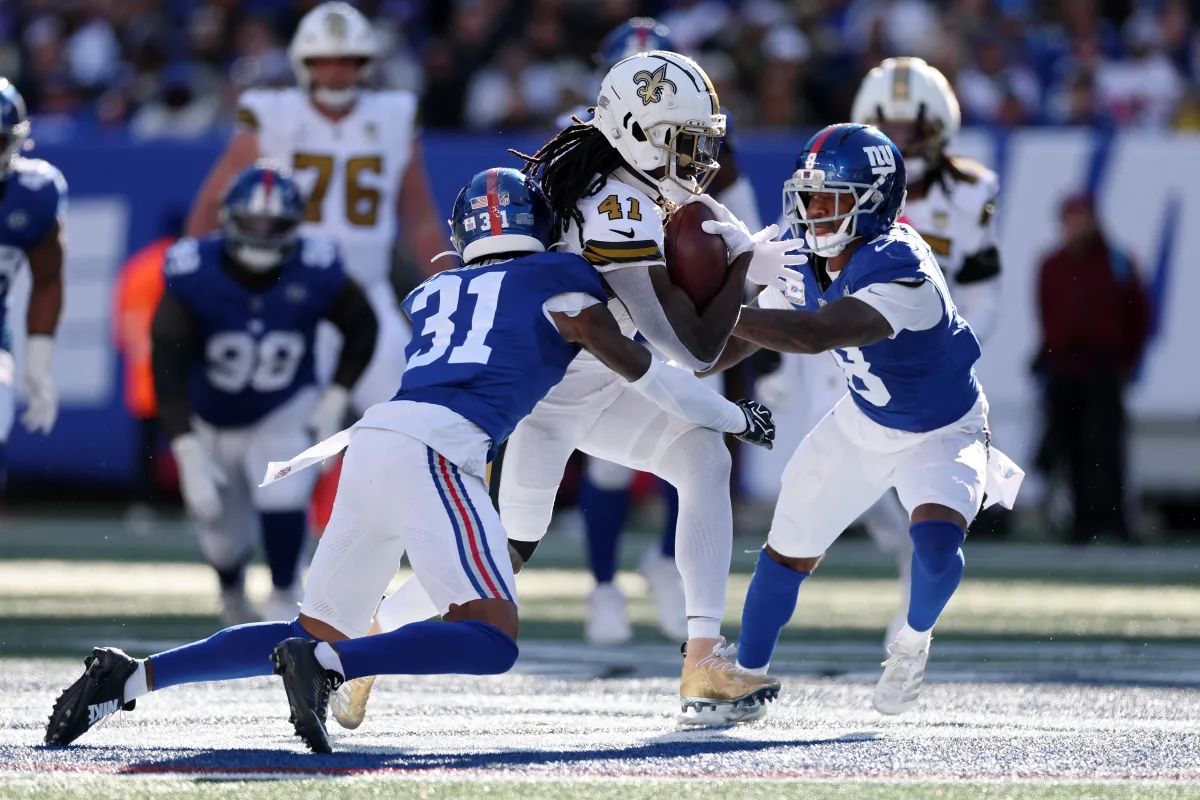
That anxiety proved not to be paranoia but prophecy on Sunday afternoon, as the Giants were handed a decisive and deeply frustrating home loss to the New Orleans Saints—a team that had been stumbling through its own existential crisis, having lost three consecutive games and entered the contest looking more like a punching bag than a playoff contender. For the Giants, this was supposed to be the game where they asserted their authority, where they proved to themselves and the league that their record was no fluke. Instead, they allowed the Saints to roll into their own building and rack up a season-high 34 points, shredding the defense with a mix of explosive plays and methodical drives that left the home crowd in stunned silence. It was a performance that felt eerily reminiscent of the Giants’ most painful recent defeats: a start-up of overconfidence, a middle section of self-inflicted errors—missed tackles, blown assignments, and a maddening failure to get off the field on third down—and a final act of stubborn resistance that came too little, too late. The echo of boos and the quiet shuffle of fans heading for the exits painted a picture of a fanbase that has seen this movie before, a fanbase growing weary of moral victories and encouraging signs. The loss was a brutal reality check, stripping away the glittering veneer of a 3-2-1 record and exposing the raw, frustrating truth that this team, while capable of flashes of brilliance, is nowhere near the polished product that a division leader should be. It was a game that left players speaking in hushed tones, searching for answers they didn’t have, and looking to their coaching staff for a spark that had yet to ignite.
Fueled by the bitter taste of that defeat, defensive coordinator Dennard Wilson stepped to the podium on Thursday afternoon with the fire of a man who has watched his unit leak oil for three straight weeks and can no longer keep his frustration bottled up. Wilson, who joined the Giants this season after a successful and highly regarded two-year stint calling plays for the Tennessee Titans, issued a stark and unvarnished warning to his defense. He called the recent behavior “unacceptable,” and then went a step further, employing a loaded, provocative term when he labeled defenders who fail to aggressively run to the football as “traitors.” The word hung in the air, jarring and confrontational, a verbal slap that will undoubtedly dominate the team’s pregame film session. It was a clear shot across the bow, demanding full-throttle effort on every single snap, regardless of down, distance, or score. Wilson’s math is simple, and his anger is rooted in a clear statistical regression that cannot be ignored or excused. While New York’s defense technically ranks 19th in the NFL in points allowed per game at 23.3—a middling figure that suggests mediocrity—the trajectory is terrifyingly steep. Across the first three weeks of the season, the unit allowed a respectable 55 total points. Over the last three contests, however, that number has ballooned to 85. That is a 54% increase, and more damningly, it represents a breakdown in fundamentals and effort, not just bad luck or a tough schedule. For Wilson, a fiery coach known for his intense sideline demeanor and his uncanny ability to connect with his players on a personal level, this is less about X’s and O’s and more about pride, identity, and the unspoken bond that must exist between men who trust each other with their physical safety. He is not just drawing up schemes; he is trying to forge a culture, and the “traitor” label is his way of severing ties with any player who hesitates, who jogs, or who watches a tackle instead of making it. It is a high-stakes tactic, one that could either galvanize a sagging room or fracture it—but Wilson is betting that his players, who know his reputation for loyalty and his willingness to go to war for them, will respond to the verbal slap in the face with renewed tenacity and a reckless abandon on Sunday.
Compounding Wilson’s growing list of grievances is the crushing reality of attrition, specifically in the defensive backfield. The Giants, notably, lost their starting cornerback and former first-round pick, Greg Newsome, to a concussion during the brutal and physical loss to the Saints. The 26-year-old, who has been a stabilizing and reliable presence on the outside, did not participate in practice on Wednesday, which is the first day of the league’s standard concussion protocol progression. While there has been no official timeline for his return, the mere fact that he was held out of a high-intensity session is a grim indicator that he is likely out for at least this week, and quite possibly longer, depending on how his brain and body respond to the intensive testing required to clear the protocol. Newsome’s absence is not just a loss of a body; it is the loss of a player who has been quietly thriving, ranking second on the team in passes defended with six, showcasing the kind of sticky coverage, elite closing speed, and football IQ that made him a highly coveted prospect coming out of college. Without him, the secondary suddenly looks thin, and the already-embattled defense must now ask younger, less-proven corners to step up against opposing number-one wideouts. The ripple effect is palpable. Wilson cannot just plug in a substitute; he has to reshuffle coverages, consider rolling safeties over the top, and potentially alter the pass-rush calculus to protect a vulnerable position group from being exposed. In a brutal sport where a single concussion can alter a season, Newsome’s health is now a primary storyline, and his absence leaves a gaping void—both on the stat sheet and in the emotional confidence of a unit that desperately needs a reliable anchor to lean on when the pressure mounts.
While the injury report dictates part of the Giants’ week, the front office also made a decisive, cold-blooded roster move on Tuesday that underscored the unforgiving and transactional nature of the league. The team cut veteran linebacker Jihad Ward, ending his second stint with the franchise after the 32-year-old had managed just one tackle across his two games played this year. On the surface, the decision is a math problem—a player producing at a negligible rate on a team looking to give valuable snaps to younger, cheaper, and more athletic talent—but beneath the cold transaction lies the human story of a career on its final legs. Ward’s journey has been a testament to perseverance and sheer grit. During his first two seasons in New York, in 2022 and 2023, he was a disruptive force, racking up 8.0 sacks and 22 quarterback hits, earning his keep as a rotational edge defender who could collapse the pocket and create havoc in the backfield. But the NFL is a nomadic existence, and Ward was shipped off to the Minnesota Vikings in 2024, followed by a year with Wilson’s Titans in 2025, where he experienced a curious and unexpected renaissance. With Tennessee, he posted a career-high 22 quarterback hits, tied his personal best in sacks with 5.0, and matched his high-water mark in passes defended with four—stats that seemingly proved he still had gas left in the tank and belonged in the league. Yet, when he returned to the Giants once more, the magic faded. The burst wasn’t there, the production vanished, and the coaching staff decided his roster spot was better utilized elsewhere to develop a rookie. It is a brutal end to a somewhat unexpected chapter, a stark reminder to every veteran in the league that loyalty is ultimately a one-way street. For Ward, the cut isn’t just a loss of income; it’s the dawning realization that a ten-year career, built on hustle and heart, might have played its final snap, leaving him to wonder if the urgent calls from other front offices will ever come again, or if he is simply another forgotten name on the wire.
As the dust settles on a chaotic week at the training center, the New York Giants stand at a crossroads, staring directly into a mirror that reflects a team far removed from the one that started the season with cautious optimism. They are first in the NFC East, but that label feels like a gilded cage. The defensive coordinator is publicly calling out traitors, a starting cornerback is in the concussion protocol, and a veteran leader has been sent packing. Yet, perhaps this chaos is exactly what this team needed to shake off its complacency. The NFL is a league of redemption and response, and the true measure of a team is not how it handles its success, but how it responds to the gut punch of failure. For the Giants, Week 7 presents an opportunity to prove they are not simply the least impressive division leader, but a resilient, scrappy squad that can win ugly, grind out games, and overcome their own inconsistencies. The players in that locker room know the narrative. They hear the analysts calling them pretenders. They feel the weight of that blown game against the Saints. The question now is whether Wilson’s inflammatory rhetoric will light a fire under a defense that desperately needs to return to its early-season form, and whether the offense—which has been a rollercoaster of brilliance and ineptitude—can string together enough drives to take the pressure off a banged-up secondary. The season is long, and the margin for error is razor-thin. But in the crucible of this adversity, the Giants have a chance to discover their true identity. They can either fold under the pressure of expectation, or they can channel the frustration of a disappointing loss, the sting of a roster cut, and the fiery tongue of their defensive coordinator into a relentless, united effort. The next few weeks will tell the true story of this team—not the story of a surprising record, but the story of a group of men fighting to prove that they belong at the top, even when the rest of the world says they don’t, and even when the evidence on the field currently suggests otherwise.