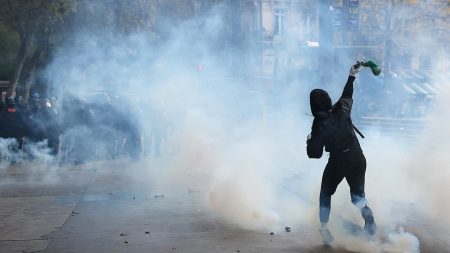




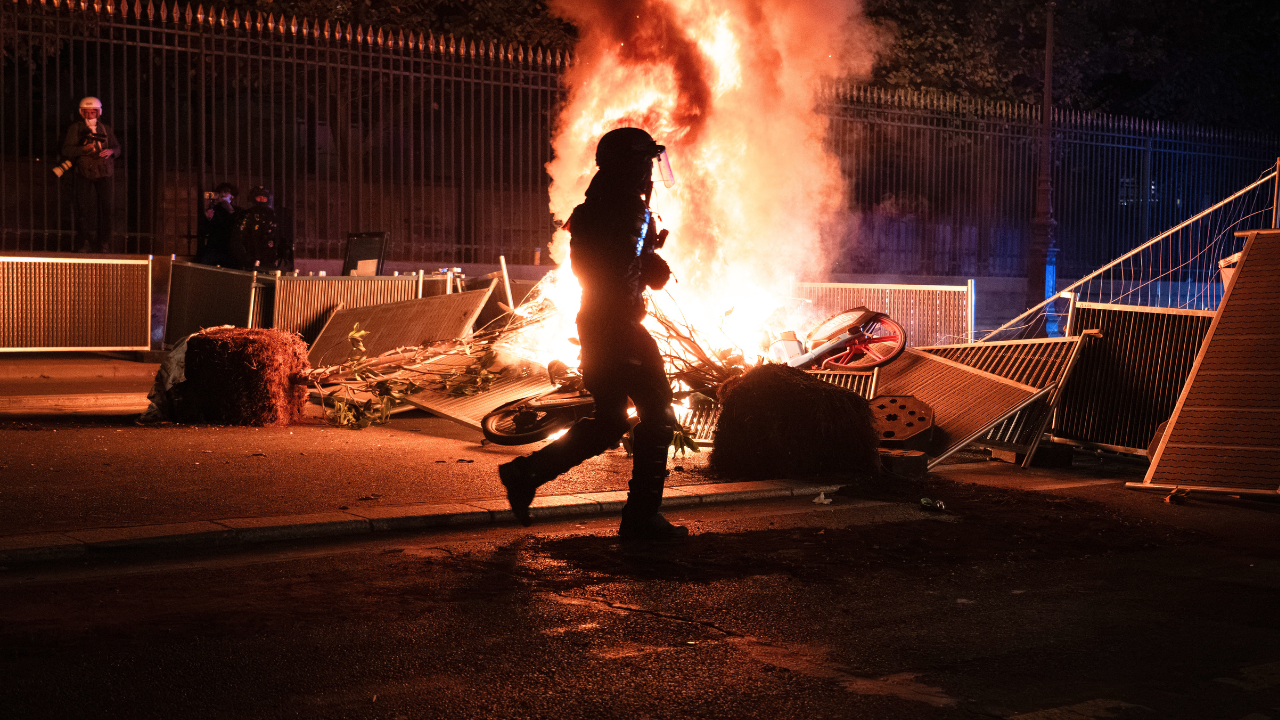
The air over Paris burned with smoke and chants this past October, a familiar mix of acrid tear gas and raw, unfiltered adolescent frustration. Teenagers with backpacks stood shoulder-to-shoulder with weathered union workers, their faces lit not just by smartphone flashlights but by the orange glow of burning barricades. Beneath the clatter of police batons and the roar of countless voices, a very different kind of battle was taking shape—one that transcended the broken windows of French high schools and chalk-dusted classrooms. Across the Atlantic, in a quiet digital echo chamber, Vijay Prashad, an academic and prominent communist leader, watched the French scenes with a knowing glow. Posting on X, he didn’t just report on the uprising; he poeticized it, borrowing a punk-rock lyric from The Clash, “Let fury have the hour, anger can be power,” and added a global coordinates check: “Paris-New Delhi-Buenos Aires.” It was a single line, but it mapped out a sprawling, interconnected web of global discontent, connecting the barricades of Europe to the dusty campus squares of South Asia and the bustling plazas of South America. But Prashad isn’t just any commentator tweeting about a political spectacle. He is the executive director of Tricontinental, a powerful nonprofit think tank funded by an American-born tech billionaire turned avid socialist, Neville Roy Singham, who currently lives and operates from Shanghai. His cryptic message served as a subtle wink to a much larger congregation—a signal that what was happening in the hallways and streets of France was never merely a domestic squabble over school funding. It was the opening salvo of a much larger, coordinated drama of rebellion, one carefully choreographed to resonate across continents and generations.
The real story of the French protests isn’t just the youths on the barricades; it’s the intricate machinery humming quietly behind them. An extensive investigation has mapped out what can only be described as a sprawling “Chaos Inc.”—a transnational ecosystem of communist parties, revolutionary socialist groups, labor unions, environmental activists, and media platforms that amplify, fund, and technically organize this unrest. At the center of this octopus is the Singham network. This isn’t a shadowy conspiracy theory; it’s a documented nexus of political action and money. Tricontinental, named after the 1966 Havana communist convention, functions as the intellectual brain trust, while outlets like BreakThrough News serve as loudspeakers, packaging the street chaos for global audiences. They don’t just report on the mayhem—they dramatize it, cutting together montages of smoke, Palestinian flags, and police violence, set to cinematic scores that make each protest feel like a trailer for a revolution. The grievances themselves are heartbreakingly real: crowded classrooms with mold on the walls, teachers burned out, and students facing an economy that offers them nothing. Yet these legitimate pains are deliberately inflated and steered toward a grander, philosophical battle against the capitalist system. The operation’s genius lies in its ability to fuse everyday despair with ideological fervor, turning a high school student’s quiet rage into a weapon in a geopolitical cold war. Even Codepink, the peace organization co-founded by Singham’s wife, Jodie Evans, is importing these protests into the American discourse, urging U.S. citizens to look at Paris, Madrid, and New Delhi as a template for resisting their own military-industrial complex. The message is clear: your local fight is our global weapon.
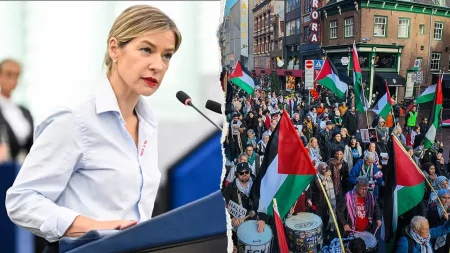
So who exactly is marching in France? Digging beneath the surface reveals a fascinating and complex demographic. The comprehensive mapping identified 54 distinct organizations within this protest ecosystem. Of these, only 16 are actually student or youth-led groups, including communist youth outfits and Muslim student associations. The remaining 38 are decidedly adult-led entities: communist political parties, powerful labor unions, and revolutionary organizations hardened by decades of political street-fighting. This is a crucial, humanizing detail—the students are often the spark, but the fire is fueled by seasoned activists who know exactly which levers to pull. The resulting mix is dizzying and deliberately broad, a coalition of unlikely bedfellows. You have lawmakers from the far-left La France Insoumise (LFI) waving Palestinian flags alongside high schoolers concerned about overcrowded lecture halls. You have the infamous Gilets jaunes, or Yellow Vests, who have been raging against fuel taxes and economic inequality for years, now converging with climate activists from Extinction Rebellion and the radical “Earth Uprisings” movement. Major labor unions like the CGT and Force Ouvrière join the calls, linking the students’ demands to their own national cost-of-living strikes. Meanwhile, Trotskyist intellectuals from Révolution Permanente walk beside communist youth draped in hammer-and-sickle banners. This isn’t a spontaneous gathering; it’s a carefully curated orchestra. The investigation reveals these groups strategically use school conditions as a universal pretext to unify a much broader anti-capitalist, anti-austerity, and anti-military spending agenda. They paint the picture of a lone anthropology student throwing a rock at police as a heroic symbol of an oppressed global class, drawing in French teachers, British socialists, Greek communists, and activist parents, all chanting the same revolutionary couplets in different languages.
The immediate protests are merely a dress rehearsal for something far more sweeping. The investigation uncovered an ambitious blueprint for a continental insurgency. An international coalition of no fewer than 28 communist and socialist youth organizations is galvanizing students for a coordinated strike across 12 European countries on November 20 under the jarring slogan, “Fight for Our Future, Not Their Wars!” Their tactics are explicit: walkouts, street blockades, campus occupations, and public assemblies aimed at disrupting the normal functioning of society. They have moved beyond mere complaints about classroom budgets, tying French educational struggles directly to opposition to NATO military spending and the ongoing war in Ukraine. This marks a decisive escalation—transforming an autumn of localized policy fights into a spring-loaded anti-war, anti-imperialist movement across the Continent. The global synchronization is striking and undeniable. In a recent media appearance, Jodie Evans of Codepink explicitly invoked the teeming streets of France, Spain, and India, urging everyday Americans to look abroad for inspiration and take to the streets of Washington, D.C., to oppose U.S. military spending. The ambition is to create a sympathy strike that jumps borders and oceans, turning the French student into a universal martyr for causes ranging from Palestinian statehood to climate justice to crushing student loan debt. This Euro-Atlantic agitation pipeline is lubricated by the Singham network’s deep pockets and sprawling media reach, creating an endless feedback loop: images of European defiance inspire American protests, which get packaged and broadcast back to Europe, spawning further demonstrations. It is a poignant generational call to arms, but one that carries a heavy hidden risk—burning out the very youth it claims to champion, weaponizing their deeply genuine anxieties about climate doom and economic precarity into ammunition for an ideological power struggle far beyond their control.
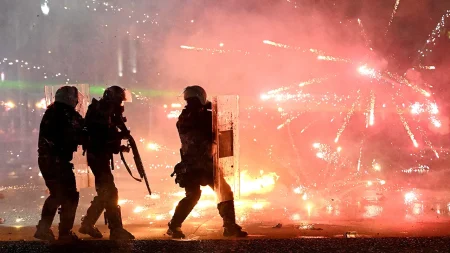
But amid the ideological maneuvering and strategic tweets, one must ask: what does this chaos truly mean for the human beings living through it on the ground? In France, the public mood is a strange and painful duality—exhilaration among the activist core, and sheer, gnawing terror among everyday citizens caught in the crossfire. Schoolteachers watch in dismay as their students are radicalized into political pawns, their genuine grievances twisted into a script written elsewhere. Parents hold their breath as live broadcasts show their teenagers locked in standoffs with riot police in the smoky twilight. The protests have thrown a spotlight onto a profound fracture running through French society—a nation that feels, in the words of many observers, as though it is devouring its own heart. The sight of LFI lawmakers cheerfully endorsing street violence while police officers are injured and public libraries are spray-painted has ignited a furious backlash, with a quiet counter-movement of ordinary citizens desperate for a return to order. The systemic decay of the French school system is undeniably real, but the solutions offered by these sprawling global networks never involve mundane fixes like new textbooks, better salaries for teachers, or functioning HVAC systems. Instead, they offer the dangerous abstraction of revolution—a utopian, violent dream that, in the harsh light of morning, brings nothing but boarded-up storefronts, traumatized neighborhoods, and broken families. For the overwhelmed police forces, this looks like a low-intensity urban war; for the students, the distinction between righteous civic protest and thrill-seeking vandalism has dissolved in the heat of the moment. The human stories are visceral and heartbreaking: a teenage girl clutching a Palestinian flag while being engulfed in tear gas, a retired educator weeping over a defaced library, a Moroccan shopkeeper sweeping glass from his ruined doorway, wondering if this political spectacle will ever bring him a better life.
The tragedy of the 2024 French protests lies in the way genuine human suffering is being snatched up and absorbed into a colossal, frictionless global narrative of rebellion—a narrative that ultimately serves a handful of powerful ideologues far more than the students themselves. From the quiet, insulated offices of think tanks in Shanghai to the bustling livestream studios of New York, a new kind of geopolitical warfare is being waged in the twenty-first century. It is not fought with intercontinental ballistic missiles, but with carefully calibrated social media groups, targeted walkout schedules, and synchronized European strike dates penciled in months in advance. The exhaustive investigation into these 54 organizations lays bare a stark, uncomfortable reality: the infrastructure of protest is no longer spontaneous. It is managed, funded, and packaged with the precision of a global marketing campaign. For the average citizen watching from their living room, this raises a haunting question about agency and authenticity—are the young people who march with such passion truly leading their own revolution, or are they the earnest yet unwitting foot soldiers in a larger, impersonal “Chaos Inc.”? The truth likely lies somewhere in the grey, uncomfortable middle. There is an undeniably raw and organic fire of frustration among French youth, a volcanic anger at the systemic elites and political establishment that have abandoned them to economic precarity and invasive environmental dread. That fire is real, and it burns hot. But it is also being meticulously banked, stoked, and fanned by external forces who view it merely as kindling for their own expansive anti-capitalist crusade. As the scheduled November 20 European strike looms over the horizon, the globe watches with a fragile mixture of dread, curiosity, and weary resignation. If the events in France are indeed the grand precursor to a broader, synchronized global upheaval, we may be entering a profoundly uncertain chapter in modern history—one where local school boards are transformed into flashpoints for international communist alliances, where teenage despair is monetized into ideological currency, and where the desperate, justified hopes of a generation become the volatile fuel for a very old, very cynical political fire. The Clash sang that fury and anger could be power. But as the smoke clears over Paris, it is imperative for the world to examine both the fury and the power—to ask who truly wields the match, and, more poignantly, who will be left standing among the ashes to rebuild.