


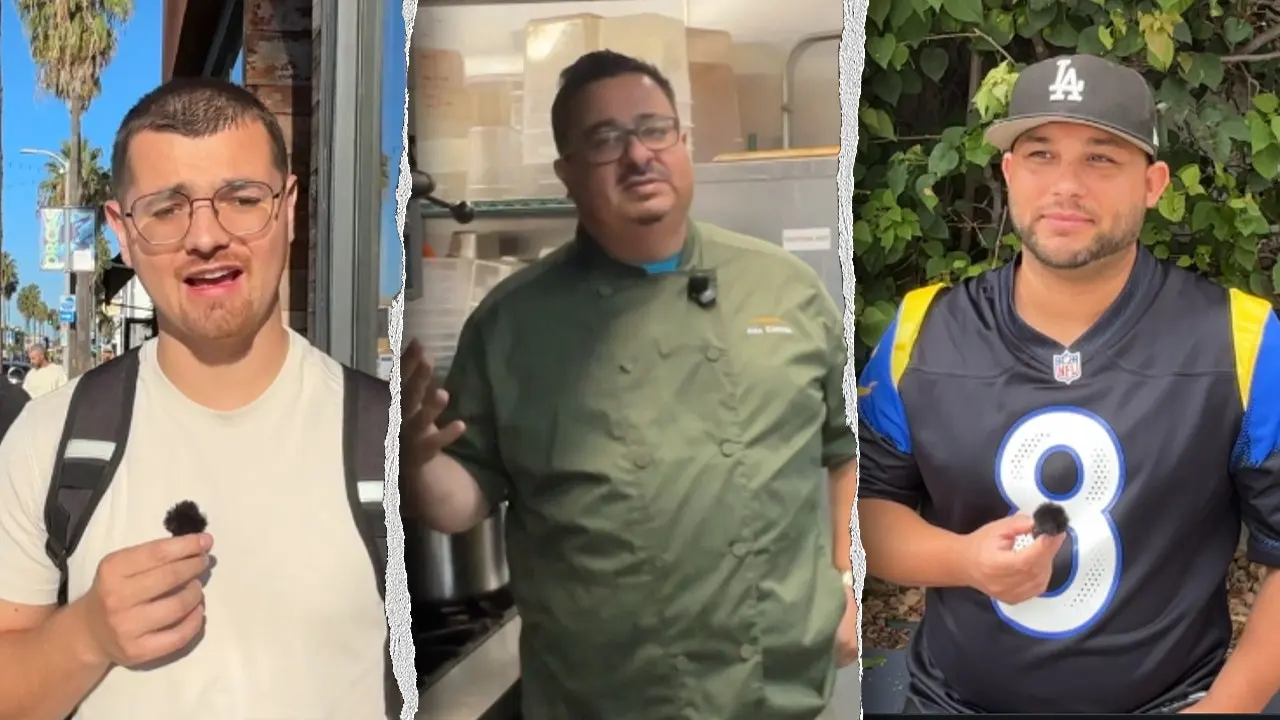
There was a time when happy hour was just an afterthought—a quiet stretch between the end of the workday and the main event, a chance to grab a cheap drink and a plate of appetizers before heading off to a real dinner. In California, that script has flipped. For a growing number of diners, happy hour is the main event. It is the dinner. It is the night out. And for restaurant owners, it is the only thing keeping the chairs filled and the lights on. Chef Alex Carballo of Grand Restaurant Group told Fox News Digital that happy hour once accounted for perhaps 5 to 8 percent of his business. Today, that number has climbed to nearly 30 percent, even as customers have pulled back on how often they dine out. “My happy hour has increased a lot, so I think people are looking for deals and looking for options,” Carballo said. The shift is not just a culinary trend; it is a survival mechanism born of economic necessity. A state long associated with sunshine, opportunity, and the good life has become a place where the simple pleasure of eating out requires strategy, math, and a willingness to show up early. The golden hour, once a prelude, has become the whole show.
Carballo has watched this transformation unfold from behind the kitchen pass, where the rhythms of service tell a larger story about the economy. Customers who used to visit four or five times a week now come in three times. Those who used to come three times now come once. “They’re going out three times a week, where they were coming out to see me four or five [times]. And the people that used to see three times a week, they’re only coming out once,” he said. What was once a stop for drinks or appetizers before dinner is increasingly becoming the dinner itself. “Now it’s like, that’s where they’re going and they’re hitting those scenes,” Carballo said. The appeal is obvious: customers can still enjoy the same food, the same service, the same atmosphere—but at a price that does not feel like a betrayal. For diners, happy hour offers a small sense of control in an economy that feels increasingly out of control. But for restaurant operators, the discount model creates a painful paradox. The costs on the other side of the ledger have not changed. “I’m still paying the same amount for food. I’m still paying the employees. My rent didn’t change. Nothing changed. Only thing I’m doing is trying to discount my product to gain people to come here,” Carballo said. It is a razor-thin margin, a tightrope act between attracting customers and staying solvent. Happy hour is no longer a marketing gimmick; it is a survival strategy, and the people executing it are doing so with a mixture of grit and quiet desperation.
The pressures driving diners to happy hour extend far beyond restaurant tabs. California has the highest overall price levels in the nation, according to 2024 data from the U.S. Bureau of Economic Analysis, with prices running roughly 11 percent above the national average. That gap is not an abstract statistic; it is felt every time someone fills a gas tank, walks through a grocery store, or opens a rent bill. In Southern California, residents described a constant, low-grade financial anxiety that shapes their daily decisions. Jonas, a Santa Monica resident who is planning a wedding with his fiancée, told Fox News Digital that he and his partner are reevaluating their budget as everyday expenses continue to add up. “Certainly gas is expensive, rent is high, and then grocery prices are pretty high as well,” Jonas said. He estimated that he spends about $100 a week on groceries, and that rising costs are influencing everything from dining out to transportation. The couple is “eating out a little bit less,” he said, and he has started walking to work to “save money on gas as well.” A wedding should be a time of joy and anticipation, but for many couples, it is also a time of spreadsheets and compromises. “I think that people are just seeing prices go up everywhere, and feeling like they’re getting less than what they had four years ago maybe,” Jonas said. “I think everybody’s really feeling that.” The feeling is not limited to any one demographic. It cuts across age, income, and geography, a shared sense that the foundations of daily life have become more expensive and less stable. And while California’s gas tax hike has made headlines, for ordinary drivers it is just another line item on an already overwhelming list.
For some Californians, the financial strain has become so overwhelming that the only answer is to leave. Justin, a California native from Glendora who moved to Las Vegas seven years ago, told Fox News Digital that the state’s high cost of living was one of the main reasons he relocated. “Affordability is crazy,” Justin said while visiting Los Angeles for a Rams game. “I left seven years ago and I thought gas and you know rent was high then,” he said. “Here I am seven years later and it’s … one of the reasons why I’m in Vegas now. It’s just unaffordable.” There is a particular sadness in returning to a place you once called home and realizing you could no longer afford to live there. Justin said many of his friends who remain in California are still struggling with housing costs. “90% of my friends are living with a roommate. It is really hard to live alone here,” he said. That reality is echoed in the housing market. According to the California Association of Realtors, just 19 percent of California households could afford the state’s median-priced home of $916,750 in the second quarter. The American Dream of homeownership, already distant for many, feels almost unattainable in a state where even a modest home carries a seven-figure price tag. For those who cannot afford to buy, renting is no refuge; rents in many California cities are among the highest in the country. The result is a state where even middle-class families are forced to double up, share space, or pack up and move to places where a paycheck goes further. Justin’s story is not an outlier; it is part of an accelerating pattern of outmigration, as people who grew up in California reluctantly conclude that the state they love no longer loves them back.
In Venice, Tatiana sees the same story playing out at the gas pump, the grocery store, and the neighborhood restaurants she once took for granted. “Everything is more expensive, gas is more expensive, food,” she told Fox News Digital. “There’s really very few affordable restaurants left on Abbot Kinney. Even our local co-op prices have gone up at least 15%. Everything costs more.” Abbot Kinney Boulevard, once a bohemian stretch of surf shops and quirky cafes, has evolved into a destination for boutique shopping and upscale dining. For the people who actually live in Venice, that evolution is a reminder that they are being priced out of their own community. The local co-op, once a place where neighbors could shop without breaking the bank, now feels like a luxury. Tatiana’s words—“We’re not getting any breaks in California”—capture something essential about the moment. It is not just that prices are high; it is that there is no relief valve. No end in sight. No sense that the next corner will bring a bargain. For many, the constant pressure wears down the spirit, turning daily errands into exercises in endurance. The beach, the weather, the beauty of the coast—these are the reasons people stay. But they are increasingly balanced against the reality of monthly bills, rising taxes, and the feeling that the California Dream has become a California hustle.
Taken together, these stories paint a portrait of a state at a crossroads, where happy hour has become a mirror of the economy. The restaurant owner discounting his menu to bring in customers, the groom-to-be walking to work to save on gas, the man who left for Las Vegas because his hometown became unaffordable, the Venice resident watching her neighborhood slip out of reach—they are all navigating the same storm, each in their own way. Happy hour, once a casual ritual, has become a small act of defiance. It is a way to say that even when everything costs more, people still want to gather, to connect, to share a meal with friends and family. Restaurant owners are doing the best they can with impossible math, and customers are doing the best they can with impossible budgets. The happy-hour table is where resilience meets reality. California has always been a place of reinvention, a land where people come to start over and dream big. But now it is also a place where a half-priced cocktail and a discounted plate of tacos can feel like a victory. Until prices ease, until wages catch up, until housing becomes more attainable, the main event will be the deal, not the destination. For a state that once defined the good life, that is a sobering thought—but it is also a reminder of the human spirit’s ability to adapt, to find joy in small moments, and to keep showing up, even when the menu has changed.