



When the doctor said the words “multiple sclerosis,” I didn’t flinch, I didn’t cry, and I didn’t ask for a second opinion. I simply nodded, because deep down I already knew something was terribly wrong with my body, and the diagnosis made a strange kind of sense. MS is a long-term autoimmune disease that affects the central nervous system, and all the symptoms I had been experiencing for months fit the picture perfectly. There was the muscle weakness that made my legs feel like they were filled with sand. There was the crushing fatigue that no amount of sleep could touch, leaving me drained from the moment I opened my eyes. There were the headaches that settled behind my eyes and refused to leave, and the dizziness that made the world tilt without warning. The whole nightmare began in February 2025, on an ordinary morning that turned terrifying in an instant. I woke up and the room was spinning, a violent, nauseating whirl that made me gasp. I staggered toward the bathroom, desperate to be sick, when my vision began to fade at the edges. It was like a curtain being drawn over my eyes, slowly swallowing the light. Then everything went black. I passed out, and when I came to, I was vomiting on the floor, confused and terrified. An ambulance rushed me to the emergency room, and because the doctors worried I might have hit my head when I collapsed, they ordered a brain MRI. That scan changed my life, because it revealed lesions on my brain, spots that could be associated with MS and could explain my dizziness, balance problems, and the strange numbness and tingling that sometimes crept through my limbs. At the time, I felt almost relieved to have an answer. I trusted the doctors completely. I had no reason not to.
But the diagnosis wasn’t as simple as I hoped. Over the following year, I went through a long and exhausting battery of tests. I had a spinal tap, a procedure where a doctor carefully inserts a needle into the lower back to collect cerebrospinal fluid, the liquid that cushions the brain and spinal cord. The fluid is examined for markers of disease, and I lay still for hours afterward, praying that the test would give us clarity. When the results came back, they showed no abnormalities. That should have been reassuring, but the lesions on my brain were still visible on a follow-up MRI. They weren’t growing, and they weren’t multiplying, but they were there, stubborn and unexplained. My neurologist remained confident that we were on the right track. Then, in February of this year, he sat me down and told me I was in the early stages of MS. He recommended that I start disease-modifying therapy, a class of medications designed to slow the progression of the disease and reduce flare-ups. Suddenly, the abstract diagnosis became very real and very serious. These treatments can be highly effective, but they are not gentle. They can change your life in profound ways, with side effects that range from mild discomfort to serious complications. Research has shown that while many MS treatments reduce infection-related hospitalizations, some medications carry increased risks of thyroid disorders, liver disease, high blood pressure, heart disease, and even acute liver injury. I stared at the brochures he handed me, reading about immunosuppression and monthly infusions, and I felt a knot tighten in my chest. This was not a decision I could make lightly. I needed time to think. I needed to understand what I was putting into my body and why. So I told him I wanted to wait, and I went home to research everything I could find.
That decision to pause and question saved my life, though I didn’t know it yet. I decided to seek a second opinion, not because I thought my neurologist was wrong, but because I wanted to be absolutely certain before committing to a lifetime of powerful medication. I was referred to a specialist who ordered a more advanced MRI, one specifically designed to detect the patterns of MS with greater precision. I went into that scan expecting confirmation. Instead, the specialist delivered news that stopped me cold: the MRI ruled out MS entirely. The lesions that had haunted me for a year were not the hallmark of multiple sclerosis. They were something else, something that had been overlooked. The doctor noticed a thyroid nodule on the imaging, a small lump that had been hiding in plain sight. An ultrasound soon confirmed it, a 1.6-centimeter nodule on my thyroid, and I was scheduled for a fine-needle biopsy, in which a thin needle is used to extract a tiny tissue sample for testing. The days that followed were agonizing. I tried to go about my normal routine, taking care of my children, running my spa, pretending everything was fine. But in the quiet moments, the fear crept in. When the results finally came back, the doctor told me the nodule had a 50 percent chance of being malignant. Fifty percent. I remember sitting in that sterile office, staring at the wall, trying to process the number. In my gut, I knew it was cancer. I can’t explain how I knew, but I did. It was a primal certainty, a voice inside me that said this is real, this is happening, and you need to fight.
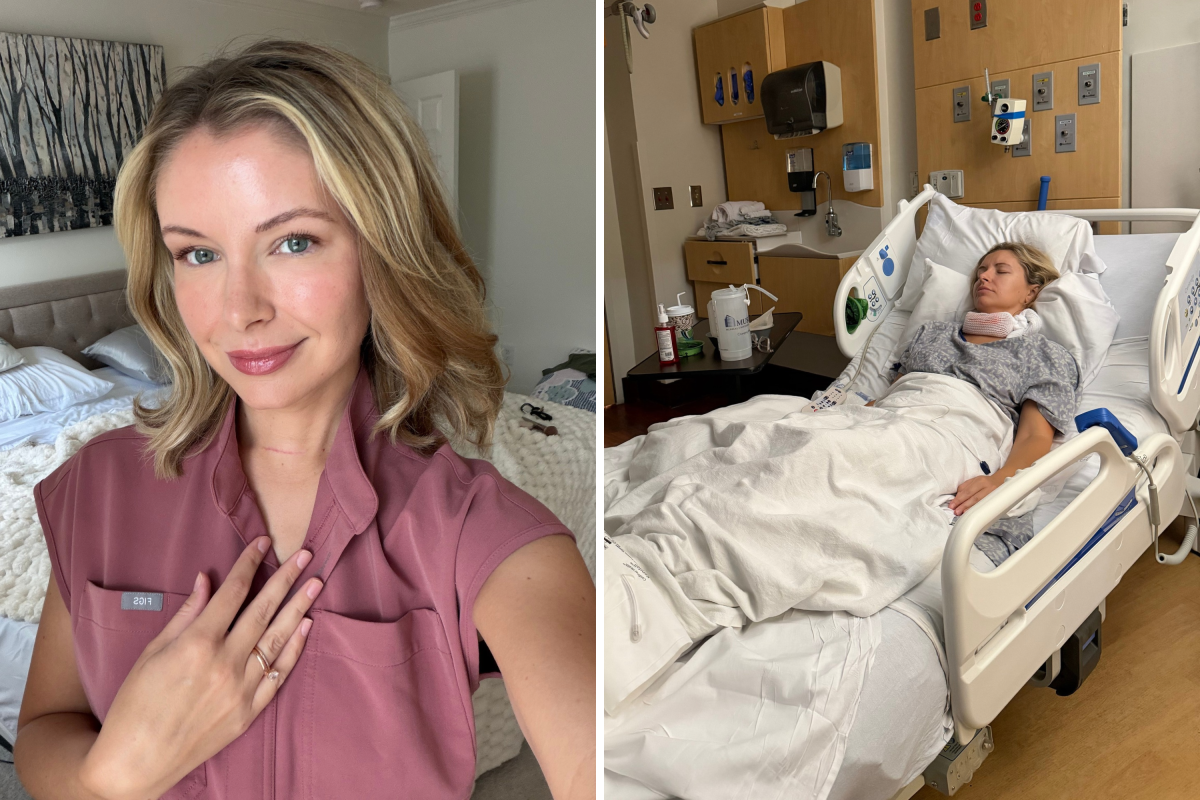
On July 30, I went into surgery to have half of my thyroid removed. I woke up with a sore throat and a thin scar on my neck, feeling fragile but still alive. The pathology results came back a few days later, and they confirmed my worst fears, but also brought an unexpected measure of hope. I had not one but two types of thyroid cancer. The first was follicular thyroid cancer, a less common form that accounts for about 10 to 15 percent of thyroid cancer cases in the United States. The second was papillary thyroid cancer, the most common type, representing around 70 to 80 percent of cases. It felt surreal to hear that I had been carrying two different cancers inside me, both invisible, both silent, while my doctors had been focused on a disease I didn’t actually have. But the greatest relief came next: the cancer was contained within the nodules. It had not spread to my lymph nodes, and it had not invaded the surrounding tissues. Surgery was all the treatment I needed. I did not need chemotherapy. I did not need radiation. I just needed to heal and then be monitored closely for the rest of my life. I will have regular blood tests and ultrasounds to watch for any signs of recurrence, and I will live with a certain amount of vigilance forever. Even now, I wonder whether my neurological symptoms were connected to the cancer. Thyroid cancer is often called a silent cancer because it typically causes few or no symptoms, but part of me cannot help but wonder whether the fatigue and weakness I felt were somehow related to the nodule pressing on my body or the stress of the unknown. I will never know for sure, and I have made peace with that.
The misdiagnosis left me with a complicated tangle of emotions. On one hand, I felt empowered, because I had trusted my instincts and sought a second opinion instead of blindly accepting what I was told. That choice changed the entire course of my medical care. On the other hand, I felt deeply scared by how easily one wrong turn could send someone down a path they never needed to walk. If I had not paused, if I had simply agreed to start MS treatment, I could have begun taking medication that suppresses the immune system. That could have had serious consequences, especially if my body was already fighting cancer. The thought haunts me. I could have spent years treating a disease I did not have while the real threat grew quietly inside me. I could have endured painful infusions and debilitating side effects for nothing. I could have ignored the cancer until it spread beyond the point of easy treatment. That realization is terrifying, but it also fuels me. I want my experience to encourage other people to advocate for themselves, to ask questions, to seek second opinions, and to remember that doctors are human and humans make mistakes. I have learned that no one knows your body better than you do. If something feels wrong, if a diagnosis doesn’t sit right with you, if a treatment plan feels too aggressive or too uncertain, you have the right to push back. You have the right to ask for more tests, more information, more time. You have the right to find a doctor who listens. I was lucky because I did those things, but I also know that not everyone has the resources or the confidence to do the same. That is why I am sharing my story, in hopes that it might give someone else the courage to speak up.
I want everyone, both men and women, to perform regular thyroid self-checks. It takes less than a minute, and it could save your life. Stand in front of a mirror, tilt your head back slightly, and swallow. Look for any bulges or asymmetries in your neck. Then use your fingertips to gently feel the area around your Adam’s apple, moving from your collarbone up toward your chin. Your thyroid gland sits low in the front of your neck, and it should feel smooth and small. If you ever notice a lump, a swelling, tenderness, or anything that feels unusual, do not ignore it. Do not convince yourself that it is nothing. Make an appointment with your doctor and ask for an ultrasound. I know it can feel awkward to poke at your own neck, and I know it is easy to assume that you would notice if something was wrong, but thyroid cancer often grows silently, without pain, without obvious symptoms, until it is discovered by chance. I had no idea the nodule was there. I never felt it, never saw it, never suspected it. It was only because I sought a second opinion for an unrelated neurological issue that the cancer was found at all. That thought still sends chills down my spine. I am a 37-year-old mom of two from Charleston, South Carolina, and I run a spa. I am not a doctor, and I do not have all the answers. But I have learned that being alive is a gift, and that taking charge of your health is one of the most powerful things you can do. I am sharing my story on social media, using my platform to raise awareness about thyroid cancer and the importance of self-advocacy, because I refuse to let my experience be wasted. If my story reaches one person who decides to get a second opinion, or to check their neck, or to trust their gut, then all of it will have been worth it.