


1. Introduction: The Calm Before the Inferno
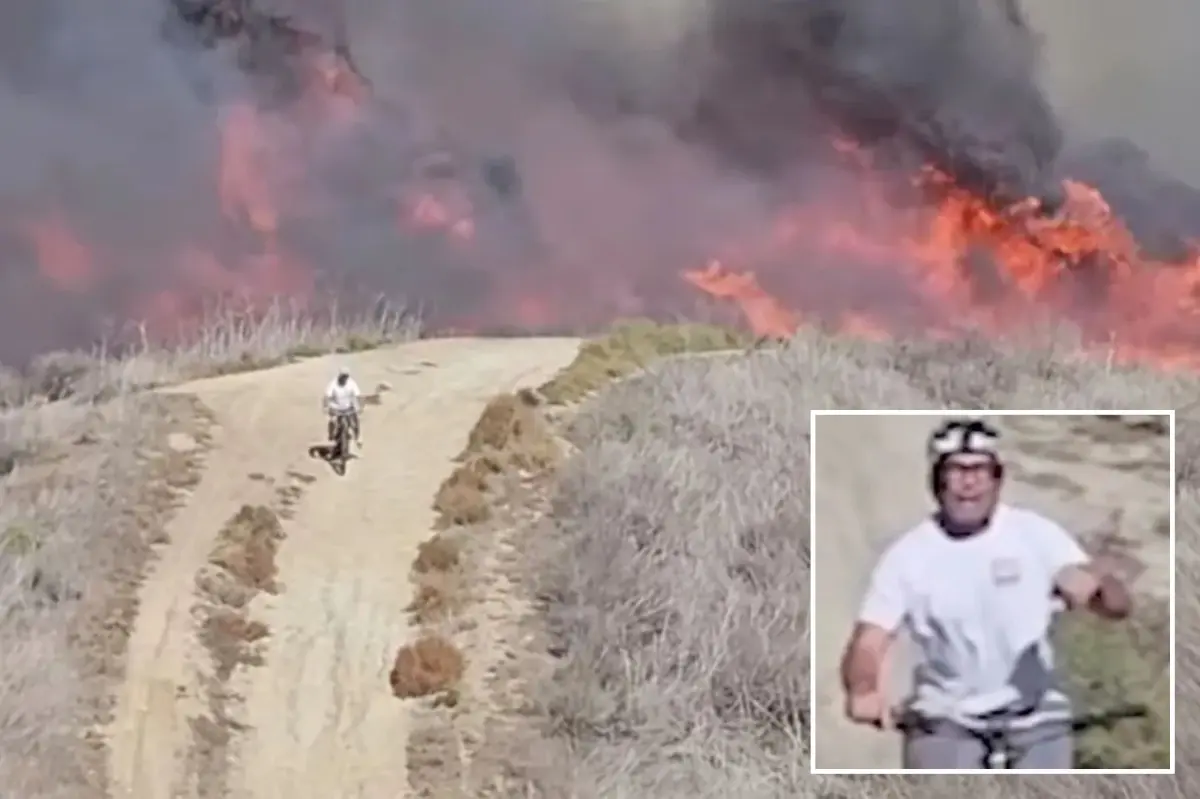
On a seemingly ordinary Friday morning in the idyllic coastal community of San Juan Capistrano, a group of mountain bikers set out to conquer the rugged trails that wind through the golden hillsides. The sun was warm, the sky was clear, and the only danger they anticipated was a tricky switchback or a loose patch of gravel. They could not have known that within minutes, their routine ride would transform into a desperate race for survival. As they pedaled along the Las Ramblas trail, a familiar yet unnerving sight emerged in the distance: a towering column of smoke, then a wall of fire, roaring up a hill with an almost sentient fury. Video footage captured by the group shows a single cyclist silhouetted against the crest of a hill, while behind him, the sky turns to a churning black and orange maelstrom. The calm of the morning was shattered in seconds. The terrain, once a place of solace and challenge, became a living nightmare of heat, smoke, and sheer terror. This was the Norte Fire, a fast-moving wildfire that had erupted in the San Clemente area around 11:30 a.m. that day, and it was already devouring everything in its path, leaving a wake of destruction and fear that would ripple through the community for days.
2. A Family’s Fight for Survival: Trapped by the Flames
Among the bikers were a couple and their young child, who found themselves caught in the fire’s rapid advance. The husband, still shaken by the ordeal, described how the fire spread in what felt like seconds, creating a wall of flames that separated him from his wife and their friend. In the chaos, with smoke thick enough to choke on and embers swirling like malevolent fireflies, the family was torn apart. Panic set in as they realized that both exits leading away from the blaze were just as dangerous, each route cut off by the roaring inferno. The heat on their faces was terrifying, a physical, oppressive force that made it difficult to breathe, let alone think clearly. They had no choice but to push through, their instincts overriding every rational thought. Miraculously, after what must have felt like an eternity of stumbling through smoke and flames, they were reunited. The relief was overwhelming, a profound gratitude that they had escaped with their lives. The family later shared their harrowing experience on Instagram, writing, “Today, God was with us!!!! The fire spread so quickly!!!! My friend was able to catch a glimpse of our crossing, before her meta glasses turned off. Both exits were just as bad. The heat on our faces was terrifying. Fires spreading fast, making it difficult to breathe and see. Thankful we made it out.” Their words, punctuated with exclamation points and a raw, unfiltered faith, capture the sheer lucky escape they had just experienced.
3. The Norte Fire’s Rampage: A Community on Edge
The family’s ordeal was a microcosm of a larger catastrophe unfolding across the region. The Norte Fire, which broke out in the afternoon, grew with alarming speed, expanding to cover 465 acres in just three hours. The Orange County Fire Authority (OCFA) and Cal Fire reported that the blaze had already damaged or destroyed six homes, an echo of the familiar and heartbreaking pattern of California’s relentless wildfire season. Firefighters battled the blaze through the night, with one suffering from heat exhaustion and another sustaining an injury, but thankfully no civilians were reported hurt. Mike Yeun, a battalion chief for the OCFA, gave a late-night update, his voice weary but resolute, emphasizing that crews were working tirelessly to increase containment, extinguish hot spots, and keep the fire within its current footprint. His priorities were clear: “Our number one objective is safety of the community and our firefighters, and when it’s safe to do so, our second priority would be to get people back into their homes.” However, that return would have to wait. Evacuation orders remained firmly in place for several zones in both San Juan Capistrano and nearby San Clemente, leaving thousands of residents displaced, uncertain of what they would find when they were finally allowed to return.
4. A Broader Landscape of Fire: Southern California in Flames
The Norte Fire was not an isolated incident. It was part of a larger, ominous pattern of simultaneous wildfires that had erupted across Southern California that weekend, a stark reminder of the region’s ever-present vulnerability. In Malibu, the Bryson Fire had torched 147 acres, though firefighters had managed to achieve 52% containment by Saturday morning. Further south, in Azusa, the Peak Fire had consumed 43.3 acres, with 41% containment. And near San Diego, the Henderson Fire had already burned through a staggering 3,100 acres, with only 20% containment. Together, these fires represented a broad assault on the landscape, fueled by dry brush, fierce winds, and years of drought. The scattered fires placed immense strain on firefighting resources, forcing crews to divide their attention and battle on multiple fronts. For the residents of these communities, the smoke-filled skies and the fear of the next evacuation order became a shared, anxious reality. The weekend that should have been a time for leisure and outdoors was instead dominated by ash and uncertainty, as the smell of wildfire smoke wafted across the region.
5. Voices in the Smoke: Commentary and Community Memory
In the midst of the chaos, a familiar voice added perspective. Spencer Pratt, a former Los Angeles mayoral candidate and a wildfire survivor himself, weighed in on the family’s predicament with a characteristic blend of dark humor and hard-won wisdom. “It’s not the worst place to be in a wildfire… But it’s definitely not the best,” he wrote on X. His comment, while somewhat flippant, underscored the reality that some locations are inescapably dangerous, and that the “best” place is always somewhere far away. For those who have experienced the trauma of a wildfire, the emotional scars run deep. The mountain bikers’ story, now shared across social media, resonated with thousands, a testament to the primal fear of being trapped by fire. It also highlighted the growing need for preparedness and awareness in a state that has become a tinderbox. The images of the bike trail, once a place of serene recreation, now serve as a haunting visual of nature’s unpredictable fury. Yet, in the same breath, the family’s survival is a story of resilience, quick thinking, and the unyielding power of the human spirit to overcome the most terrifying of circumstances.
6. Looking Forward: Ashes, Hope, and the Road to Recovery
As Saturday dawned, the fires continued to burn, and the work of recovery began. The evacuations remained in place, and for the residents of San Juan Capistrano and San Clemente, the waiting game was agonizing. They were left to wonder if their homes had survived the inferno’s path, or if they, like so many others, would be left to sift through ashes. The firefighters, many working through exhaustion, continued their relentless assault on the flames, their chief’s words ringing true: safety first, then the long road to rebuilding. For the mountain bikers, the ordeal was over, but the vivid memories of that terrifying ride will remain etched in their minds. Their story is a powerful reminder of the unpredictable nature of wildfires and the fine line between a routine outdoor adventure and a battle for survival. The community, bound together by shared trauma and resilience, will begin the slow process of healing, assessing the damage, and supporting those who lost everything. The flames may have died down, but the smoke will clear, revealing a landscape forever changed, yet a community determined to rise from the ashes. The “lucky” escape of the family on the trail serves as a beacon of hope, a story of survival that will be told for years to come, a reminder that in the face of nature’s fury, courage and faith can carry us through.