

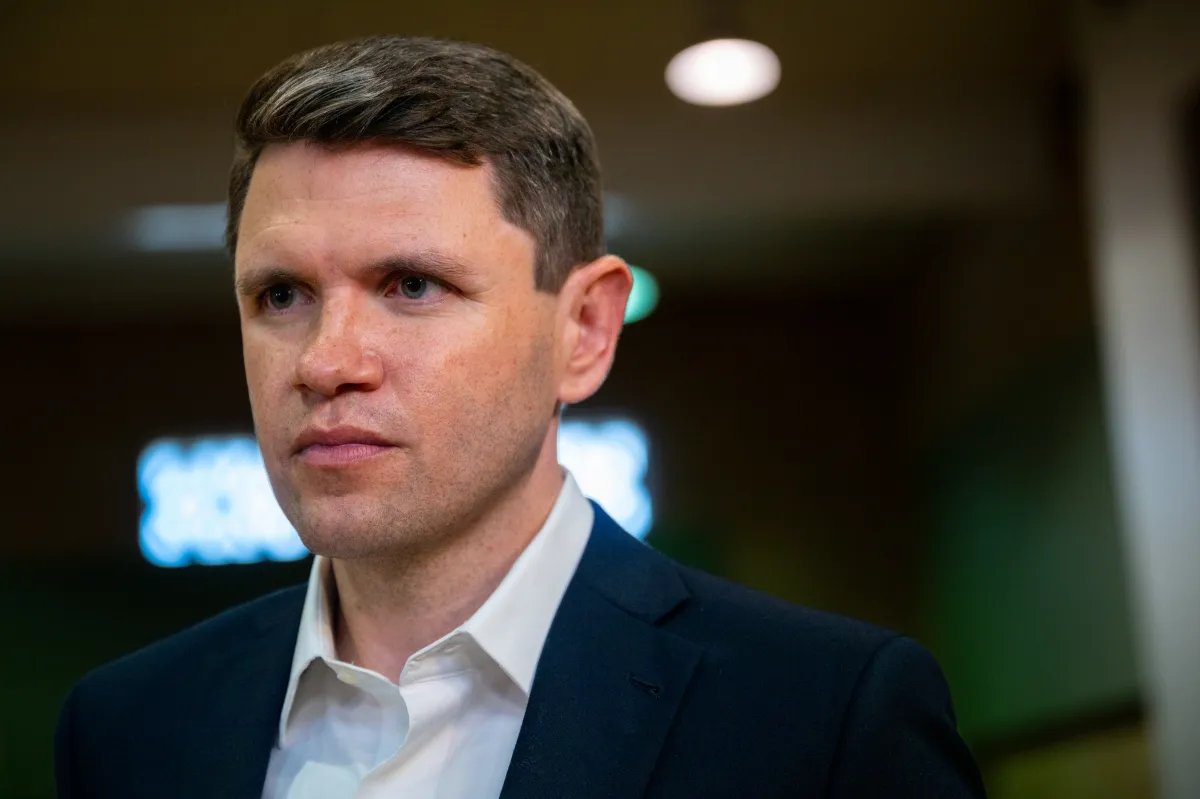
If you’ve been following the run-up to this year’s midterm elections, you’ve probably heard a lot of confident predictions from both sides. But according to CNN’s chief data analyst, Harry Enten, the smartest thing anyone can do right now is embrace uncertainty. Enten says Democrats are staring at a “big siren warning sign” with Election Day approaching, and the reason isn’t complicated: the Senate is effectively too close to call. Dozens of polls show key races locked in statistical ties, with margins so tight that they fall within the margin of error, meaning any one of them could tip in either direction on election night. That’s not the kind of reassurance a party wants when it’s trying to flip control of the chamber. Right now, Republicans hold a narrow majority in both the House and Senate, and Democrats are hoping to break that grip. But Enten’s point is that the polling simply doesn’t support a clear Democratic wave. In fact, he’s seen this movie before. Recent cycles have shown that Republican candidates often outperform their polling averages by three or four points, and if that pattern repeats itself, several “toss-up” races that currently look winnable for Democrats could easily stay red. That’s why Enten keeps using phrases like “too close to call” and “Republicans very much in the ball game.” It’s not doom and gloom for Democrats, exactly, but it’s definitely not the kind of confidence that lets you start planning a victory party.
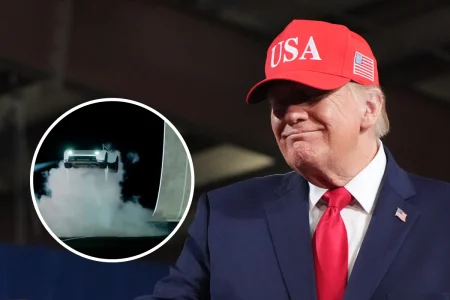
The broader political environment only makes things more complicated. Midterm elections are traditionally viewed as a referendum on the party that controls the White House, and the president’s party historically loses seats. That pattern has held true for generations, and it’s one reason Democrats have reason to hope. But this year is unusual because the president is Donald Trump, and his approval ratings have been sliding at a critical moment. According to a new Fox News poll, Trump’s overall approval rating has hit a record low for both of his terms in office. More importantly, voters are consistently flagging affordability as their top concern, and on the issues that matter most to households—the economy, immigration, jobs, and even the ongoing war in Iran—Trump’s numbers have slipped. You can see why that matters. When families are sitting at the kitchen table trying to figure out how to pay for groceries or rent, they tend to take out their frustrations at the ballot box. And when the president is trailing on the issues that people care about most, it creates an opening for the opposition party. Trump has been traveling across the country, stumping for Republican candidates in the most competitive races, but the polls he’s been handed along the way aren’t exactly the kind of material that fires up a crowd. The combination of an unpopular president, a restless electorate, and a historically challenging midterm environment has made the Senate map genuinely unpredictable.
Let’s talk about the map itself, because that’s where the real drama is playing out. Forecasters at Sabato’s Crystal Ball currently list Texas, Kansas, Iowa, Ohio, and Maine as toss-ups, while the Cook Political Report goes even further, adding Alaska, Michigan, and Texas to its own list of races that could go either way. That’s a remarkable number of competitive seats, and it means the outcome of the Senate could come down to a handful of states that haven’t always been battlegrounds. In nearly all of these races, polling is neck and neck, with candidates separated by only a few points. Some polls show one candidate ahead by a hair; others show the exact opposite. The result is a statistical muddle that makes it almost impossible to say with any confidence which party will control the Senate come January. Harry Enten summed it up pretty bluntly: “The bottom line is this, we have a few weeks to go left in this campaign, the polling has been tight.” He added that this is a story we’ve seen before, which is exactly why the Senate map remains “way too close to call.” Craig Agranoff, a political professor at Florida Atlantic University, echoed that sentiment in an interview with Newsweek, saying that Democrats do have a real path, but Enten is right that it’s still too close to call. Agranoff pointed out that the toss-up races in Ohio, Texas, Iowa, Kansas, Maine, and Alaska are all within a few points, and Democrats need four net seats to flip the chamber. If the polls hold, they might get there. But that’s a big “if,” because Republican candidates have often outperformed their averages in recent cycles, and even a normal miss in their direction could keep the Senate red.
Zoom in on Kansas, and you’ll see exactly what Enten is talking about. Recent polling shows Democrat Adam Hamilton leading Republican incumbent Senator Roger Marshall by a couple of points, or sometimes tied entirely, depending on the survey. One InsiderAdvantage poll conducted from October 9–10, 2026, among 1,200 likely voters, put Hamilton at 47.5 percent and Marshall at 46.7 percent. Libertarian Party candidate David C. Graham picked up 3.4 percent, and just 2.4 percent remained undecided. The poll had a margin of error of 2.83 percent, which means the race is effectively a coin flip. Kansas is not a state where Democrats usually expect to win, and the fact that Hamilton is competitive at all is a sign of how strange this political season has become. Then there’s Texas, which has been flirting with competitiveness for a few cycles now. Democrat James Talarico is leading in a majority of recent polls against Republican Ken Paxton. An ActiVote poll conducted from September 30–October 14, 2026, among 400 likely midterm voters, showed Talarico at 51.9 percent and Paxton at 48.1 percent. But that poll had a margin of error of 4.9 percent, so the lead is hardly safe. Texas is still a conservative state in many ways, but demographic shifts and suburban voters moving away from the GOP have made it increasingly plausible for a Democrat to win statewide. The fact that both Kansas and Texas are genuinely competitive tells you a lot about the national mood. Voters are clearly not satisfied with the status quo, and they’re willing to look at candidates from either party if they think it will improve their lives.
Ohio is another state where the race is living up to its toss-up billing. Former Senator Sherrod Brown, a Democrat, is hoping to return to the Senate, and he’s facing Republican Senator Jon Husted in a contest that has become a national obsession. A Bowling Green State University/Democracy and Public Policy Network Polls/YouGov survey conducted from September 29–October 9, 2026, among 1,000 likely voters, showed Brown with 48 percent of the vote compared to Husted’s 42 percent. Libertarian Bill Redpath captured 3 percent, Independent Greg Levy had 5 percent, and 2 percent said they’d choose someone else. That particular poll puts Brown ahead by six points, outside the margin of error of 4 percent, which is a comfortable-ish lead for a Democrat in a state that has trended red in recent years. But other surveys have shown the race much closer, with some even showing a dead heat. Ohio has a long history of electing populist candidates from both parties, and Brown’s brand of working-class politics has proven resilient even when the national environment favors Republicans. Meanwhile, races in Alaska, Maine, and Iowa are also showing single-digit leads or outright ties as Election Day nears. These are states with very different electorates, yet they all seem to be responding to similar undercurrents of economic anxiety and frustration with the political establishment. And then there’s Michigan, where the Senate race has caught the eye of President Trump himself. Democrat Abdul El-Sayed is leading Republican Mike Rogers in recent polling, with a Quantus Insights survey from October 5–6, 2026, showing El-Sayed at 47.6 percent and Rogers at 46.5 percent. The poll surveyed 762 likely voters and had a margin of error of 7.8 percent, with 4.2 percent undecided. That’s about as tight as it gets, and it’s why every rally, every ad buy, and every debate performance in these states matters so much.
So what should voters actually expect on Election Day? The honest answer is that nobody knows, and anyone who tells you otherwise is selling something. The polls suggest Democrats are in a better position than they were a month ago, but the map is not locked in either way. Democrats need four net seats to flip the Senate, and they have a plausible path to get there if the current numbers hold. But history is not on their side when it comes to polling accuracy, especially when Republican candidates have a recent track record of outperforming their averages by several points. A normal polling miss in the GOP’s direction would flip several of these toss-up races and keep the Senate in Republican hands. That’s the uncomfortable reality for Democrats, and it’s the reason Harry Enten is urging caution rather than celebration. It’s also the reason Republicans aren’t panicking, even though the national environment seems unfavorable. The next few weeks will be filled with frantic campaigning, last-minute ads, and endless punditry, but in the end, it will come down to individual voters in a handful of states making deeply personal decisions. They’ll be thinking about their jobs, their families, the cost of living, and the direction of the country. They’ll be weighing whether the current administration deserves another chance or whether it’s time for a change. And when they walk into the voting booth, all the polls and predictions in the world won’t matter. What matters is that these races are genuinely competitive, that voters are engaged, and that the outcome will be determined by real people, not just data models. That’s what makes this election so fascinating and so nerve-wracking at the same time. The Senate is hanging in the balance, and we won’t know for sure until the votes are counted.