


Paragraph 1: The Final Score and the Emotional Divide
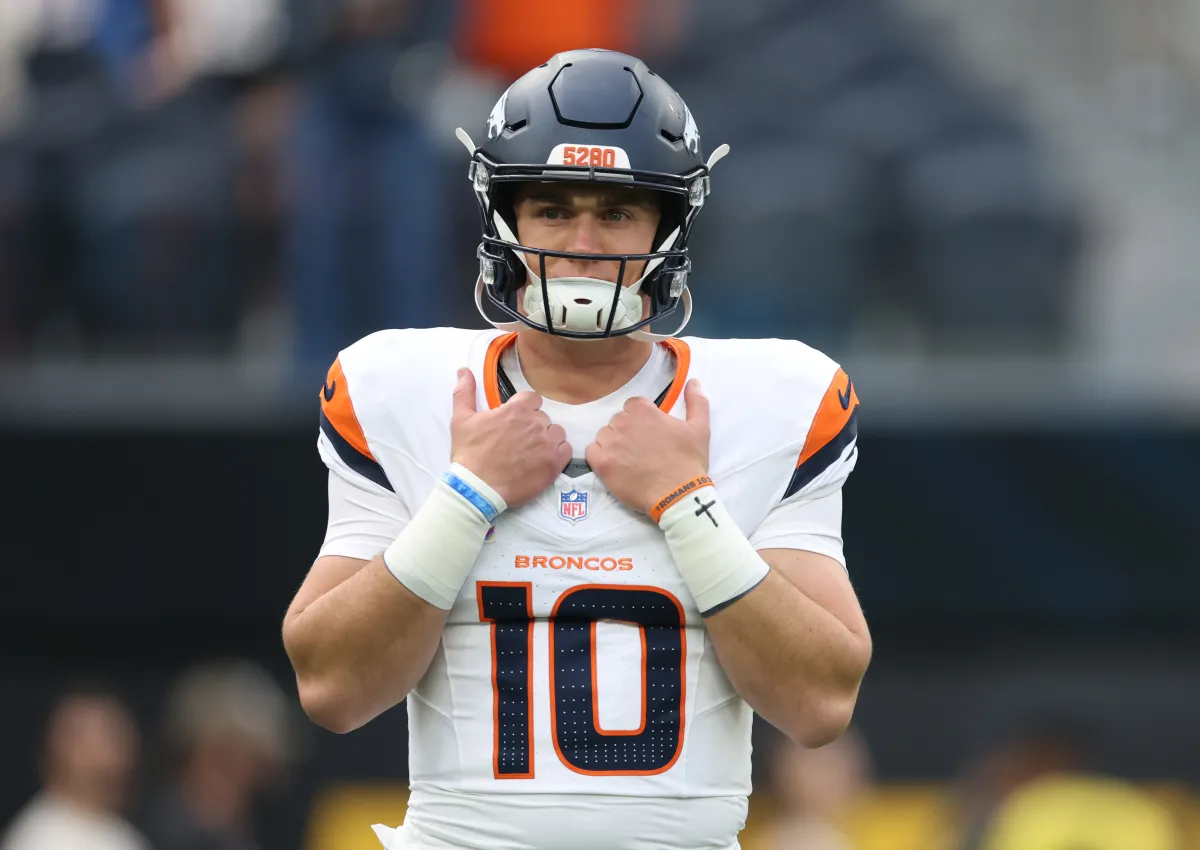
The final whistle blew on Thursday night in Seattle, and the Denver Broncos walked off the field with a hard-fought, ugly-as-it-was victory over the Seattle Seahawks. For quarterback Bo Nix, the feeling should have been one of pure elation—another win in a professional career defined by highs and lows. Yet, as he headed to the locker room, the narrative swirling around him was not about the triumph, but about the struggle. The Broncos won, yes, but the manner of that win left many critics sharpening their knives. It’s a strange paradox of the NFL: a win is a win, but sometimes it doesn’t feel like one. For fans, the emotional whiplash is real. You’re happy your team emerged victorious, but you’re also deeply aware that the performance was lackluster, that the offense sputtered, and that your quarterback didn’t look like the franchise savior many believed he would be. There’s a sense of relief, but it’s tinged with anxiety. This is the reality for Bo Nix, a young signal-caller learning on the job, and it’s a reality that has put him in the crosshairs of analysts, talk shows, and social media. The criticism isn’t entirely new—it has been building since the season began—but Thursday night’s game, despite the victory, seemed to amplify it to a fever pitch. The world of sports commentary often reduces complex performances to tidy narratives, and for Nix, the narrative is becoming one of inadequacy, of being carried by his defense and the opponent’s mistakes. That’s a heavy burden for anyone to bear, especially a player who was brought in to be the answer under center.
Paragraph 2: The Struggles on the Field—A Tale of Two Halves
Let’s dig into the reality of the performance. The first half showed glimpses of promise; the offense was moving the ball, Bo Nix was making some decent throws, and the team seemed to be finding a rhythm. However, the entire second half and overtime painted a completely different picture. The Broncos mustered a paltry 33 total net yards in that span. To put that in perspective, a single drive often covers more ground. They were stagnant, predictable, and painfully ineffective. The line of scrimmage felt like a wall, the receivers couldn’t find separation, and Nix looked uncertain, often forcing throws into tight windows or holding onto the ball too long. It was the kind of performance that gives fans nightmares about the team’s true potential. And in the eyes of most neutral observers, the game was essentially handed to Denver by Seahawks quarterback Sam Darnold. Costly turnovers, particularly in overtime, gifted the Broncos prime field position, ultimately setting up the game-winning field goal. Watching it live felt less like a victory and more like a survival. For the casual fan, it’s frustrating; for the diehard, it’s agonizing. The offense’s average of 252.2 total yards per game ranks second-worst in the entire NFL, better only than the winless Tennessee Titans. That’s a shocking statistic for a team with playoff aspirations. It suggests that the current approach, the one that somehow has the Broncos at 4-2, is built on quicksand. But in the NFL, the scoreboard is the only truth that matters during the season, and that scoreboard says the Broncos are winners. Still, that knowledge doesn’t erase the nagging feeling that a reckoning is coming.
Paragraph 3: Ed McCaffrey’s Passionate Defense—A Legend’s Perspective
Enter Ed McCaffrey, a Broncos legend who knows a thing or two about winning in the NFL. A three-time Super Bowl champion, McCaffrey embodies the blue-collar, physical, resilient ethos that has defined the franchise’s best eras. He watched the criticism mount against Bo Nix and felt the need to step in. In a post on X, McCaffrey made his stance unmistakably clear, writing, “Stop, just stop. Enough already. Apparently winning isn’t enough anymore. Bo Nix and the Broncos weren’t perfect but they still won the game. Winning in the NFL is hard. Enjoy it.” The words are raw, heartfelt, and refreshingly human in a landscape dominated by hot takes. McCaffrey isn’t arguing that the offense played flawlessly—he outright acknowledges they weren’t perfect. But he is making a larger point about perspective. In a league where 32 teams compete every week, where injuries, game plans, and sheer luck shape outcomes, winning on the road against a conference opponent is an extraordinary achievement. It’s the result of countless hours of preparation, physical punishment, and mental resilience. McCaffrey’s plea is that of a former player who knows how ephemeral success can be. He is reminding us, and particularly the armchair quarterbacks, that every win is precious. The Broncos are 4-2, they are in the thick of the AFC West race, and Bo Nix is growing. To McCaffrey, the obsession with aesthetics over results is a modern disease—one that robs the sport of its joy. His words resonate not just because of his legacy, but because they cut through the noise and speak to the fundamental truth that football is a game of outcomes, not just expected points or yards per attempt. When you win, you celebrate.
Paragraph 4: The Counterargument—Sustainability and the Road Ahead
However, McCaffrey’s passionate defense, while grounded in the purest love of the game, doesn’t fully address the legitimate concerns swirling around Denver’s offense. The critics aren’t just saying that Nix is bad; they’re saying that the way the Broncos are winning isn’t sustainable for a deep playoff run. The defense, led by a budding star alongside veteran leadership, has been forced to carry an inordinate load. The turnovers forced by the defense are the primary engine of the team’s success, but relying on them as a consistent strategy is a gamble. Eventually, a game will come where the opponent doesn’t make those critical mistakes, and the offense will be asked to do its part—something it has consistently failed to do. The statistics don’t lie: 252.2 total yards per game is not a recipe for long-term prosperity. The Broncos are bookended by terrible luck and skill positions that haven’t quite clicked. For Bo Nix to earn the unyielding trust of his fanbase, he needs to show growth beyond the quarterback rating and the final score. He needs to lead a drive that wins a game in the fourth quarter without the defense intervening. He needs to connect on deep passes with his talented receivers, who have been virtually invisible in the game plan. The criticism isn’t rooted in malice; it’s rooted in concern. And it’s a concern that even the most optimistic Broncos fan feels deep down. McCaffrey’s point about enjoying the win is valid, but the human psyche is complicated. We can enjoy the victory while also fearing the impending fall. That’s the nature of being a fan—a constant tug-of-war between hope and anxiety, between the joy of the immediate and the dread of the future. The 4-2 record is a beautiful mirage, and we all know that mirages can fade with the sun.
Paragraph 5: The Next Test—A Chance for Redemption
The beauty of the NFL is that there’s always a next game, a next chance to silence the doubters. For the Broncos, that opportunity comes in Week 7 against the Arizona Cardinals. The Cardinals are a beatable team, but they are also filled with young, hungry players who will not simply roll over. This game is a critical test for Bo Nix and offensive coordinator. It’s a chance to prove that the offensive struggles are fixable, that the game plan can be adjusted, and that the quarterback can lead. Will the coaches open up the playbook, allowing Nix to throw more downfield, trust his arm, and take calculated risks? Or will we see more conservative play-calling, designed to limit mistakes but also limiting scoring? The answer tells us a lot about the team’s philosophy and its belief in its young quarterback. For Nix individually, this is a moment of character. All young quarterbacks face adversity—that’s a rite of passage. The great ones use it as fuel, turning criticism into a relentless drive to improve. The Cardinals defense is not a biblical monster; they are vulnerable. A strong performance, even in a loss, would go a long way in rebuilding the narrative. But a repeat of Thursday’s second half would solidify the skeptics’ opinions. The pressure is immense, but it’s also a privilege. As a franchise quarterback, carrying the hopes of a city, every snap is a pressure-packed situation. Nix, to his credit, has shown resilience throughout his collegiate career. He’s no stranger to proving himself. The human aspect here is the internal battle between self-doubt and confidence. He knows his own skills, he knows the work he’s put in, and he needs to translate that into on-field production. For the fans, it’s a collective breath held, hoping for that spark, that moment of brilliance that tells them everything is going to be alright.
Paragraph 6: The Larger Picture—Football, Fandom, and Finding Joy
In the end, the debate over Bo Nix and the Broncos’ offense is about so much more than X’s and O’s. It’s a reflection of our own modern, hyper-analytical world where we’re never satisfied with just the result. We demand perfection, and when we don’t see it, we dissect every flaw. Ed McCaffrey’s plea to simply “enjoy it” is a reminder of the pure, uncomplicated joy that drew us to the sport in the first place. Football is a gladiator’s sport—brutal, demanding, and utterly unpredictable. Winning a game in the NFL is a monumental achievement, regardless of the margin or the aesthetics. For the players, coaches, and even the front office, the win is validation of their hard work. For the fans, it’s a weekend’s worth of happiness, a reason to high-five strangers, and a source of hope for the season ahead. The criticism, while valid in many ways, should never overshadow that. We can acknowledge that the offense needs to improve, that the path to success is rocky, but we can also pause and appreciate the moment. The Broncos are 4-2, they are in the playoff hunt, and they have a young quarterback with a strong arm and an even stronger will. The story is still being written. What matters now is how we, as observers, choose to engage with it. We can either be bitter archivists of yards per play, or we can be passionate advocates for a team that’s finding ways to win ugly. The choice is ours, but as McCaffrey suggests, let’s not lose sight of the fact that winning is hard. It’s precious. It’s worth celebrating. And maybe, just maybe, in the midst of all the second-guessing, the most human thing we can do is simply cheer. For the game, for the players, and for the beautiful, imperfect journey that is an NFL season.