

Through the opening five weeks of the 2026 NFL season, the Indianapolis Colts have found themselves in an uncomfortable place, one where hope and frustration are tangled together. There have been promising moments, flashes of an offense that looks capable of competing, but the consistency has not been there. The Colts have been underwhelming, and the reasons are not mysterious. Injuries have shredded the options available to quarterback Daniel Jones, and with each passing week, the offense has had to reinvent itself just to stay functional. Football is a game of attrition, and no position group has felt that more than the wide receivers. What began as a season with genuine promise, a chance to make a real push in a flawed and open division, has slowly become a test of endurance. The players in the locker room do not have the luxury of dwelling on what has gone wrong; the schedule keeps moving, and the next opponent is always there, demanding attention. But outside the building, among the fans who invest their emotions and their Sundays, the weight of expectation is heavy. They watch the offense sputter and feel the frustration in their gut. They know this team has more than it has shown. They see the potential and wonder why it has not fully arrived. The execution has not been disastrous, but it has been ordinary, and ordinary is not what anyone expected. There is still time to change the narrative, but the margin for error is shrinking. Every practice, every injury report, every decision matters a little more. The Colts are not dead, but they are already wounded, and the question is whether they can keep fighting through the pain.
No single injury has affected the offense more than the one suffered by wide receiver Alec Pierce. Pierce is not simply a pass-catcher; he is the kind of threat that changes how defenses think. His speed forces safeties to stay deep, gives cornerbacks pause, and prevents defensive coordinators from loading the box with unnecessary confidence. When he re-aggravated an offseason heel injury in Week 2 against the Kansas City Chiefs, he took something important away from Daniel Jones that does not always show up in the box score. The deep ball, the explosive play, the quick strike down the sideline that can change a game in a single throw, has largely disappeared. Without Pierce, the Colts have had to grind for yards in smaller pieces. They have tried to move the chains with short routes and contested catches, but there is no sizzle, no constant threat of the knockout punch. Defenses have noticed. They play the Colts differently now. They are more aggressive at the line, more willing to press, more comfortable playing in single coverage because they believe they will not get burned over the top. It is a mentally exhausting way to play football. Every possession feels like a climb, and every first down feels earned. The absence of that deep threat has also affected the running game, because defenses no longer have to respect the back end. They can load up, commit more resources to stopping the run, and make life difficult for everyone. Pierce has been on the sideline, but his presence is still felt in every game plan, every route combination, every missed opportunity. His injury is not just a physical loss; it is a psychological blow to the entire offense.
The Colts tried to solve the issue by turning to a familiar face. Last month, they signed veteran wide receiver Darius Slayton, a player who had spent years catching passes from Daniel Jones in New York. There was a logic to the move that made sense on paper. Slayton had speed, experience, a proven connection with the quarterback, and the kind of vertical ability that could help replace Pierce’s production. When the signing happened, there was a cautious optimism, the feeling that maybe the offense had found a lifeline. But football does not always follow the script. Slayton never saw the field. There was no obvious explanation, at least not one offered to the public. Maybe he was not healthy enough. Maybe he did not pick up the scheme quickly enough. Maybe the coaching staff simply believed other players were further along. Whatever the reason, the experiment failed, and on Friday the Colts made the quiet, difficult decision to part ways with him. There is something almost sad about these transactions. A player arrives with hope and excitement, ready to resurrect his career and help a team in need, and then, a few weeks later, it is over. The locker is cleaned out. The jersey is returned. The name disappears from the conversation. The Colts did not sign Slayton to be a spectator. They signed him to contribute, to stretch the field, to give the offense another dimension. When that did not happen, the organization had to make a business decision. For the player, it is another chapter in the unpredictable, often unforgiving life of an NFL professional. And for an offense already thin on weapons, it was yet another reminder that no cavalry is coming to rescue them. The solutions are going to have to come from within.
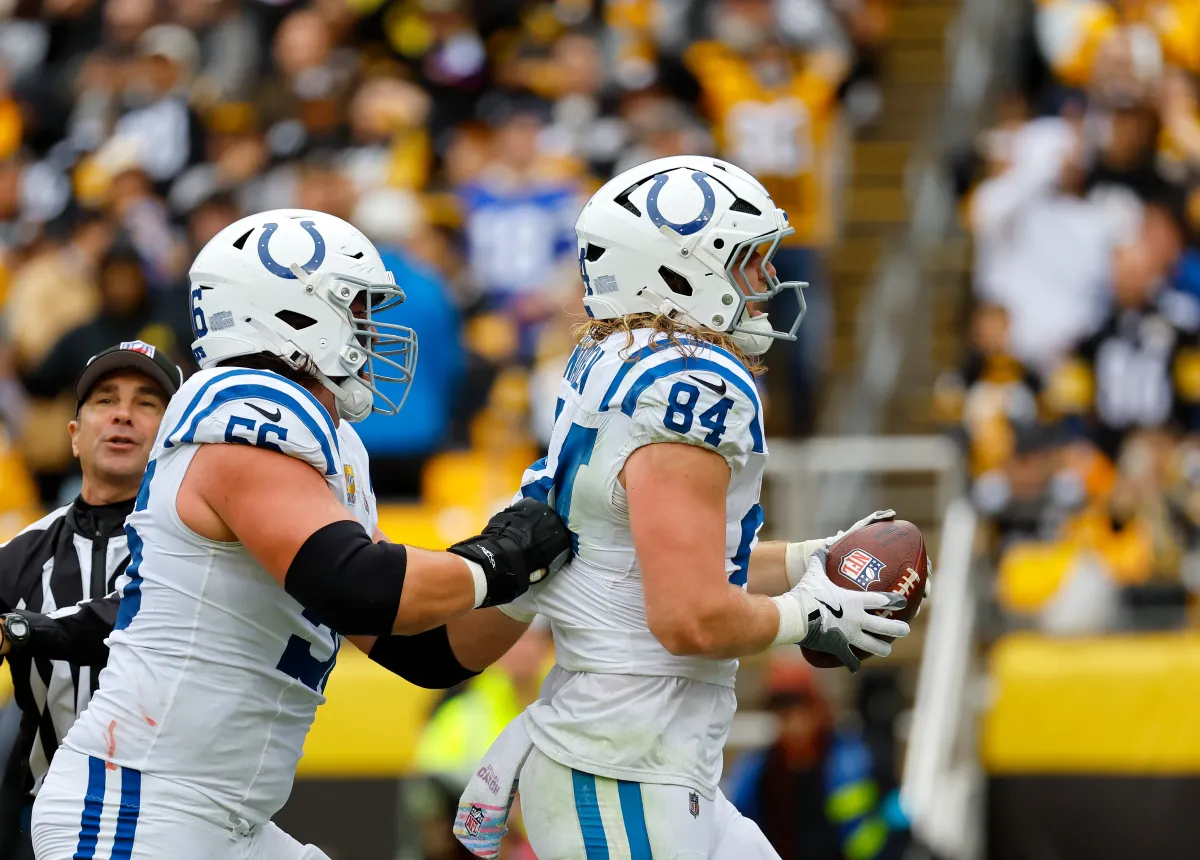
Just when it seemed the Colts could not absorb any more bad news, Friday delivered another gut punch. According to Colts beat writer James Boyd, Warren suffered a groin injury in practice and has been officially listed as questionable for the team’s Week 6 matchup against the Tennessee Titans. The timing could not be crueler. Warren has been one of the few reliable bright spots in the Colts’ passing game all season, a second-year player who has emerged as the team’s most consistent and impactful receiving threat. He leads the Colts in receptions and receiving touchdowns, stats that reflect just how much the offense already depends on him. Losing him would leave a void that would be almost impossible to fill on short notice. Groin injuries are uniquely difficult for skill players. They affect the ability to stop, start, and change direction, all the small movements that define success in the open field. A player with a groin issue cannot move the way he needs to, even if he is brave enough to try to play through the discomfort. The questionable tag leaves everyone in a strange limbo. Warren is undoubtedly doing everything possible to be ready, because players want to be on the field for divisional games, especially against a team eager for its first win. But the training staff has to think about the bigger picture. Pushing him too far, too fast, could turn a short-term issue into a season-long problem. There are no easy answers. The medical team will evaluate him, he will move and test and try to convince everyone that he is ready, and ultimately the decision may not be made until minutes before kickoff. Meanwhile, the Colts have to prepare for the possibility that he will not play. They have to adjust the game plan, shuffle roles, and ask someone else to step into a larger role. It is not an ideal position, but it is the reality they now face.
The Tennessee Titans are not going to offer any sympathy. They are winless, desperate, and dangerous in the way that only teams with their backs against the wall can be. There is no team in the NFL more unpredictable than one that has nothing to lose and everything to gain. The Titans are fighting for their season, for pride, for the chance to believe again. They will come out swinging with emotion and urgency, and the Colts had better be ready for it. Divisional games are always complicated, but this one is layered with extra tension. For Indianapolis, the path to victory starts with controlling the football, sustaining drives, and making plays when they matter most. But that path becomes much harder if their most reliable receiving threat is limited or absent. Warren’s presence would change the way the Titans defend the Colts. He would give Daniel Jones a trusted target, someone to look for in critical moments and tight windows. Without him, the offense looks thinner and more predictable. The Titans, of course, have been watching the injury reports as closely as anyone. They know the Colts are hurting. They know a weakened opponent is an opportunity. They are going to be physical, aggressive, and relentless, testing whether Indianapolis can withstand the blow. This is exactly the kind of game that can define a season, not only in the standings but in the heart of a team. It is a chance for the Colts to show that they can handle adversity, that they can win even when things are not perfect. It is also a chance for the Titans to remind everyone that they are not done fighting.
Beyond Sunday, the Colts are still chasing the Jacksonville Jaguars, who sit at the top of the AFC South. That adds another layer of urgency to every game, especially every divisional game. A loss to Tennessee would not crush the season, but it would make the road steeper and the questions louder. The Colts cannot afford to waste opportunities. They need to build momentum, stack wins, and stay as healthy as possible before the season escapes them. Whether Warren plays or not, the team knows it has to find a way to compete. They have been tested again and again through the first five weeks, and this is another test, one that will reveal something about their character and resilience. Football has an old saying that the most important ability is availability, and the Colts have learned just how true that is. Injuries strip away the best-laid plans and force everyone to adapt in real time. It is exhausting and frustrating, but it is also where the human side of the sport shows itself. Players are not machines. They carry doubt, pain, and responsibility while trying to perform at the highest level. They also carry hope. As Week 6 arrives, the Colts will have to lean on their depth, their preparation, and each other. They may have to go to battle without one of their most impactful weapons. If that happens, someone will need to rise, to make a play nobody expected, to become the answer in a moment of uncertainty. That is the unscripted beauty of football. It is also why a Saturday injury report can feel like so much more than a list of names. It is hope, nervous and fragile, waiting to see who will answer the call.