



In a move that captures the contradictions at the heart of his approach to Russia, President Donald Trump on Friday signed an executive order that both imposed and immediately suspended a sweeping set of tariffs and sanctions against Moscow. The order, which landed after weeks of quiet diplomatic maneuvering, creates the legal framework for a 500 percent tariff on Russian goods and a potential 100 percent tariff aimed at major buyers of Russian oil and gas, as well as countries that help Russia dodge existing oil sanctions. But in the same breath, Trump waived those measures, declaring that it is in the national interest of the United States to hold off on enforcing them for now. The executive order includes a formal certification to Congress explaining that the waiver is justified at this time, effectively giving the administration room to use the threat of economic punishment as leverage while keeping the door open for future action. It is a classic Trump-style policy move: maximum pressure on paper, maximum flexibility in practice. The order does not erase the sanctions that were already in place under earlier executive orders, but it does signal that the administration is willing to pause the next wave of economic warfare against Russia, at least for the moment. The timing is striking, coming just one week after Trump announced a separate agreement with Moscow to increase Russian diesel supplies to American and global markets, a deal that has already drawn sharp criticism from lawmakers who see it as a gift to the Kremlin.
The legal foundation for Friday’s order is the Lindsey O. Graham Sanctioning Russia and Iran Act of 2026, a piece of legislation that Trump signed into law on September 18. That law was designed to tighten the screws on Russia in a variety of ways, expanding sanctions authority against Russian officials, financial institutions, and state-controlled entities, while also imposing new restrictions on Russia’s energy sector and increasing duties on Russian goods. It also extended the Iran Sanctions Act, tying the two adversarial nations together in a single piece of legislation. When Trump signed that bill, the White House framed it as a strong message to both Moscow and Tehran that the United States would not tolerate their behavior. The law gave the president substantial new powers, but it also left room for interpretation. Legal analysts who studied the legislation after its enactment noted that it provided the president with considerable flexibility, including the authority to decide how to handle tariffs on major purchasers of Russian-origin oil or natural gas and on countries that facilitate Russian oil sanctions evasion. That flexibility is exactly what Trump used on Friday. By signing the executive order, he activated the legal machinery for the tariffs and sanctions, but by waiving them, he kept the authority in his own hands. The order states that the waiver will remain in effect until Trump, or the secretary of state in consultation with other administration officials, determines that further action is necessary. In other words, the administration has built a loaded weapon and placed it on the table, but it is not yet ready to fire.
The waiver itself is framed in careful legal language. Trump’s order says he has submitted to Congress a certification that issuing the waiver at this time is in the national interests of the United States. That certification is a key procedural step, because the underlying law likely required some form of congressional notification or justification before the president could set aside the measures. By providing that certification, Trump is attempting to satisfy the legal requirements while preserving his discretion. The order also makes clear that the waiver does not undo any of the sanctions that were already imposed under earlier executive orders, meaning that existing penalties against Russian entities and individuals remain in force. What the waiver does is pause the new, more aggressive measures that Congress authorized. This is not an amnesty for Russia, nor is it a full normalization of trade relations. It is a strategic pause, one that allows the administration to claim it is being tough on Russia while also keeping the door open for diplomatic and economic engagement. The legal analysis published after the law’s enactment supports this reading, emphasizing that the president has broad authority to calibrate the response based on evolving circumstances. That analysis appears to have given the administration confidence to move forward with the waiver, knowing that it can be reversed at any time. The practical effect is that, for now, Russian goods will not face the massive 500 percent tariff, and countries that continue to buy Russian energy will not suddenly find their own exports to the United States hit with 100 percent duties. But the threat remains, hanging over the heads of Moscow and its trading partners.
If the waiver is ever lifted, the consequences could be severe. The executive order provides for a 100 percent tariff on goods from countries that purchase Russian energy, with the tariff applying to new Russian energy purchases made on or after October 18. It also creates a separate mechanism for 100 percent duties on goods from the five countries deemed to be the largest facilitators of Russian oil sanctions evasion. The order does not name those countries, leaving that determination to administration officials who are instructed to monitor Russian energy purchases and sanctions-evasion activity and report their findings to the president. This means that some of Russia’s largest energy customers, including nations that have continued to buy Russian crude and natural gas despite Western sanctions, could find themselves facing punishing economic penalties if the waiver is lifted. The threat is not just aimed at Russia itself, but at the entire network of countries that keep Russia’s energy sector afloat. By targeting buyers and facilitators, the law seeks to dry up the revenue streams that fund the Kremlin’s war machine. The executive order’s silence on specific countries is notable, however. It suggests that the administration wants to keep its options open, perhaps to avoid alienating allies or to give certain countries a chance to change their behavior before being publicly named. It also creates an element of uncertainty, which can be a powerful tool in international diplomacy. Countries that rely on Russian energy may now be unsure whether their trade relationships with the United States are at risk, and that uncertainty could push them to reconsider their dependence on Moscow.
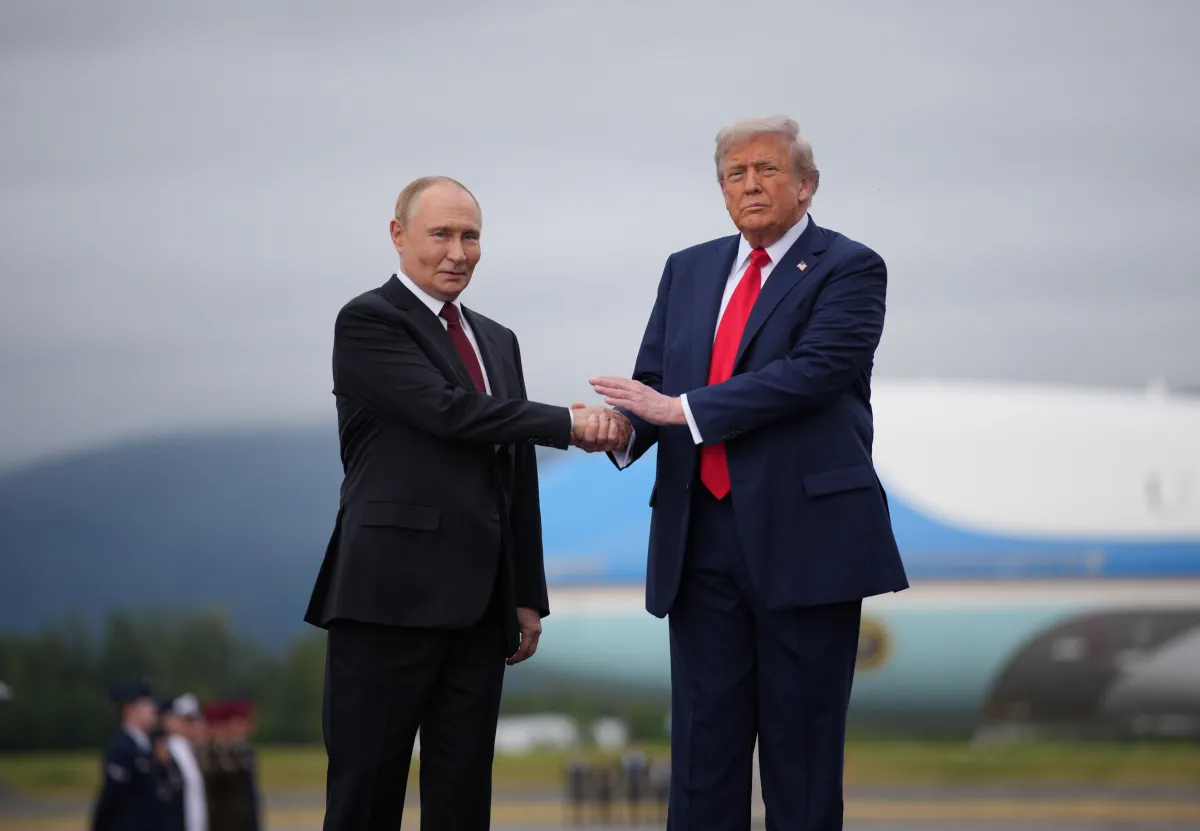
The immediate context for Friday’s order is Trump’s recent diesel deal with Russia. One week before signing the executive order, Trump announced an agreement with Russian President Vladimir Putin to increase supplies of Russian diesel to U.S. and global markets. Trump framed the deal as a practical measure to bring down costs, telling reporters that the world needs oil and that diesel is a critical product. “We need oil for the world, and this is diesel, which is what we need, so we’re very happy to get it,” he said. The Treasury Department subsequently issued temporary relief covering certain Russian-origin diesel transactions, allowing those shipments to proceed despite existing sanctions. The executive order issued Friday does not specifically mention diesel, and there is no stated causal connection between the diesel agreement and the broader waivers. But the timing is hard to ignore. The administration appears to be trying to have it both ways: projecting strength against Russia while also facilitating the flow of Russian energy to global markets. That balancing act has proven controversial. Critics argue that easing restrictions on Russian energy, even temporarily, undermines the broader effort to isolate Moscow and weakens the message that the United States is committed to holding Russia accountable for its actions. Supporters, on the other hand, argue that practical economic concerns cannot be ignored, especially when high energy prices are hurting American consumers and threatening global stability. The diesel deal, in particular, has been defended as a way to stabilize markets and prevent shortages, even if it means doing business with Russia in a limited and controlled manner.
The criticism of the diesel deal has been loud and bipartisan in tone, even if the specifics vary. Republican Texas Representative Michael McCaul, for example, said on X that he understood the desire to bring down diesel prices but was concerned that lifting sanctions on Russian oil would only fund the Kremlin’s war machine. That sentiment reflects a broader anxiety among lawmakers who worry that the administration is sending mixed signals. Congress passed the Lindsey O. Graham Sanctioning Russia and Iran Act with the clear intent of increasing economic pressure on Moscow, and many lawmakers see the waiver as a step backward. The executive order’s careful legal language and its emphasis on national interest may satisfy procedural requirements, but it does little to ease the concerns of those who believe Russia should be punished, not rewarded. At the same time, the administration’s approach is not without logic. By waiving the tariffs and sanctions, Trump retains maximum leverage. He can threaten to impose the 500 percent tariff or the 100 percent duties at any moment, using that threat to extract concessions from Russia or to pressure other countries to reduce their energy ties with Moscow. The waiver also gives the administration time to assess the impact of the diesel deal and to determine whether the broader sanctions framework needs adjustment. In the meantime, the world is left to interpret the mixed signals. Is the United States getting tougher on Russia, or is it quietly accommodating Russian energy exports? The answer, for now, is both. The executive order is a study in strategic ambiguity, designed to keep every option on the table. Whether that approach will prove effective remains to be seen, but it is a clear reflection of Trump’s transactional style and his willingness to use economic policy as a tool for negotiation. The coming months will reveal whether the waiver is a temporary pause or the beginning of a broader recalibration of U.S. policy toward Russia.