

A Lone Star Warning: Why the Texas Senate Showdown Has the GOP Sweating
At first glance, Texas should have been the last place on the map where Republicans needed to break a sweat. The state had not sided with a Democrat in a presidential race in decades. GOP candidates had dominated statewide ballots for a generation, and Donald Trump carried the Lone Star State by nine points in 2016. Yet as the 2018 midterm elections took shape, the Senate showdown in Texas became one of the most telling and unsettling contests in the nation. Ted Cruz, the sharp-edged conservative who had become one of Trump’s most loyal defenders in Washington, was suddenly fighting for his political survival against Beto O’Rourke, a charismatic Democratic congressman from El Paso. O’Rourke was generating the kind of energy that Texas Democrats had not felt in years. Crowds spilled out of coffee shops, high school gyms, and dusty county fairgrounds. Democrats who had long written off their own state were showing up to volunteer, knock on doors, and argue with relatives at Thanksgiving dinners. Republicans, meanwhile, watched the polling numbers with growing alarm. A race that should have been a formality, a guaranteed Republican seat in a reliably red state, was becoming a genuine fight. And if that could happen in Texas, the party’s leaders knew, then no corner of the country was truly safe.
That realization sent a chill through the Republican Party’s political infrastructure. The Senate showdown in Texas was never supposed to be the center of the national conversation. But as the 2018 midterm elections approached, there it was: on nightly news broadcasts, in massive fundraising emails, on social media feeds, and in the anxious private conversations of GOP strategists. The state’s political landscape had changed faster than the party had prepared for, and the race became a mirror for everything that worried Republicans across the country. It was no longer just a question of whether Cruz could hold his seat. It was a question of whether the Republican coalition, built on rural strength, older voters, and cultural conservatism, could withstand the demographic and suburban shifts reshaping the electoral map. The answer, at least in the closing months of the campaign, seemed dangerously unclear.
Trump’s Double-Edged Sword in Texas
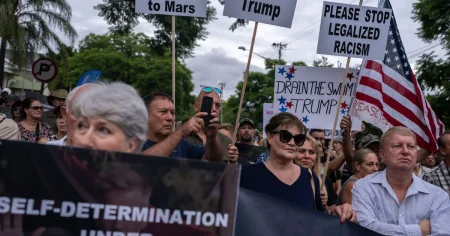
Donald Trump understood exactly what was at stake. He inserted himself into the Texas race with all the subtlety of a thunderstorm rolling across the plains, holding rallies, firing off tweets, and painting O’Rourke as a radical leftist who would wreck the economy, open the border, and strip away the Second Amendment. For many Republican loyalists, that message was precisely what they wanted to hear. It fired up the base, energized the faithful, and reminded conservative voters that the president was willing to fight for his allies. But behind closed doors, Republican operatives had a quieter worry. Trump’s presence in Texas did not only energize Republicans. It energized the opposition. College-educated suburban voters, especially women, were turned off by the president’s combative style and alarmist language. In deep-red rural precincts, Trump remained enormously popular. But in the rapidly expanding suburbs of Dallas, Houston, Austin, and San Antonio, there was restlessness. A national mood was forming against the president, and the Texas Senate race had become a magnet for that frustration.
Every time Trump attacked O’Rourke on Twitter, Democratic donors responded by flooding the challenger’s campaign with cash. Every time the president held a rally in Texas, the other side found new volunteers. Republican strategists began to realize that Trump was a double-edged sword: a powerful weapon for mobilizing the base, but also a force that could hand energy to the enemy. Cruz, a well-funded incumbent with a sophisticated political operation, struggled to make the race about local issues because the national environment kept pulling the debate back to the president. Even in a state Trump had carried, his coattails were heavy. And as the race tightened, it became clear that the president’s brand of politics, designed to dominate in Republican pockets, was doing as much to drive Democratic voters to the polls as it was to turn out Republicans. That was a dangerous dynamic for the GOP, and it was playing out in real time under the brightest lights the Texas political world had ever seen.
Beto O’Rourke and the New Democratic Playbook
Beto O’Rourke was not the kind of candidate Democrats usually ran in Texas. He did not run away from his party’s label, but he refused to be defined by it. He traveled to all 254 counties in Texas, often with a small staff and a restless enthusiasm that made him look more like a storyteller than a politician. He stood on truck bumpers, folding chairs, and porch steps, delivering unscripted speeches that felt personal, honest, and surprisingly optimistic. His campaign raised staggering sums of money, most of it from small-dollar donors across the country, and shattered fundraising records that had stood for years. But more important than the money was the atmosphere around it. O’Rourke spoke about civil rights, health care, immigration reform, and the basic dignity of working families with a kind of earnest energy that felt refreshing in an era of Trump-era cynicism. He did not simply ask people to vote for him. He made them feel as though they were building something together. His events stopped being political rallies and started feeling like gatherings, places where people listened, sang along, and left with new energy.
The conversation around the Texas Senate race shifted almost overnight. O’Rourke’s social media pages were filled with raw, unpolished footage: festival visits, small-town diners, late-night conversations in living rooms. Young voters responded with an intensity not seen in Texas politics in decades. Latino voters found a candidate willing to listen rather than lecture. Suburban parents, many of whom had never voted for a Democrat, saw sincerity in his eyes. And lifelong Republicans, tired of the noise in Washington, quietly crossed over. For the national Democratic Party, O’Rourke offered a blueprint: personal, local, digital, and tireless. For Republicans, he was a nightmare. He was hard to caricature because he didn’t fit the standard left-wing attacks they loved to deploy. He spoke in plain language about fairness and opportunity, and he treated every voter as someone worth meeting. His debate performances were sharp but not cruel. His campaign staff seemed to operate in a state of joy, not anger. And while Cruz had the machinery, the endorsements, and the party structure behind him, O’Rourke had something more unpredictable: a movement. That movement was visible everywhere, in the crowded phone banks, in the endless knocking on doors, in the long lines of first-time voters waiting to show that Texas was no longer a foregone conclusion.
The Changing Face of Texas Voters
Part of what made Texas so alluring for Democrats and so frightening for Republicans was the tide moving beneath the surface. The state was changing faster than the maps had kept up with. Texas’s major cities were booming, drawing thousands of new residents every month from California, the Northeast, and the Midwest. Many of those newcomers were young, diverse, and less tied to the old voting habits of the state. Suburban counties that had once voted Republican by overwhelming margins were turning purple, and in some cases light blue. The state’s Hispanic population, long underrepresented at the ballot box, was growing in both numbers and political power. A generation of Texans raised under one-party Republican rule was coming of age with different concerns and different questions, about schools, infrastructure, health care, and climate. Rural areas remained strongly Republican, but their share of the electorate was slowly shrinking. The math should have worried party leaders long before 2018. A Republican base increasingly concentrated in aging and rural communities could not sustain its dominance forever if the dynamic metro areas kept moving in the opposite direction.
The Senate showdown in Texas brought that demographic reality into full focus. O’Rourke’s campaign did not simply target likely Democratic voters. It reached out to disaffected Republicans and independents in the suburbs, and it invested heavily in voter registration. Hundreds of thousands of new Texans registered to vote in the months before the midterm elections, and many of them were bound for the Democratic column. In past cycles, those voters might never have come to the polls. In 2018, they made their presence known. For Donald Trump and the Republican Party, the Texas race was no longer only about whether Ted Cruz could win. It was about whether the GOP could survive the demographic wave beginning to crash over the entire Sun Belt. Even if Cruz survived, the margin would be a warning. A state that had not been seriously contested in years was suddenly divided by only a few points. The old assumptions about Republican invincibility in Texas were fading, and the implications stretched well beyond one election cycle. The GOP was no longer playing offense in the state; it was playing defense in a place it had always counted on as a fortress.
Playing Defense in a State That Should Have Been Safe
The consequences were immediate and practical. National Republicans had to pour time, money, and top operatives into Texas, a state that had never needed that kind of help. That was a problem because the Senate map in the 2018 midterm elections was already tight. Every dollar spent in Texas was a dollar not spent in Florida, Tennessee, Missouri, or North Dakota. Yet the Republican Party had no choice. Ted Cruz, despite his fundraising strength, his solid conservative record, and his dedicated base, was in a genuine dogfight. Super PACs descended with a flood of television ads, opposition research, and get-out-the-vote operations normally reserved for swing states. Trump returned to Texas again and again, making the race a personal test of his own political appeal. At every turn, the message from Republicans was the same: Texas is in danger. But in telling voters that, the party made a dangerous admission. Texas, they implied, was no longer guaranteed. That admission became its own story, talked about in every newspaper and echoed on every cable news channel.
Cruz, typically a confident and relentless campaigner, appeared on edge. He attacked O’Rourke relentlessly, painting him as too liberal, too inexperienced, and too dangerous for Texas. He linked the challenger to national Democrats and tried to make the race about the future of American values. But the attacks did not seem to move the fundamentals. The Republican base was solid, but the growing middle of Texas voters was slipping away. Democratic donors, sensing an upset, poured money into the race too. What had once been a safe Republican Senate seat was now an expensive, high-risk liability. Even if the GOP held it, the opportunity cost was enormous. The party had spent millions of dollars and hundreds of hours of presidential attention on a state it should have won in its sleep. That alone was a sign of how much trouble the 2018 midterm elections promised. And as other races across the country tightened, Republican leaders could not shake the feeling that Texas was not the only state where their assumptions were becoming outdated.
A Warning Shot for the GOP’s Midterm Map
In the end, the lesson of the Texas Senate race was never just about one seat. It was about the entire Republican coalition. The GOP could still win elections by turning out its most loyal voters, but the margins were shrinking, and they were shrinking in places that had once felt untouchable. Texas, of all states, had become a cautionary tale. The demographic trends that Democrats celebrated and Republicans feared were not abstract theories. They were happening in real time, in real suburbs, in real county election offices, in real ballot boxes. Donald Trump’s polarizing presidency had accelerated the shift, and the Republican Party was now forced to defend red territory in a way it had never imagined. The Senate showdown in Texas offered a clear view of the battlefield ahead. A close race in a state that should have been a footnote became one of the most closely watched events of the entire 2018 midterm elections. It exposed the GOP’s dependence on a shrinking base and its vulnerability to changing voter preferences. It revealed that presidential turnout, particularly at the margins, could make the difference between a comfortable win and a devastating loss. It proved that smart, energetic, and well-funded Democratic campaigns could compete anywhere, even in the heart of Republican power. And it whispered something that no Republican wanted to hear: no state, no matter how red, is forever safe.
When the dust settled on election night, Ted Cruz survived, but by a margin far too narrow for comfort. Beto O’Rourke came closer to winning a statewide race in Texas than any Democrat in a generation, and the energy he unleashed did not disappear when the polls closed. The national Democratic Party saw exactly what was possible, and the Republican Party saw exactly what it feared. The midterm elections, which were supposed to be a referendum on a president and his party, had become something larger: a preview of a changing political map. Texas, a state that had anchored Republican hopes for decades, was no longer a sure thing. The worry that Republicans felt about that Senate race was never just about Ted Cruz. It was about what his close call meant for every future election. The Texas Senate race was the canary in the coal mine, and it was already singing.