



For more than a year, a man accused of betraying one of America’s most important safety nets managed to stay one step ahead of the law. He drove across the northern border, disappeared into the vast chaos of India, and likely believed he had escaped accountability forever. But justice, as it turns out, has a long memory and an even longer reach. On a quiet September day, in a country thousands of miles from the rainy streets of Tacoma, Washington, federal agents working with international partners finally closed in. Manjit Singh Bedi, a naturalized U.S. citizen and the owner of an Asian grocery store, was arrested in India and placed on a plane back to the United States. His return was announced not in a courtroom, but through the confident social media post of FBI Director Kash Patel, who celebrated the capture as part of a broader, unprecedented wave of international cooperation. For the people who rely on food assistance to feed their families, and for the taxpayers who fund it, Bedi’s arrest is a quiet but meaningful victory—a reminder that even the most complicated fraud schemes, hidden behind cash registers and EBT card swipes, can eventually be unraveled.
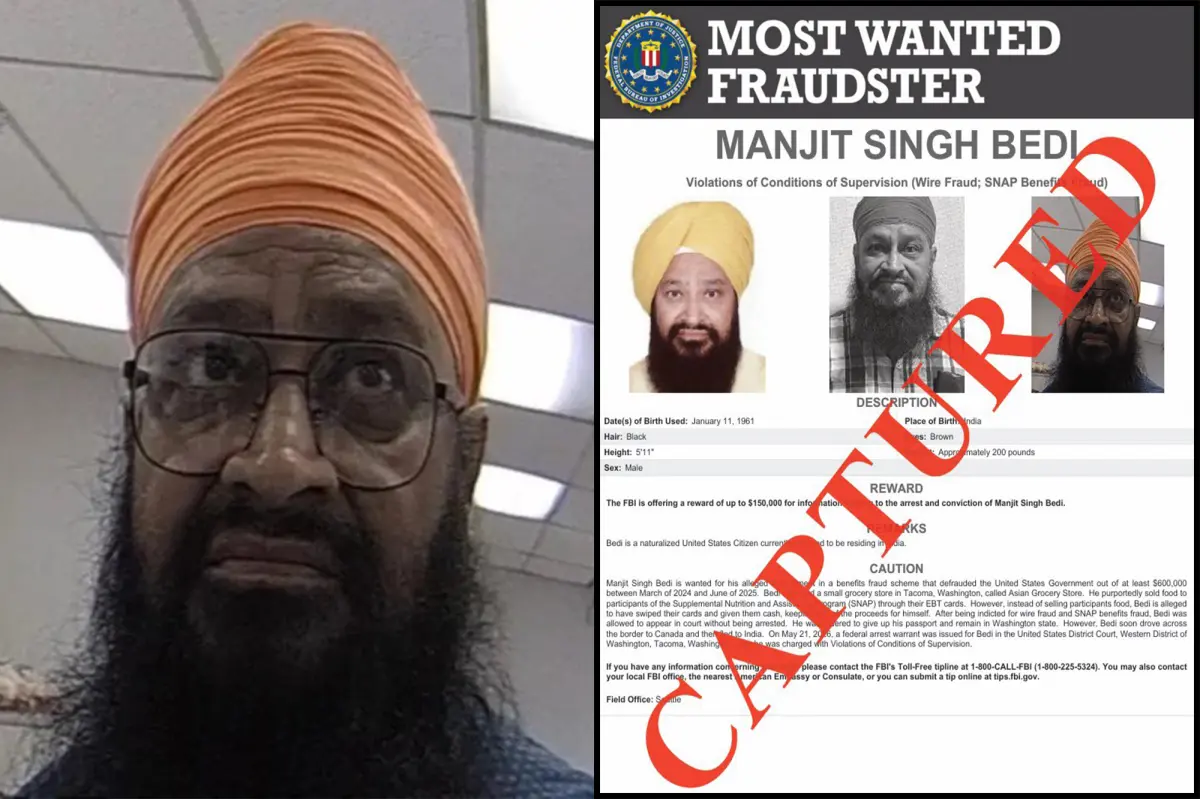
The allegations against Bedi are both simple and deeply troubling. Between March 2024 and June 2025, he allegedly used his position as the operator of an Asian grocery store in Tacoma to exploit the Supplemental Nutrition Assistance Program, commonly known as SNAP, or food stamps. The scheme worked like this: customers receiving government food benefits would come into his store and hand over their Electronic Benefit Transfer, or EBT, cards. Instead of ringing up eligible food purchases, Bedi would swipe the cards and give the recipients cash—often less than the value of the benefits—while keeping a significant cut for himself. In total, federal officials say, he defrauded the U.S. government of at least $600,000. It is a particularly cynical form of theft, because SNAP is designed to ensure that low-income families and individuals do not go hungry. By converting those benefits into cash, Bedi allegedly drained money from a program that millions of vulnerable Americans depend on, all while enriching himself and undermining the integrity of the entire system. The FBI did not take the case lightly. Bedi was indicted, and a federal arrest warrant was issued after he allegedly violated the conditions of his release. But by then, the grocer had already begun his flight from justice.
Bedi’s escape was not particularly dramatic, but it was effective for a time. After being indicted in connection with the scheme, he allegedly drove north into Canada, a relatively short trip from Tacoma. From there, he made his way across the globe to India, the country of his origin, where he likely hoped to blend in among millions of people and disappear into the anonymity of a foreign city. For months, he remained out of reach. The FBI, however, did not forget him. In fact, Bedi’s case was significant enough that he was added to the FBI’s Most Wanted Fraudsters list, a new program created just three months ago to spotlight individuals accused of major financial crimes. The FBI even offered a reward of up to $150,000 for information leading to his arrest and conviction. The reward, combined with the dogged work of investigators and international partners, eventually paid off. In September, Indian authorities arrested Bedi, and he was returned to the United States to face the charges against him. The arrest warrant against him, issued on May 21, 2026, would finally be served. For FBI Director Kash Patel, Bedi’s capture was more than just another successful operation—it was a symbol of what he described as an unprecedented stretch of success in bringing high-value fugitives back to American soil.
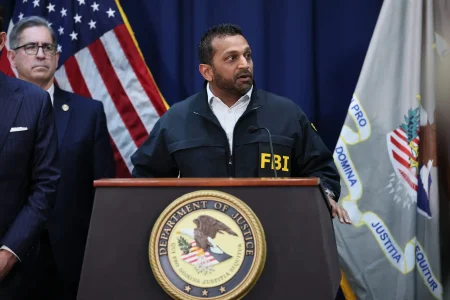
Patel took to social media to announce the news with a mix of pride and gratitude. “BACK IN THE US – Manjit Singh Bedi, one of the FBI’s Most Wanted Fraudsters, arrested in September in India,” he wrote on X, the platform formerly known as Twitter. But he did not stop there. Patel went on to emphasize the broader significance of the arrest, pointing to a dramatic increase in extraditions and removals over the past twenty months. “This is the latest in an unprecedented stretch of success in bringing high-value targets back to the United States through strong partnerships with our foreign law enforcement counterparts,” he said. He added that the FBI had secured 260 extraditions and removals during that period—a jump of more than 70 percent compared to the previous twenty-month span. Those numbers, impressive on their own, reflect a renewed commitment to international cooperation in the fight against financial crime. They also send a clear message to fugitives everywhere: no matter how far you run, no matter how carefully you cover your tracks, the United States government has both the resources and the will to track you down. For Patel, Bedi’s case was also a personal milestone, as he noted that Bedi is now one of six fugitives captured through the FBI’s Most Wanted Fraudsters program since the list was created just three months ago.
Behind the official announcements and statistical victories, however, there is a more human story worth telling. The victims of Bedi’s alleged scheme are not faceless statistics. They are parents trying to put food on the table, elderly people living on fixed incomes, and working families who, despite their best efforts, sometimes need help making ends meet. When someone like Bedi allegedly exploits SNAP benefits for personal gain, he is not just stealing from the government—he is stealing from his own neighbors, from the community he served, and from the trust that makes social programs possible. It is a betrayal that cuts deeper than the financial loss. At the same time, the case also highlights the importance of vigilance and accountability. The fact that the FBI created a Most Wanted Fraudsters list, offered a substantial reward, and worked across international borders to bring Bedi back shows that financial crimes are taken seriously, even when they do not involve violence or physical danger. Fraud may not make headlines as often as other crimes, but its impact is real and lasting, eroding public confidence and diverting resources away from those who genuinely need them. By pursuing cases like Bedi’s, law enforcement sends a powerful signal that honesty and integrity are not optional, and that those who abuse public assistance programs will be held responsible.
In the end, Bedi’s return to the United States is a testament to the persistence of investigators, the strength of international partnerships, and the quiet determination of a justice system that refuses to give up. It is also a reminder that the world is smaller than it used to be. A fugitive can travel thousands of miles, cross oceans and borders, and still find that the long arm of the law has followed him home. As FBI Director Patel put it, Bedi will now face justice in the United States for his alleged crimes. “Thank you to our outstanding partners for their assistance in this case,” Patel wrote, offering a simple but sincere acknowledgment of the teamwork required to make such an arrest possible. For the people of Tacoma, for the SNAP recipients who may have been exploited, and for everyone who believes in the fairness of the system, this case offers a measure of closure. The grocery store may have closed, the cash may have changed hands, and the benefits may have been lost. But the man accused of orchestrating the scheme is back where he belongs, ready to answer for his actions in a court of law. And that, perhaps, is the most reassuring outcome of all.