


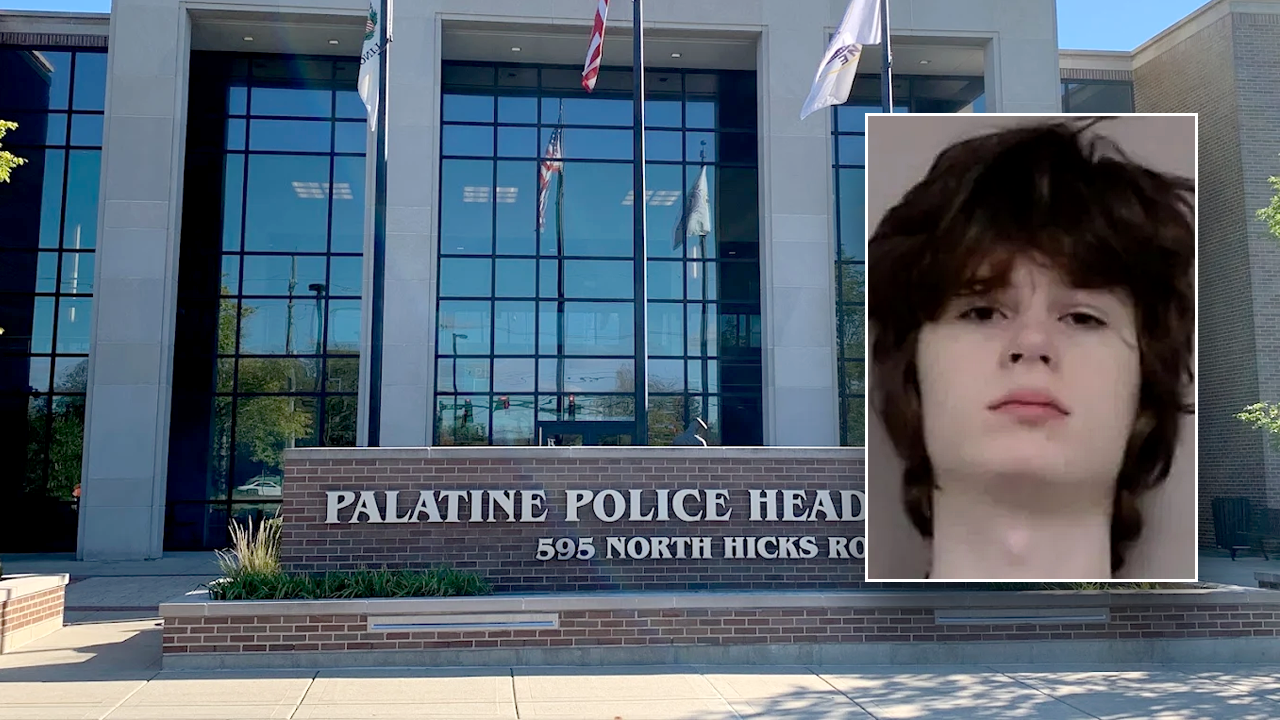
On a recent Sunday afternoon, the parking lot of a Hindu temple in Aurora, Illinois, was probably quiet in the way suburban parking lots are quiet on weekends—a few cars, some foot traffic, the rustle of autumn leaves. Into that stillness, a red Acura pulled in at 12:25 p.m. It remained only a few minutes, then drove away. It could have been someone lost or turning around. But according to authorities, the driver was Alexandros Paporakis, a 19-year-old from Palatine, and he had come to the temple to kill. Police say he was armed with a modified rifle, about 300 rounds of ammunition, body armor and tactical gear, and he intended to carry out a mass shooting against the Hindu worshippers gathered there. The attack did not happen, not because of heroics or security, but because the rifle jammed. Paporakis drove home, frustrated, and looked online for a way to unjam it. At some point, he sent a message to a coworker at Taco Bell describing his plan. That employee, instead of dismissing it or staying silent, contacted Mount Prospect Police. Within hours, law enforcement had a search warrant, a suspect, and enough evidence to end the plot. The failed rifle and the brave coworker turned what could have been another mass murder into a case of prevention. Paporakis now faces one felony count of making a terrorist threat and one felony count of unlawful possession of a weapon. A Cook County judge ordered him held without bond, and also ordered a jailhouse healthcare plan that takes account of his medical needs: he is transgender and receives hormone injections as part of gender transition, and he has been treated for ADHD, depression and anxiety. Those details do not erase the danger he allegedly posed; they only make the story more human, and more complicated.
The investigation unfolded with remarkable speed. After the coworker came forward, police received a suspicious message and connected it to Paporakis; a red Acura registered in his name matched surveillance video from the temple. The same video showed the vehicle entering the parking lot at 12:25 p.m. and exiting a few minutes later, leaving little doubt that this was not a random sighting. Officers then watched as Paporakis drove to a residence on Rand Road in Palatine, a home he shared with his mother. That detail, tucked inside the police narrative, is heartbreaking in its ordinariness: the teenager who allegedly planned a massacre lived with his parent, in a neighborhood where neighbors probably had no idea what was hidden in his room. But when police searched the home, they found the tools of violence. There was a rifle, a loaded magazine, hundreds of rounds of rifle ammunition, body armor and other tactical gear. There was also an eight-page document that prosecutors called a manifesto, in which Paporakis allegedly described his white supremacist ideology and his plan to attack the temple. He had already given himself a title, “Aurora Shooter,” as if he imagined himself as a figure in some dark mythology. In reality, he was arrested by officers who had been tipped off by a coworker, and the weapons were taken away before they could be used. The home outside Chicago, a supposed place of safety, had become storage for ammunition and hate.
Inside that same home, police also found the manifesto, and its contents are both appalling and revealing. According to Palatine Police, the eight pages were filled with words of hate, violence, and ideas of racial superiority. Paporakis allegedly described Indian people as “subhuman” and wrote about wanting to kill as many Jewish people, African-Americans, Indians and other non-white people as possible. He reportedly called himself a sociopathic white supremacist Neo-Nazi, a person filled with hatred who fantasized about mass murder nearly every day. The manifesto was not an impulsive note; it was a plan, wrapped in an ideology that has existed long before Paporakis and will likely exist after him. It is difficult to read such words without feeling anger and revulsion, but it is important to confront them honestly. This was not a simple case of a disturbed young man snapping. It was a case of a young man who had apparently adopted a worldview that dehumanized entire groups of people and then turned that worldview into a plan for violence. It is also important to note that Paporakis is himself a member of a marginalized community: he is a transgender teenager. That fact does not contradict his alleged beliefs, and it should not be used to stigmatize transgender people. Rather, it complicates the picture and reminds us that human beings are not easy to categorize. Extremism can take root in surprising places, and no community is immune to the allure of hate.
Whenever a plot like this is disrupted, the first impulse is to see the suspect as a monster, a figure so distorted by hate that he seems to belong to a separate species. But the details in the court order and police report pull the story back into the realm of ordinary tragedy. Paporakis was 19, an age when identity is still being formed, when loneliness can feel absolute, and when the internet can become an echo chamber of rage. He lived with his mother and worked at a Taco Bell. He was receiving treatment for depression and anxiety and was being treated for ADHD. He was also a transgender man receiving hormone injections as part of his transition, a deeply personal process that can be especially difficult for a young person without a strong support system. None of this justifies planning to murder people, and none of it excuses an alleged neo-Nazi ideology. But it does suggest that radicalization is rarely a sudden conversion. It is a slow, often silent process, fed by online spaces that validate hatred and give confused, hurting young people a substitute identity. In Paporakis’s case, the ideology he adopted was white supremacist and antisemitic, even though he himself was not a typical member of such a movement. That sounds contradictory, but extremists often recruit from the margins, offering belonging to those who feel alienated. The result is a person who has learned to channel his own pain into contempt for others. Understanding that does not soften the crime he allegedly planned. It only makes prevention possible. If we treat every would-be attacker as an isolated monster, we miss the pathways that lead people to violence—and we miss the chances to intervene before a rifle is loaded.
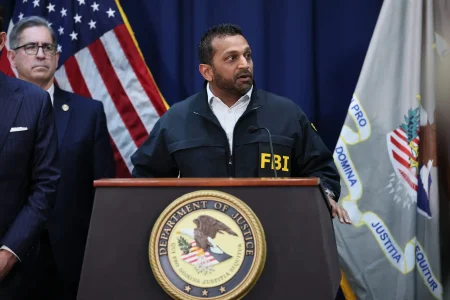
The quick work of the tipster and the police cannot be overstated. At a news conference on Thursday, FBI Chicago Field Office acting special agent in charge Lucas Rothaar praised the person who came forward, noting that many successful disruptions of potential attacks begin with “a single, courageous member of the public.” That courage is not always easy. Reporting a coworker or acquaintance can feel like betrayal, especially when you are not sure whether words will turn into action. But the coworker in this case chose to act, and that decision allowed law enforcement to move before Paporakis could return to the Hindu temple. It also allowed the temple itself to respond. In a message on its website, the temple said the safety of devotees, employees and volunteers was its highest priority, and announced additional security measures, including increased armed security presence. This is the part of the story that does not make headlines often enough: prevention works. It works because a person noticed something and reported it. It works because police treated the tip as urgent and followed the evidence. It works because a community refused to be passive in the face of hate. The Hindu temple in Aurora now has to confront a painful new reality—the knowledge that it was specifically targeted. Worshippers may wonder if they are safe in their own place of prayer. The added security cannot erase that anxiety, but the swift response from law enforcement and the solidarity of the public may offer some reassurance. The case is not over. Paporakis is being held without bond, with a next court appearance scheduled for October 30. But for everyone who would have been inside the temple that afternoon, the outcome could have been unimaginably different.
In the end, this story is not only about a thwarted attack; it is about the fragility of normal life and the power of human intervention. The Hindu temple in Aurora could have joined the long list of places where hatred turns into bloodshed—a grocery store, a synagogue, a school, a nightclub. That it did not is a matter of luck, yes, but also of connection. A coworker received a message and did not ignore it. Police heard a threat and acted. A community learned about a danger and responded. These are not automatic things. They are choices, made by people who decided that silence was too dangerous. The investigation will continue, and the legal system will decide what happens to Alexandros Paporakis. But no sentence can undo the fear he caused, and no explanation can fully account for the hate he allegedly carried. There will be discussions about mental health, about internet radicalization, about the strange intersection of a transgender teenager and a white supremacist ideology. Those discussions are necessary, even if they make us uncomfortable. They remind us that evil is not always obvious; it can live in a bedroom in a mother’s house, disguised as angry words and locked away with a rifle. They also remind us that prevention does not require perfect information. It requires a willingness to see something and say something, to take threats seriously, to ask hard questions of people we love, and to extend help before it is too late. The 19-year-old in this case may spend a long time in jail. The temple may need armed guards for a while. But the deeper truth is that the community was protected not by walls or weapons, but by an ordinary person who saw something wrong and spoke up. That is a kind of heroism that will never make a headline, and it is exactly the kind of heroism that saved lives on an afternoon that could have ended so differently.