



Paragraph 1: The Heated Exchange
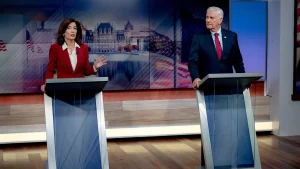
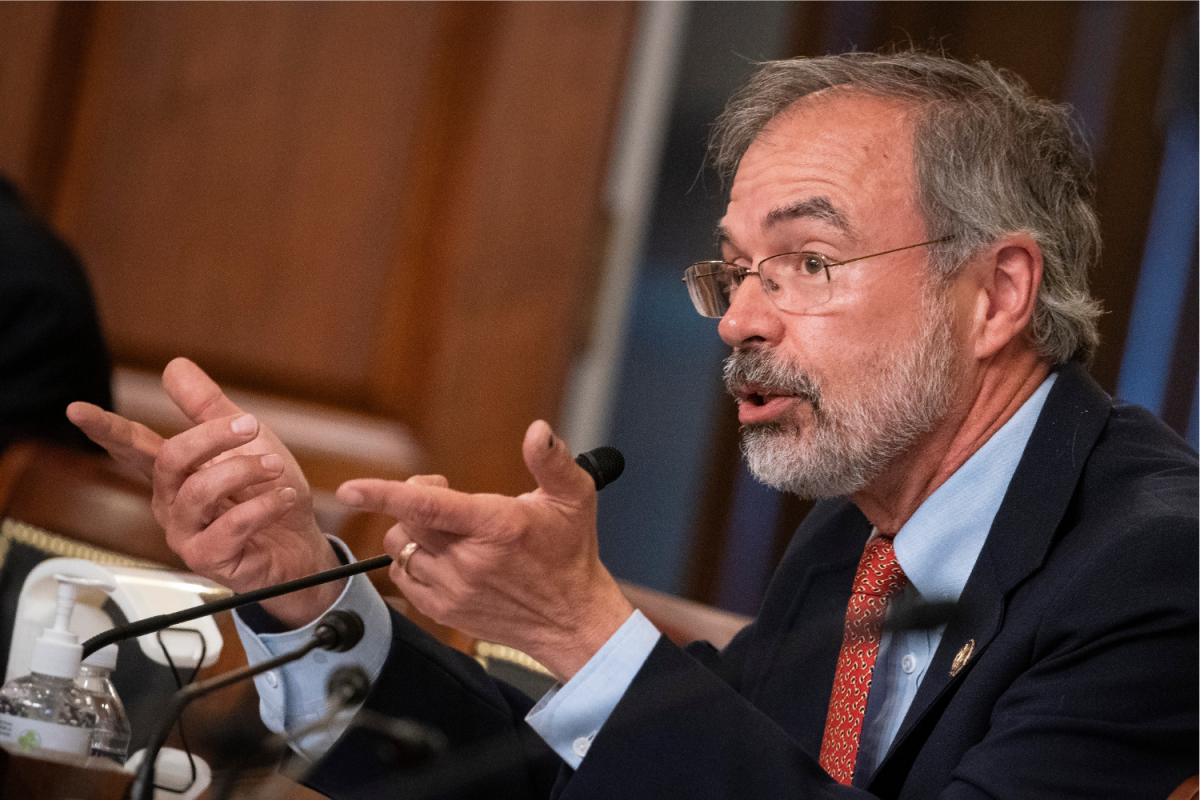
The atmosphere in the Cambridge, Maryland auditorium was already charged with the kind of tension that only a midterm election season can bring, but it reached a boiling point on Tuesday night during a debate between Republican Representative Andy Harris and his Democratic challenger, Dan Schwartz. What was meant to be a civil discussion about the issues facing Maryland’s First Congressional District devolved into a spectacle of jeers, interruptions, and a congressman’s indignation. As Harris began to explain his views on rising diesel prices, he was met not with polite attention but with laughter, shouts, and groans from the audience. The laughter wasn’t just a casual dismissal; it was a collective, almost weary reaction that suggested the crowd had heard enough. But Harris, a ten-term incumbent who is no stranger to confrontation, was not about to be silenced by what he perceived as a disrespectful crowd. Turning to face the hecklers, he snapped, “See, this is the problem. You say you all believe there’s First Amendment but only if you agree with you. You should let me finish the sentence, ma’am. You are rude.” The accusation of rudeness seemed to only fan the flames, and as the moderator pleaded for calm, Harris pointed a finger at another audience member, labeling them rude as well. The member shot back, “You started it,” a moment that encapsulated the raw, personal nature of modern political discourse. It was a scene that, while messy, laid bare the deep divisions that have come to define American politics, even in a local debate that was supposed to be about bridges, poultry, and offshore wind.
Paragraph 2: The Stakes in Maryland’s First District
To understand the significance of this outburst, one must first appreciate the political terrain of Maryland’s First Congressional District. This is a sprawling, predominantly rural district that hugs the Chesapeake Bay, encompassing the Eastern Shore and parts of Baltimore and Harford counties. It is a region where agriculture, fishing, and small-town values have long been the bedrock, but it is also a district that has undergone a subtle political shift in recent years. Harris, a physician and anesthesiologist by training, has represented this district since 2011, and he has become a prominent figure within the conservative wing of the Republican Party. As the chair of the ultra-conservative House Freedom Caucus, he is a close ally of former President Donald Trump, and his voting record reflects a staunchly conservative ideology. Yet, his opponent, Dan Schwartz, is hoping that the district’s changing demographics and a growing frustration with high prices might create an opening. The debate itself was organized by the League of Women Voters and was meant to focus on local concerns: aging bridges that crumble under the weight of farm equipment, the economic future of the poultry industry, and the controversial offshore wind projects that have divided the community. But like many debates in this election cycle, national issues—particularly the economy and inflation—kept creeping into the conversation, overriding the local focus. It was within this context that the discussion turned to the Trump administration’s deal with Russia over diesel, a topic that would trigger the evening’s most explosive moment. For Harris, the rise in diesel prices was a clear indictment of Democratic environmental regulations, a claim that he was determined to make, but the audience seemed to have other ideas.
Paragraph 3: The Diesel Debate and the Search for Answers
As the debate progressed, State Senator Dan Schwartz, the Democratic nominee, criticized the Trump administration’s handling of the Russian diesel deal, calling it a botched effort that would not do anything to ease the burden on American families. Harris, visibly frustrated, attempted to counter by pivoting to the fundamental causes of the price hikes. “The facts are diesel prices have gone up. There’s no question about it. Why has it gone up? Because the Democrats’ environmental regulations have not—,” he began, only to be drowned out by the cacophony of disapproval. The interruption was not just a spontaneous eruption; it was a sign that the audience, many of whom were likely farmers, fishermen, and small business owners who feel the pain of every price increase, was not willing to accept a partisan talking point without challenge. Harris’s reaction, however, was equally telling. He did not try to win the room back with a patient explanation; instead, he chastised the audience, demanding to be heard. The moderator’s pleas for decorum went largely unheeded, and it was left to Schwartz to play the role of peacemaker. “It’s very important that you guys are able to hear from both of us tonight,” he said, trying to restore a semblance of order. Despite Harris’s assertion that environmental policies were the culprit, federal energy officials have painted a very different picture. The U.S. Energy Information Administration has pointed to tight global supplies of distillate fuel and elevated crude-oil prices as the main drivers of the surge, with reduced refining activity in Russia, China, and the Middle East contributing to the shortage. The complex interplay of global markets, geopolitics, and pandemic recovery is a far cry from a simple partisan narrative, but in the heat of a debate, nuance is often the first casualty.
Paragraph 4: The Human Cost of Rising Fuel Prices
While the political argument raged on inside the auditorium, the real impact of high diesel prices was being felt far beyond the walls of the debate hall. Wendell Meekins, a Dorchester County farmer with roughly 30 years of experience, knows all too well what these numbers mean for his bottom line. Meekins, whose farm lies within the very district Harris represents, told local news station WBOC that his operation is spending more than $2,000 each day on fuel during the harvest season. This isn’t just a line item; it’s a crushing financial burden that compounds the losses he’s already suffered from drought-related crop damage. “This is just a further cut into your profit, which is making it hard to come out ahead,” Meekins explained. His story is emblematic of the broader struggles facing rural communities across the nation. For a farmer, diesel fuel is not an optional expense—it is the lifeblood of their machinery, essential for planting, harvesting, and transporting goods to market. When prices spike, there is no alternative but to pay or watch the harvest rot in the fields. The same goes for the truckers who haul those goods, the fishermen who fuel their boats, and the contractors who power their equipment. Every rise in the price of distillates sends ripples through the local economy, affecting everything from the cost of food at the grocery store to the price of a new home. In this context, the audience’s reaction to Harris’s comments becomes more understandable. They were not simply heckling for sport; they were expressing the frustration and anxiety of people who are struggling to make ends meet and who feel that their elected officials are not addressing their immediate needs.
Paragraph 5: The Political Landscape and the Race Ahead
As the debate dust settles, the race for Maryland’s First Congressional District remains an uphill battle for Schwartz. Harris, who is seeking his ninth term, has a well-established base and the backing of a national conservative network, along with the endorsement of Donald Trump. He also chairs the powerful House Freedom Caucus, a position that gives him outsized influence in Washington. Schwartz, on the other hand, is running a campaign focused on affordability and consumer protection, opposing tariffs, defending Medicaid, and advocating for restrictions on congressional stock trading. His platform speaks to the economic anxieties of the district, but the odds are steep. Public polling in the race is sparse, but a Democratic-sponsored poll conducted in late July surveyed 482 likely voters and put Harris 13 points ahead, leading 52 percent to 39 percent. Prediction market Kalshi gives Harris an even more commanding 92 percent implied probability of winning, though it’s important to note that market prices reflect traders’ expectations rather than a guaranteed result. The district’s historical voting patterns favor Republicans, and despite the shifting political winds, Harris’s incumbency advantage is formidable. Yet, the explosive exchange at the debate could be a sign that the electorate is restless, not just in Maryland but across the country. The political winds are blowing strongly in favor of Republicans in many races, as inflation and gas prices continue to dominate the national conversation, but this particular district’s dynamics are unique, and only time will tell if Schwartz can harness the frustration of the crowd into tangible votes on election day.
Paragraph 6: Gas Prices as a National Flash Point
The debate in Cambridge is merely a microcosm of a larger national story unfolding as the midterm elections approach. Gasoline and diesel prices have risen sharply across the United States this year, and they have become a powerful political weapon in the battle for control of Congress. In every state where there is a competitive Senate race, the price at the pump has become a central issue, with candidates on both sides staking out positions and assigning blame. A recent Reuters/Ipsos poll of 4,506 adults found that a bipartisan majority—78 percent of respondents—blames the Trump administration’s policies for higher costs, a statistic that includes 64 percent of Republican voters. This is a striking finding, as it suggests that even rank-and-file party members are feeling the pinch and are willing to hold their own leaders accountable. The national average price for a gallon of gas has risen by more than 46 percent since late February, climbing from roughly $2.98 to around $4.36, according to AAA data. Maryland has not been spared; the average price for regular gasoline increased by about 43 percent over the same period, from $2.975 to $4.259. These numbers translate into real pain for working families, who must choose between filling their tank and putting food on the table. For politicians, these numbers translate into votes lost or gained. The debate in Cambridge may have been contentious, but it was also a reflection of a broader truth: in an era of high prices and economic uncertainty, voters are hungry for answers, not partisan squabbles. And when they laugh at a congressman who tries to blame environmental regulations for a complex global crisis, they are not just being rude—they are demanding a more honest and solutions-oriented approach. Whether they get it in the coming weeks remains to be seen, but the tension in that auditorium will likely repeat itself in campaign stops and polling places across the country before this election season is over.