


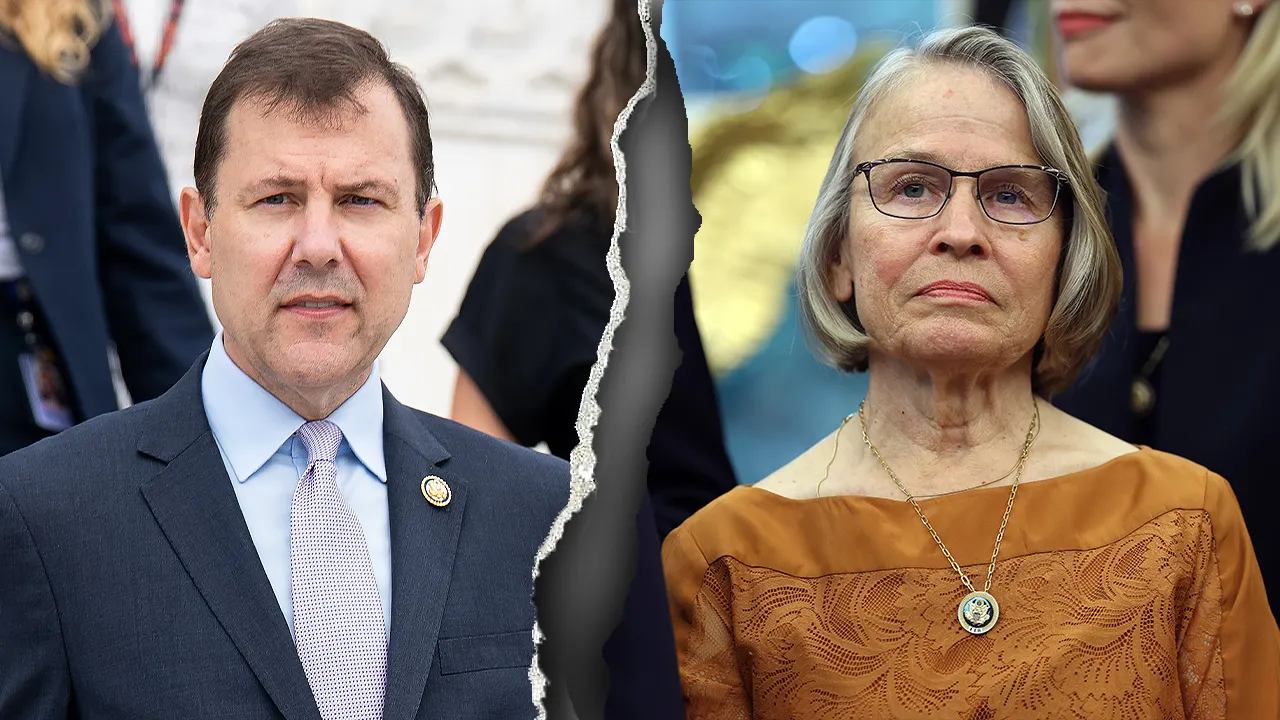
It’s that frantic, nerve-racking stretch of a campaign season when every dollar, every ad buy, and every internal poll can feel like a matter of life or death. And in the final weeks before Election Day, some of the most powerful Republican fundraising machines in the country have made a quiet but brutally strategic decision: they are pulling the plug on two sitting House members. A top elections group tied to President Donald Trump, MAGA Inc., is halting its planned spending in the districts represented by Rep. Tom Kean of New Jersey and Rep. Mariannette Miller-Meeks of Iowa. At the same time, the Congressional Leadership Fund, a super PAC closely aligned with House GOP leadership, is also withdrawing its cash from those same two districts. Both groups are rerouting their money into other House races across the country, a move that speaks volumes about what the latest polling is telling them behind closed doors. It’s not a decision these organizations make lightly—but in the cold, unromantic math of politics, they’d rather spend where the odds are better. And for the incumbents left behind, it’s the kind of signal that can send shockwaves through a campaign.
To understand why this matters so much, you have to look at the bigger picture. Control of the House of Representatives is hanging by a thread, and Republicans are facing an increasingly steep climb to hold on to their majority. The latest Fox News Power Rankings show Democrats with an edge in 219 House seats, which is just enough to clinch the gavel, while Republicans are projected to keep 198. That leaves 19 races completely up in the air, and the national environment feels like it’s tilting away from the GOP. In that kind of landscape, every competitive seat becomes a precious resource, and party committees have to make hard choices about where to invest. Pulling money from Kean and Miller-Meeks is essentially an admission that their re-election chances have grown slim—at least in the eyes of the strategists who spend their days analyzing polling data. It’s a brutal form of triage, but it’s also how the game is played. The groups aren’t abandoning the fight entirely; they’re repositioning their firepower in the hope of saving the majority by winning elsewhere. For the two incumbents, though, it means they can no longer count on the cavalry riding in to save them.
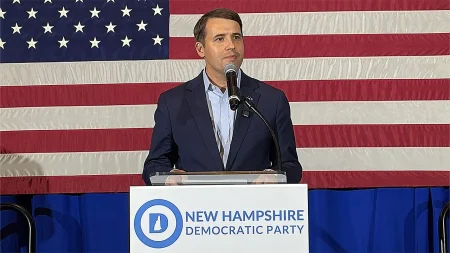
Take Tom Kean’s district, for example. New Jersey’s 7th Congressional District is one of the wealthiest in the state and in the country, stretching through the leafy suburbs and exurbs north of New York City. It’s the kind of place where country-club Republicans and independent-minded swing voters coexist, and where national trends often show up in unexpected ways. Kean first won this seat in 2022 by defeating incumbent Democrat Tom Malinowski by fewer than 10,000 votes, and he expanded his margin in 2024 to just over 5 percent—about 23,000 votes. That sounds comfortable enough, but in a midterm year with a volatile political climate, even a five-point cushion can evaporate quickly. His Democratic opponent, Rebecca Bennett, is giving him a serious challenge, and the race has tightened enough that outside groups are getting nervous. A source close to Kean’s campaign pushed back on the idea that the congressman is in trouble, insisting that “the race is fully funded down the home stretch.” The source also noted that Kean’s campaign and the House Republicans’ campaign arm have “major reservations on broadcast,” while Bennett’s side apparently doesn’t have the same soft-dollar reservations on her behalf. In other words, the campaign is trying to project confidence, but the super PACs are voting with their wallets, and that’s never a good sign for an incumbent.
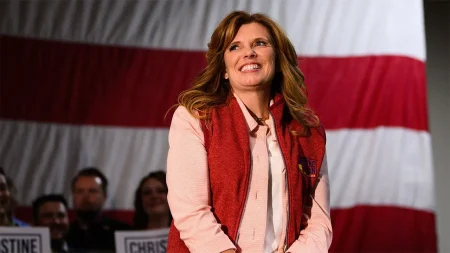
Then there’s Mariannette Miller-Meeks, a name that has become almost synonymous with razor-thin margins. The Iowa Republican is seeking a fourth term in the state’s 1st Congressional District, which covers the southeastern corner of the state, including Davenport and Iowa City. Her political career has been defined by nail-biters: she first won her seat in 2020 by just six votes, earning her the affectionate nickname “six-pack” among her House Republican colleagues. She went on to defeat Democrat Christina Bohannan twice—by roughly 20,000 votes in 2022 and by a mere 800 votes in 2024. If anyone knows how to survive a close race, it’s Miller-Meeks, but even she may be running out of runway. Bohannan is back for a third try, and in a district that includes a major university community like Iowa City, the dynamics are tricky for a Republican. Polling in recent weeks has apparently not been kind, and the decision by MAGA Inc. and the Congressional Leadership Fund to redirect their money suggests they see the writing on the wall. For Miller-Meeks, being left to fend for herself in the final stretch is a bitter pill to swallow, especially after she’s proven time and again that she can win when the margins are impossibly close. But this time, the national headwinds might be too strong, and the party’s financial backers are making a calculated bet that their money is better spent elsewhere.
The reshuffling isn’t just about the two Republicans, either. The Congressional Leadership Fund is reportedly pulling funding from Michigan’s 8th Congressional District and Ohio’s 1st Congressional District as well—but those are places where Republicans were hoping to unseat Democratic incumbents, not defend their own. In Michigan, that means abandoning the challenge against Rep. Kristen McDonald Rivet, and in Ohio, it means giving up on the effort to unseat Rep. Greg Landsman. The money being freed up is being rerouted into races where Republicans feel more confident, like the battleground districts held by Rep. Brian Fitzpatrick of Pennsylvania and Rep. Monica De La Cruz of Texas. This is the brutal calculus of modern campaign finance: every dollar spent in a losing race is a dollar that can’t be used in a winnable one. The super PACs aren’t in the business of making incumbents feel good; they’re in the business of maximizing the number of Republican seats in the House. If that means cutting loose a couple of sitting members and shifting focus to a handful of promising challengers, so be it. It’s a sign of how the national map has shifted, and it reflects a growing belief among GOP strategists that the path to a majority runs through Pennsylvania, Texas, and other states where the political terrain looks more forgiving.
At the end of the day, these funding decisions are about more than just television ads and mailers—they’re about human beings, careers, and the lives of everyday voters who will head to the polls in just a few weeks. For Kean and Miller-Meeks, the news is a gut punch. They’ve spent months building their campaigns, shaking hands, appearing at town halls, and defending their records. Now, with the finish line in sight, the national party is quietly telling them they’re on their own. It doesn’t necessarily mean defeat, of course. Local dynamics matter, and both incumbents have deep roots in their communities. Kean can point to a famous political name and a record of bipartisanship, while Miller-Meeks has shown an uncanny ability to defy the odds. But the absence of outside money can make a race feel very lonely, especially when the other side is fully funded and national attention starts to shift. Voters might not see the spreadsheets or the internal polling, but they’ll feel the effects in the form of fewer attack ads, less grassroots organizing, and a general sense that the party has moved on. It’s a reminder that in American politics, loyalty is often conditional, and the money follows the math. For now, the math says these two districts are no longer worth the investment—and that’s a hard truth for any politician to face.