

A Shepherd’s Courage: Pope Leo XIV Faces Surgery with Faith and Fortitude
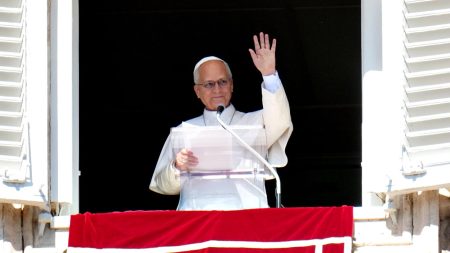
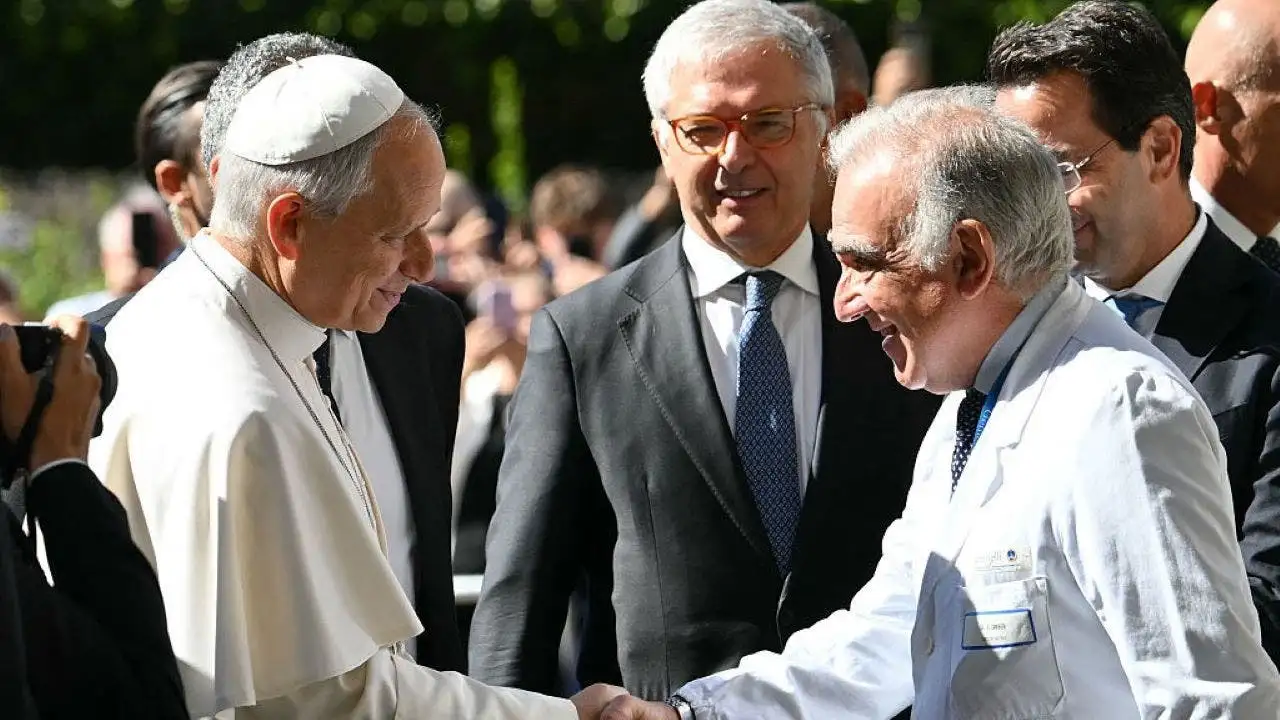
The morning light fell softly over Rome as Pope Leo XIV made his way to Agostino Gemelli University Hospital, a place that has become synonymous with papal health care over the decades. At seventy-one years old, the pontiff arrived with the quiet dignity that has come to define his papacy, preparing for a procedure that would remove a small nodule from his lung—a discovery that surprised even those closest to him. The announcement came the previous day, delivered not through a formal Vatican statement, but through the pope’s own words during his weekly Angelus address in St. Peter’s Square. There was something characteristically honest and unassuming about the way he shared the news with the faithful gathered below, speaking not with alarm but with a calm acceptance that seemed to put everyone at ease. For a man who has spent his life in service to others, this moment of personal vulnerability was handled with the same grace that has marked his public ministry, a quiet acknowledgment that even shepherds must sometimes pause to tend to their own wounds.
The pope’s own account of discovering the growth revealed his characteristic straightforwardness and lack of self-pity. “Doctors found a small lump in the lung,” he told the crowd, explaining that it had been “identified at a very early stage and well situated.” This matter-of-fact delivery, devoid of dramatic embellishment, spoke volumes about his temperament. He went on to explain that his physicians had deemed it appropriate to intervene surgically, and following their counsel, he had decided to proceed. “I thank you for your spiritual closeness and I rely on your prayer,” he added, turning what could have been a moment of fear into an invitation for communal participation. Vatican spokesman Matteo Bruni confirmed that the surgery itself was not expected to be lengthy, though the pope would likely remain hospitalized for approximately one week—a stay that would allow for proper recovery and observation. The decision to act swiftly, catching the nodule at such an early stage, suggested both medical prudence and the kind of proactive approach to health that has characterized the American-born pope’s approach to life more broadly.
Those who know Pope Leo XIV describe a man of remarkable vitality, someone whose days are filled with the kind of physical activity that would exhaust men half his age. He plays tennis regularly and swims at the papal summer retreat in Castel Gandolfo, maintaining a level of fitness that has seemed almost effortless for him. This news of his surgery, therefore, lands with particular weight precisely because it seems so out of character for a man who has never publicly contended with serious health challenges. The Vatican has remained characteristically tight-lipped about whether the nodule is cancerous, choosing instead to release minimal details while focusing on the pope’s stable condition and the routine nature of the planned intervention. This reserve is not unusual for the Holy See, which has historically guarded the health details of its leaders with a discretion that borders on protective secrecy. Yet even with this institutional caution, the underlying message has been clear: the pope is in good hands, the prognosis is hopeful, and the treatment has come at a moment when it can be most effective.
The choice of Agostino Gemelli University Hospital is itself steeped in tradition and meaning, as this institution has long been known informally as the “Pope’s hospital” due to its longstanding relationship with the Holy See. It was here that previous popes received treatment for various ailments, and the facility’s modern infrastructure, combined with its proximity to the Vatican, has made it the natural choice for papal medical care. The pope’s scheduled international trip from November sixth through the seventeenth, which was to include stops in Uruguay, Argentina, and Peru, now hangs in a delicate balance. While no official decision has been announced regarding whether the surgery and recovery period will affect these plans, the timing is tight, and Vatican officials are undoubtedly weighing the demands of such an ambitious journey against the pope’s need for rest and recuperation. This uncertainty adds another layer of complexity to what is already a moment of vulnerability, reminding observers that the life of a modern pope involves an exhausting rhythm of travel, audiences, and ceremonies that would challenge even the most robust constitution.
Beyond his personal health concerns, Pope Leo used his Sunday remarks to shine a light on suffering that extends far beyond his own circumstances, renewing his urgent appeal for peace in war-torn Ukraine. “The war in the martyred Ukraine continues to create suffering, even beyond its borders, especially in the poorest countries, where many people depend on the exports of cereals and grains,” he said, drawing attention to the cascading consequences of conflict that reach vulnerable populations thousands of miles from the front lines. This refusal to turn inward during his own moment of trial is deeply emblematic of his pastoral vision—a vision that insists the Church must always look outward, toward the margins, toward those whom the world forgets. Even as he prepared himself for surgery, the pope’s heart remained with the hungry, the displaced, and the war-weary, offering his suffering as a prayer for their liberation. It was a powerful reminder that spiritual leadership is not merely about administering institutions but about embodying a certain way of being in the world, one that holds space for others even in the midst of personal trials.
As the days ahead unfold, the world will watch and wait with bated breath, holding Pope Leo in prayer and hope. The image of this vigorous, tennis-playing pontiff lying in a hospital bed may seem incongruous, but it also humanizes him in ways that formal pronouncements never could. There is something deeply relatable about a leader who faces the same fears and uncertainties as the rest of humanity—who must confront his own mortality despite his profound faith and his extraordinary position. In this moment, the pope becomes not just a symbol but a fellow traveler, a man who, in his vulnerability, draws closer to those he serves. The faithful around the world will pray not only for a successful surgery and swift recovery but also for the grace that comes from accepting whatever lies ahead with peace and trust. Pope Leo has already given them the greatest gift in this regard—an example of courage that is not the absence of fear but the willingness to move forward in faith despite it. His journey into the operating room carries with it the hopes of millions, and his recovery will be celebrated as a victory not merely of medicine but of the human spirit, sustained by prayer and buoyed by the profound spiritual closeness he has so humbly requested.