

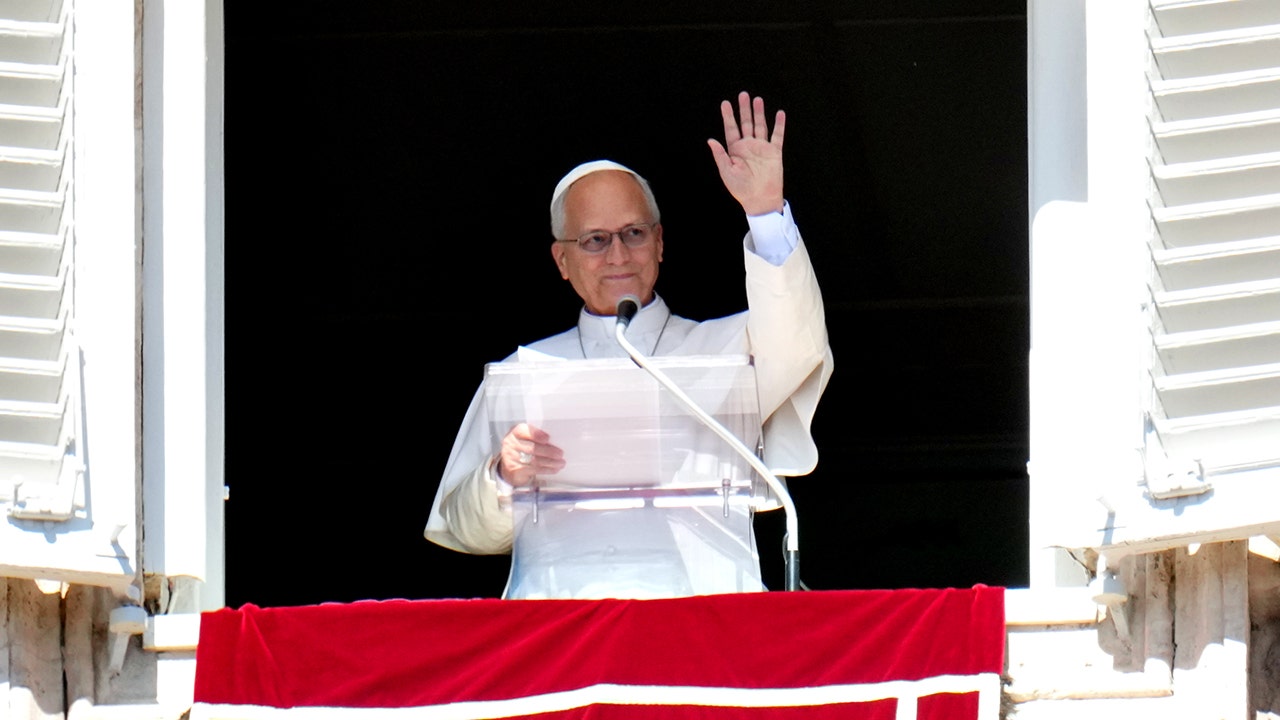
There is a particular kind of stillness that settles over St. Peter’s Square on a Sunday morning when the Pope appears for the Angelus. Thousands of pilgrims and tourists gather, holding rosaries, cameras, and hopes, waiting for a familiar gesture of blessing and a few words of peace. But on this Sunday, the quiet was different. It carried a heavier weight. Pope Leo XIV, the 71-year-old American-born pontiff known for his vigor and warmth, stood before the crowd and made an unexpected and deeply personal announcement: doctors had found a small nodule in his lung, and he would undergo surgery to remove it in the coming days. His voice remained calm, almost reassuring, but the news rippled through the square and beyond. He explained that the nodule had been discovered at a “very early stage” and was “well situated,” words that offered some comfort even as they opened the door to uncertainty. The surgery, he said, was already scheduled, and he expected to remain in the hospital for about a week. Vatican spokesman Matteo Bruni later confirmed the details, adding a layer of official weight to a moment that felt, for many, like watching a father pause to share his own fragility with his family. There was no panic in the Pope’s voice, only trust. He thanked the faithful for their spiritual closeness and asked for their prayers, a simple request that turned a private medical concern into a shared moment of solidarity.
The coming days will bring Pope Leo to the Gemelli Hospital in Rome, a place often referred to as the Pope’s hospital because of its long history of caring for pontiffs. The choice of that institution, with its quiet corridors and dedicated medical teams, suggests a careful and planned approach. According to Vatican sources, the surgery is likely to take place within days, and the Pope is expected to remain under observation for roughly a week. What remains unclear is whether the nodule is cancerous. The Vatican has not disclosed that detail, and no further information about the diagnosis or the exact nature of the procedure has been released. In that silence, there is room for worry, but also room for hope. The Pope’s own description of the nodule as small, early, and well situated offers a measure of reassurance. It suggests that doctors found it in time, before it could become something more dangerous. For a man who has shown no previously known health problems and who has maintained a strikingly active lifestyle, this announcement came as a surprise to many. Pope Leo is known for playing tennis and swimming at the papal summer retreat in Castel Gandolfo. He is not a man who slows down easily. His energy has been part of his public identity, a sign of vitality in a role that demands constant travel, speaking, and pastoral care. The image of him in a hospital bed, even temporarily, is difficult to square with the man who has appeared so robust. And yet, this is precisely what makes the moment so human. No amount of vigor or devotion can make anyone immune to the vulnerabilities of the body. The Pope, like everyone else, must sometimes stop and listen to what his own health is telling him.
This surgery does not happen in a vacuum. Pope Leo’s life is a tapestry of commitments, and the coming months are full of plans that now carry a quiet question mark. He is scheduled to embark on a major international trip from November 6 through November 17, with planned stops in Uruguay, Argentina, and Peru. It is a journey that many in those countries have been anticipating, a chance to see the Pope in their midst, to hear his voice, to feel the presence of the Church in their own streets. Whether the surgery and recovery will affect those travel plans remains unknown. The Vatican has not commented on the trip, and perhaps no one yet knows what the coming weeks will allow. There is a strange tension in that uncertainty. The Pope’s work is built on presence, on showing up for people in their joys and sorrows. To be forced to step back, even briefly, is a reminder that even the most dedicated servant of the Church must sometimes become the one who is served. But there is also something profound in this moment. By choosing to be open about his condition, Pope Leo has invited the world into his own experience of vulnerability. He has not hidden behind the walls of the Vatican or offered vague statements about needing rest. He stood in public, in the bright light of the square, and told the truth. That kind of transparency is a gift. It reminds us that faith does not require pretending to be invincible. It allows us to be weak, to be afraid, to need help, and still to trust in something greater than ourselves.
In the same Sunday address, the Pope turned his attention outward, away from his own body and toward the suffering of the world. He renewed his appeal for peace in Ukraine, a war that has now dragged on far too long, leaving destruction and grief in its wake. His words were not abstract. He spoke specifically about the Black Sea and the safe passage of grain shipments, a matter that affects the daily bread of millions. The war, he warned, continues to create suffering beyond its borders, especially in the poorest countries, where people depend on exports of cereals and grains. When conflict interrupts those shipments, it is not just soldiers who suffer. It is children in distant lands, families who have no connection to the war, people whose only crime is to live in places where food is already scarce. The Pope’s appeal was simple and urgent: “I send a strong appeal for all those involved that they can guarantee the safe transport of grains in the Black Sea. The daily life of many people cannot be hostage to war.” There is a profound connection between his own vulnerability and his plea for others. Here is a man facing surgery, a moment of personal uncertainty, and his first instinct is to speak for those who have even less control over their lives. He knows that his own operation will be performed by skilled doctors in a modern hospital, with every resource available. But the people he is thinking about may not have access to clean water, let alone advanced medicine. Their suffering is not a medical problem; it is a consequence of human choices, of wars begun and prolonged, of politics that forget the poor. By linking his health announcement with his plea for peace, the Pope reminds us that our lives are intertwined. None of us is truly alone in our struggles.
There is a quiet strength in the way Pope Leo has chosen to face this moment. He did not ask for sympathy. He did not dwell on his own fears. He simply told the truth, asked for prayers, and continued with his work. The announcement came after the Angelus, not instead of it. He spoke about his lung, but he also spoke about Ukraine. He acknowledged his own need for healing while also calling for the healing of nations. That is the mark of a leader who understands that his role is not to be the center of the story, but to point beyond himself. And yet, there is no denying the emotional weight of the moment. When a Pope says he is going to the hospital, it stirs something deep in the Catholic imagination. The Pope is a symbol of continuity, a link to centuries of faith. To see him as frail, as needing care, is to confront the reality that even the most sacred human institutions are carried by fragile human beings. But perhaps that is exactly where faith becomes real. It is easy to believe in God when everything is going well, when the body is strong and the future seems bright. It is harder, but more meaningful, to trust when the path is uncertain. The Pope’s request for prayers is not just a formality. It is an invitation. He is asking people to hold him in their hearts, to surround him with spiritual support, to remind him that he is not alone. And in that act of asking, he is also giving. He is giving people a way to feel connected to him, to participate in his life in a way that goes beyond mere observation.
As the days before the surgery unfold, the world will watch and wait. There will be official statements, medical updates, and perhaps photographs of the Pope leaving the Vatican for the hospital. There will be moments of anxiety and moments of hope. But beneath all the news coverage, there is a simple human story. A man, nearing the end of a long and demanding life of service, has received difficult news. He has decided to trust the doctors, to take care of himself, to accept help. He has also decided to remain present, to keep speaking for those who have no voice, to keep praying for peace. There is something almost pastoral about his courage. He is not pretending to be stronger than he is. He is not hiding from the reality of his condition. He is facing it with honesty, with faith, and with the support of a global community. In a world that often celebrates self-reliance and invulnerability, this is a countercultural witness. It says that it is okay to be weak. It is okay to need others. It is okay to ask for prayer. It is okay to slow down. The surgery will happen soon, and then there will be recovery, and then, perhaps, the return to travel and work. But this moment, this fragile pause in the life of a Pope, will remain in the hearts of those who witnessed it. It is a reminder that leadership is not about perfection. It is about honesty, humility, and love. And it is a reminder that no matter how high our position or how strong our bodies, we all walk the same path. We all need grace. We all need each other. And perhaps, in the end, that is the most human and holy truth of all.