

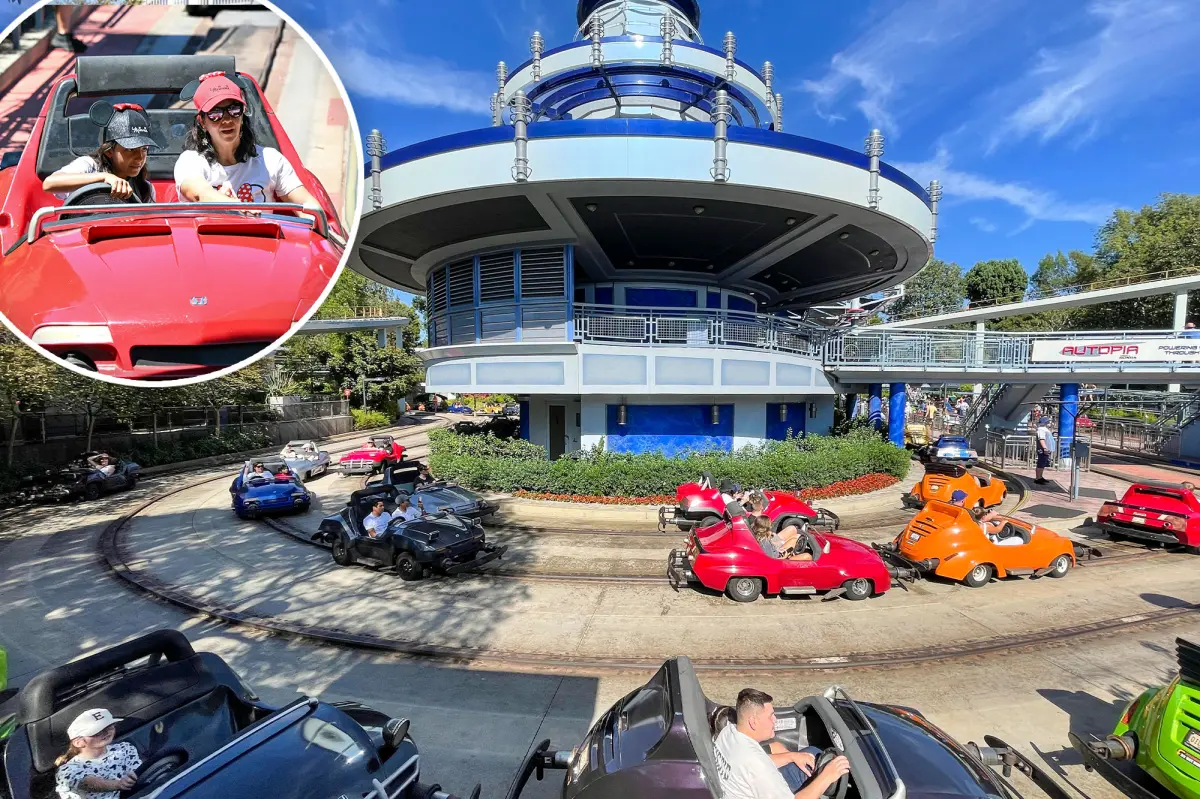
For nearly seven decades, the gentle putter of small gasoline engines and the faint, sweet smell of exhaust have been as much a part of Disneyland’s Autopia as the winding track and the miniature freeway signs. It was the ride where countless children first felt the thrill of gripping a steering wheel, their feet barely reaching the pedals, their parents smiling from the passenger seat. But that era is coming to an end. Disneyland has confirmed that Autopia will retire its gas-powered cars and replace them with electric vehicles, a move made all the more urgent by a California state deadline. The state has set a February 1 cutoff, after which the ride’s current internal combustion engines would no longer be allowed to operate unless they are retired. The announcement marks a major shift for one of the park’s most iconic attractions, and for Bob Gurr, the Disney legend who designed the ride, it is a change he has been pushing for longer than many guests have been alive. “It will be electric, but not the conventional idea of a battery in a car,” Gurr revealed in a new interview with the New York Times. “It’s very different.” His cryptic but promising description suggests that Disney is not simply dropping an off-the-shelf electric motor into the little roadsters, but is exploring a more imaginative approach, one that may preserve the spirit of the ride while eliminating its environmental toll.
The history of Autopia is deeply tied to the automobile culture of mid-century America. When it first opened in 1955, it was a futuristic fantasy of what driving might look like in a world of endless highways and gleaming cars. For decades, the ride has been powered by small gasoline engines, most recently an 8.5 horsepower Honda four-stroke engine. Honda has been a key part of the ride’s modern identity, and according to Gurr, the company will continue its involvement even after the conversion to electric power. A Honda spokesperson confirmed to the Times that the company’s current sponsorship agreement with Disneyland Resort runs through early 2027, and that discussions about the future of the partnership are ongoing. This suggests that the transition will be a collaborative effort, with Honda lending its engineering expertise to a new generation of ride vehicles. The relationship between the ride and its sponsors has always been part of its story. From 1955 to 1970, Richfield Oil sponsored the attraction, and later Chevron took over from 2000 to 2012. These oil company partnerships were fitting for an era when gasoline was seen as a symbol of freedom and progress. But times have changed, and the same cultural and regulatory forces that are pushing the broader automotive industry toward electrification are now reaching into the happiest place on Earth.
The shift is not just a nostalgic concession to changing times; it is also a response to real environmental and legal pressures. Disneyland has already found itself in trouble over the ride’s emissions. In 2024, the park paid a $56,000 settlement to the California Air Resources Board after it was discovered that the Autopia cars were operating without certified emissions controls. Disneyland described the issue as an “administrative oversight” and said that corrections were made without any lasting impact on the environment. Still, the incident highlighted the awkward reality of a major corporation with ambitious climate goals operating a fleet of small gas-burning cars in the middle of smog-conscious Southern California. California has long been a leader in emissions regulation, and the state’s deadline left Disney with little choice but to modernize. The move is also in line with Disneyland’s broader environmental commitments. The park has said that the transition to electric vehicles is part of its larger effort to reach net zero emissions by 2030, a goal that includes increasing its use of renewable energy sources. For a company that loves to tell stories about the future, keeping a gas-guzzling attraction in operation was becoming an increasingly difficult story to tell, especially to a generation of children who are growing up with electric cars, climate strikes, and a much more urgent sense of environmental responsibility.
For Bob Gurr, the change has been a long time coming. The designer, now in his nineties, has been advocating for the ride to go electric since 2000, more than two decades before it became a corporate priority. “For 26 years, I’ve been arguing, ‘When are you going to do anything to get rid of that gasoline?’” Gurr told the Times. He did not mince words about his frustration, calling Autopia “the dirtiest place on Earth” in the middle of Anaheim. That is a striking statement from the man who helped create the ride, but it comes from a place of love and a desire to see his creation survive in a changed world. Gurr has always been an inventor and a forward thinker, and watching his beloved ride become an environmental relic has clearly been difficult. His advocacy over the years was not just about emissions; it was about the message the ride sends. Autopia was originally designed to celebrate the open road and the freedom of the automobile. But as the world has learned more about the consequences of fossil fuels, that celebration has felt increasingly outdated. Gurr’s insistence on electrification was not an admission that the ride was a mistake, but rather a recognition that the ideals it represents, freedom, movement, joy, can be reimagined for a new era. His relief at the upcoming change is palpable, and his excitement about the new technology suggests that the ride’s best days may still be ahead.
Autopia has undergone many changes over the years, but this will be one of its most significant transformations. The ride last received a major renovation in 2016, when Honda came on board as the primary sponsor and the track and vehicles were updated. At that time, the focus was on improving the experience and the aesthetic, not on rethinking the powertrain. But in 2024, Disneyland announced its intention to convert the ride to electric vehicles, setting the stage for the current transition. The details of the new system are still under wraps, and Gurr’s hints about a non-conventional electric approach have sparked plenty of speculation among fans and theme park enthusiasts. Some imagine a system that uses inductive charging built into the track, allowing the cars to draw power without bulky batteries. Others wonder if the ride might use a hydrogen fuel cell or some other emerging technology. Whatever the solution is, it will need to preserve the tactile experience that makes Autopia special. For children, the magic of the ride is not just in moving forward; it is in the feeling of control, the vibration of the vehicle, the wind in their hair, and the gentle challenge of steering along the track. An electric powertrain can provide all of that, and in some ways it may do so even better, with smoother acceleration and quieter operation. The challenge for Disney will be to retain the nostalgia and the charm of the original while leaving behind the noise and fumes.
As the February 1 deadline approaches, the sense of anticipation among Disney fans is growing. There is something bittersweet about saying goodbye to the sound of those little engines, which have been a background hum of childhood for millions of visitors. But there is also something exciting about watching Disney take a step into a cleaner, more sustainable future. Autopia has always been about the future, about the promise of the open road and the adventure that awaits just around the next curve. Now, that future is being reimagined. The ride will still teach kids the basics of driving, the thrill of the wheel, the importance of staying on the track, the joy of movement. But it will do so without leaving a cloud of exhaust behind. In a way, the new Autopia may be more true to its original spirit than the gas-powered version ever was. The original dream was not about gasoline; it was about freedom. Electric vehicles can provide that freedom, and they can do it more quietly, more cleanly, and with a nod to the world that today’s children will inherit. Disneyland’s decision to electrify Autopia is a reminder that even the most beloved traditions can evolve. It honors the past not by preserving it in amber, but by carrying its best qualities forward. And for Bob Gurr, who has waited more than a quarter of a century for this moment, the green light is finally on.