



The thought of leaving the home that holds a lifetime of memories can be unsettling, and it’s no surprise that the vast majority of older Americans want to stay right where they are. According to the AARP, three out of every four people aged fifty and older would prefer to remain in their own homes as they age, rather than moving to a facility or relying on full-time institutional care. But staying independent isn’t simply a matter of wishing for it; it’s something that must be supported by daily habits, long before a crisis arrives. Dr. Vonda Wright, a double board-certified orthopedic surgeon and an authority on active aging who practices in Orlando, Florida, has spent years studying what really keeps people mobile and self-sufficient late into life. She points to three core challenges that often stand between older adults and their ability to age in place: difficulty getting up from a chair and managing basic self-care, memory problems that complicate daily life, and incontinence that makes personal hygiene feel overwhelming. These issues are deeply personal and often embarrassing, which is why they’re frequently ignored until they become unavoidable. But Wright believes there is a missing link in most conversations about mental health, physical health, and independence: skeletal longevity. Her message is that our bones, muscles, and tendons form the architecture of our independence, and paying attention to that entire musculoskeletal system is what allows people to keep living in the homes they love. It’s not about avoiding aging; it’s about making sure the body can support the life we want to live, right up to the very end.
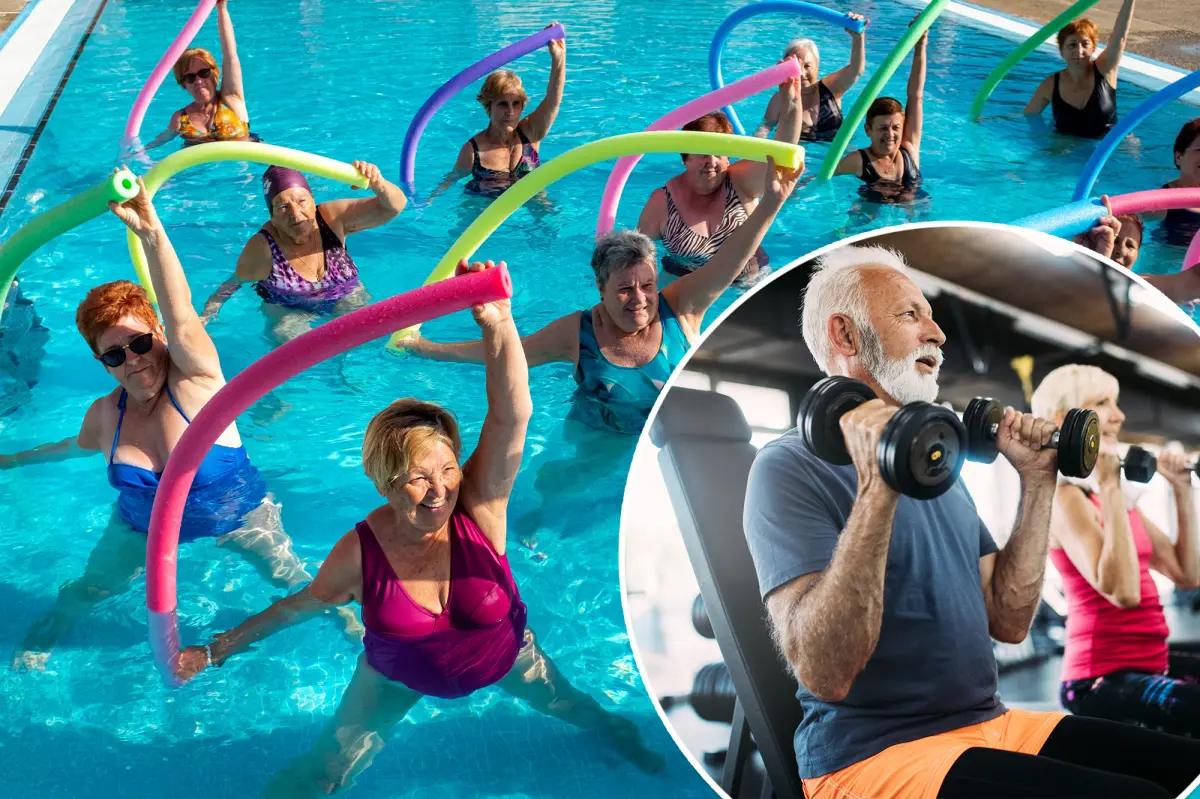
The first and most important habit, according to Wright, is simply to keep moving. She points out that the human body craves mobility; it’s literally our first skill, something we learn to do when we’re about a year old. Yet somewhere along the way, many of us start treating rest as the default response to discomfort, especially when joints begin to ache. Wright pushes back against that idea with conviction. Even when your hips hurt, even when your knees hurt, she says, you should move on the ground or get into a pool where the water is chest-high and let the buoyancy support you. The Centers for Disease Control and Prevention echoes that advice, suggesting low-impact activities like walking, cycling, and water exercise to help older adults preserve the ability to handle everyday tasks on their own. These activities don’t require expensive equipment or a gym membership; they just require a willingness to get up and engage with the world. Wright is careful to say that she doesn’t want people exercising through a new injury or severe pain, but she strongly challenges the belief that rest is the best cure for pain. In her experience, rest doesn’t cure anything. If you have arthritic knees, for example, the muscles around those knees and in your hips can be strengthened to support the joint and reduce the burden on it. Rest simply allows muscles to weaken, making the pain worse and making it harder to recover. The answer to feeling better, she insists, is not staying still but staying strong and mobile, even when it takes effort to get started.
The second habit is building muscle, and Wright is adamant that it is never too late. Strength training is what allows older adults to get out of a chair without using their arms, climb stairs without fear, carry groceries into the house, and play with grandchildren on the floor. These are the everyday tasks that support independent living, and they all depend on having enough muscle mass to do the job. Wright wants people to know that there is no age or skill level at which the ability to become more mobile is lost. Even if someone has already experienced a decline, or their parents have, the body can still change for the better. She references powerful research by Dr. Maria Fiatarone at Tufts University, a small but landmark study from 1990 that showed even people at ninety years old can regain function. In that study, nine nursing home residents completed eight weeks of high-intensity resistance training, and their muscle strength increased by an average of 174 percent. They also showed improvements in muscle size and mobility, proving that the body remains responsive to effort far later than most people assume. Wright notes that it’s even possible to build muscle while sitting in a wheelchair, so physical limitations don’t have to be a barrier. The National Institute on Aging recommends that older adults perform muscle-strengthening activities at least two days a week, targeting all major muscle groups and allowing recovery time between sessions. That can be as simple as using resistance bands, lifting small hand weights, or doing body-weight exercises like sit-to-stands and wall push-ups. For beginners, the advice is to start gradually and ask a doctor or physical therapist for guidance, because safety matters just as much as effort.
The third habit has to do with nutrition, and it’s one that often goes overlooked in conversations about aging. Wright warns that older adults tend to eat less, sometimes without realizing how much that hurts their ability to maintain energy and build muscle. She shares a personal observation: even her own 86-year-old parents, who are otherwise sharp and independent, have fallen into the habit of eating smaller and smaller portions. She understands the reasons, appetite changes, medication issues, the hassle of cooking for one or two people, but the consequence is real. We cannot fuel the muscle we want to build or maintain the energy we need without a protein-forward, adequate-calorie diet. This doesn’t mean forcing down huge meals, but it does mean being intentional about what those smaller meals contain. The National Institute on Aging points out that while older adults may need fewer calories overall, they still need just as many nutrients, if not more, to keep their bodies functioning well. Protein is especially critical, because it provides the building blocks for muscle tissue, so the agency recommends consuming protein-rich foods throughout the day rather than lumping them into one meal. That includes seafood, dairy products, fortified soy products, beans, and lentils. The specific calorie and protein needs vary from person to person depending on weight and activity level, but the principle is universal: eating less is not okay if it means eating poorly. Wright’s message is not about restriction or dieting; it’s about abundance in the right places, making every bite count so the body has the fuel it needs to keep doing the things that matter.
The fourth habit is more mental than physical, but Wright says it may be the most powerful of all. She observes that the most common mistake seniors make as they age is assuming that aging is an inevitable slide from vitality to frailty. People look at a certain number of birthday candles and decide that they are now destined to sit on the couch for the rest of their lives. They stop challenging themselves, stop trying new things, and stop expecting their bodies to respond, and in that way they create a self-fulfilling prophecy. Wright wants to dismantle that assumption completely. The reality, she says, is that there is no age or skill level at which you’re done. That’s not just empty encouragement; it’s grounded in the physiology of how muscles and nerves adapt to stress. When you ask your body to move, to lift, to balance, it rewires itself to meet that demand, even in very late life. The decline we associate with aging is often more about disuse than about inevitable decay. Of course, aging brings real changes, and no one is promising eternal youth, but Wright’s point is that frailty is not an unavoidable destination. It is often the result of giving up before the body has to give up. Changing that mindset is essential, because no amount of exercise or good nutrition will stick if a person believes it’s pointless. It requires a shift from “I’m too old” to “I’m still here,” and that shift can change how a person moves through every single day. For adult children watching their parents age, this mindset shift matters too, because the expectations we hold for our older loved ones can either encourage them to stay strong or nudge them toward passivity.
The fifth habit is having open, honest conversations, and Wright emphasizes that this should start far earlier than most people think. She urges adults to begin planning for future independence during their busiest decades, in their thirties and forties, while they’re deep in careers and raising families, rather than waiting until a parent falls or a health crisis forces a rushed decision. Aging in place is not a short-term arrangement; it’s a long-term lifetime plan to live where you want to live, with whom you want to live, when you want to live there. That plan requires talking about things that make people uncomfortable, like what kind of help Mom and Dad might need, how they want to handle daily care, and what resources are available in the community. Wright recommends that adult children directly ask their aging parents what assistance they actually need, rather than assuming or waiting for them to ask for help. Many parents, she explains, do not want to be a burden to their adult children, so they never ask for anything, even when they’re struggling. They suffer in silence rather than admit they can’t do everything they used to do. Wright encourages families to make space for really open, frank conversations: What do you want help with? How can I help you? How could we get help for you if possible? She shares her own example of living with her elderly parents and noticing that their meals started to suffer while she was traveling. Rather than let them struggle, she arranged to have half of their meals delivered every week, because she wasn’t going to be home to shop or cook. They remained independent, but with assistance, and that is exactly what aging in place should look like. It’s not doing everything alone; it’s getting the right support so that home remains a place of dignity, comfort, and choice. Ultimately, Wright’s message is one of hope and empowerment: by moving, building muscle, eating well, shifting our mindset, and talking openly, we can rewrite the story of aging and make staying home not just a wish but a real, achievable future.