



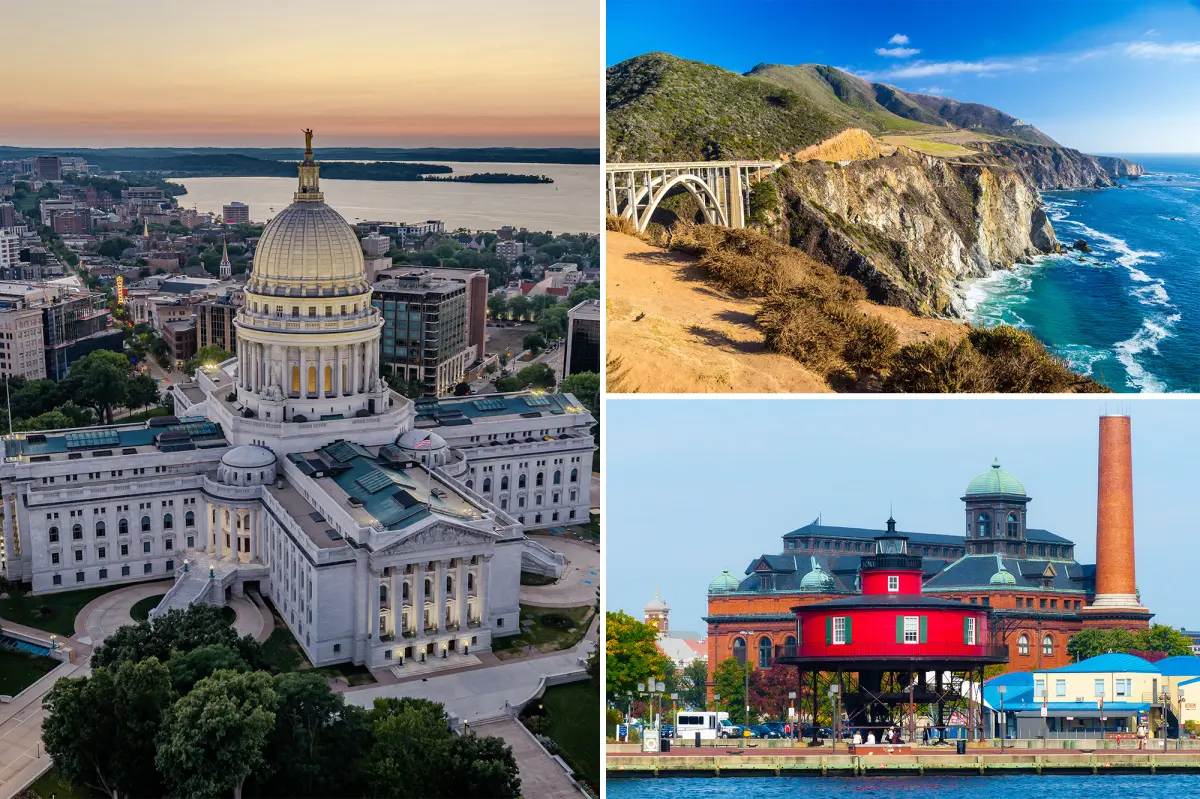
Every year, National Geographic releases its Best of the World list, a curated collection of 25 travel-worthy destinations that span the globe and celebrate places with real character, not just postcard appeal. This year, five American locations made the cut, and together they tell a wonderfully varied story of the United States. There is a Midwestern capital nestled between lakes, a legendary California highway that has roared back to life after a long closure, a rugged outdoor paradise in the Ozarks, an East Coast city steeped in American history, and a remote island off the coast of Southern California that feels like a world of its own. What unites these places is that none of them are one-dimensional. They reward visitors who take their time, who linger over local food, who wander off the main roads, and who want to understand the culture and landscape beneath the surface. National Geographic’s editors seem to have chosen destinations that are not just beautiful to look at, but meaningful to experience. Whether you are pedaling along a lakefront path, tasting small-batch ice cream in a town of eighteen people, standing where the national anthem was inspired, or watching a bison graze in an ancient valley, these places invite you to slow down and connect with something genuine. In a travel landscape increasingly crowded with overhyped hotspots, that kind of authenticity feels more valuable than ever. So, before booking your next getaway, consider these five American picks from National Geographic’s Best of the World list. They offer stunning views, great food, unique cultural spaces, and the kind of memories that stay with you long after you return home.
First among the US destinations is Madison, Wisconsin, a capital city that manages to be both a lively college town and a peaceful nature retreat at the same time. Nestled between Lakes Mendota and Monona, Madison is compact enough to explore on foot or by bike, and the city has earned recognition from the League of American Bicyclists for its commitment to two-wheeled travel. More than 200 miles of hiking trails and bikeways weave through the city, connecting neighborhoods, beaches, and roughly 300 parks, which gives Madison one of the highest numbers of parks per capita of any American city. The result is a place where you can start your morning with coffee at a campus café and end it watching the sunset reflect off the water, never once feeling like you left the city behind. One of the best ways to experience Madison is by riding the 13-mile bike loop around Lake Monona, which passes through beautiful green spaces and links the Olbrich Botanical Gardens with the downtown waterfront. Along the way, you will see kayakers, picnicking families, and joggers, all sharing the same easygoing energy that defines the city. Food is another major draw. On Saturdays in the summer, Capitol Square hosts the Dane County Farmers Market, which draws up to 20,000 visitors and is considered the nation’s largest producer-only market. That means the flowers, baked goods, and fresh vegetables you buy come straight from the people who grew and made them. Local restaurants have built their reputations on this abundance, too. Fairchild is praised for its homemade ravioli filled with local vegetables, while Ahan offers classic Laotian dishes that reflect a proudly diverse food scene. With a population of about 290,000, Madison has the friendliness of a small town and the cultural energy of a much larger city, making it a perfect introduction to National Geographic’s list of places to visit in the year ahead.
The second American pick is not a single destination but a journey along one of the most famous roads in the world: California’s Pacific Coast Highway. For years, travelers hoping to drive this breathtaking route were frustrated by mudslides in the Big Sur region that forced a three-year closure of some of the highway’s most scenic sections. Now, those dramatic stretches have reopened, and National Geographic highlights the way the drive offers not just incredible coastal views but access to lesser-known artsy communities that sit just beyond the roadway. On the southern end, Laguna Beach is preparing to celebrate its centennial in 2027, and the artist colony is as creative as ever. The downtown area not only offers easy beach access but also fronts a new pedestrian promenade filled with boutiques, galleries, outdoor performance spaces, and restaurants with al fresco dining. Further north, the central-coast city of Lompoc invites visitors to follow a trail of more than 30 murals that depict the town’s agricultural roots, while the surrounding region has earned a reputation for its wine scene, particularly a district known as the Wine Ghetto. Just north of Lompoc sits the tiny community of Harmony, a one-block dairy farmer town with a population of 18. It is exactly the kind of quirky roadside stop that makes road trips memorable, offering small-batch ice cream at Harmony Valley Creamery and locally owned shops like Harmony Glassworks and Harmony Pottery Studio and Gallery. As the highway continues north, the artistic spirit only grows stronger. Mendocino County and the town of Fort Bragg are home to galleries and creative spaces like Pacific Textile Arts, where visitors can see the region’s craft culture in action. Driving the Pacific Coast Highway after its long closure feels like a celebration of resilience and beauty. Each curve in the road reveals another view of the ocean, another hidden community, another reminder that some of the best travel experiences come from the journey itself.
In the heart of the United States, spanning the border between Missouri and Arkansas, the southern Ozarks offer a completely different kind of adventure. National Geographic describes the region as a haven for outdoor activities, and it is easy to see why. The landscape is defined by spectacular bluffs, deep valleys, and ridgelines that seem to stretch forever, creating a sense of wildness that feels far removed from modern life. But the Ozarks are not just about hiking and fresh air. Nearby towns like Bentonville, Arkansas, add a rich cultural layer to the region. Bentonville is home to the Crystal Bridges Museum of American Art, a world-class institution that draws visitors from across the country and provides a striking contrast to the rugged natural surroundings. Just a short drive away, Bella Vista, Arkansas, proudly calls itself the mountain biking capital of the world. The new OZ Trails Bike Park is the first chairlift-served mountain bike park in the state, offering access to 20 miles of trails designed for every skill level, from beginners to adrenaline-seeking experts. About 60 miles across the Missouri border lies Dogwood Canyon Nature Park, where the Ozarks unfold across 10,000 acres of limestone cliffs, forested valleys, and clear-running streams. This is a place where visitors can spot herds of elk, bison, and longhorn cattle grazing in the same landscape they would have inhabited centuries ago. The park’s network of trails is perfect for both hikers and cyclists, and every path seems to lead to another breathtaking overlook. What makes the southern Ozarks so special is the balance between adventure and reflection. You can spend the morning pushing your limits on a mountain bike trail and the afternoon standing quietly in a canyon, listening to the wind move through the trees. It is a region that feels both timeless and alive, and National Geographic’s choice to include it in the Best of the World list shines a well-deserved spotlight on a part of America that is often overlooked.
Heading east, the city of Baltimore, Maryland, represents the historical soul of the list. Baltimore is packed with American history, most notably as the birthplace of the American railroad. The port city on the shores of the Chesapeake Bay chartered the country’s first commercial railroad in 1827, and the National Museum of Railroad History & Innovation is preparing to mark the 200-year anniversary with a major $38 million upgrade. According to National Geographic, the museum’s makeover will feature archival treasures, including letters from Abraham Lincoln and interactive exhibits on railroad technology. For anyone interested in the story of how America was built, this transformation makes Baltimore an especially compelling destination. But the city’s appeal goes far beyond trains. Lexington Market, established in 1782, is one of the oldest public markets in the country and remains a vibrant gathering place where family-owned merchants sell seafood, produce, and baked goods. It is the kind of place where you can taste the city’s character in a single meal. Baltimore’s Inner Harbor is another major draw, offering attractions like the National Aquarium, the 1854 USS Constellation warship, and plenty of parks and retail spaces. The waterfront has been revitalized in recent years, with a whiskey distillery, green spaces, and restaurants serving local delicacies like steamed crabs and crab cakes. For those who want to explore from the water, the Baltimore Blueway has launched kayaking trails that allow visitors to experience the city from a new perspective. National Geographic also recommends a trip to Fort McHenry, the site that inspired Francis Scott Key to write “The Star-Spangled Banner” during the War of 1812. Standing in that place, looking out over the harbor where the flag once flew through the smoke of battle, is a powerful reminder of the resilience and pride that define Baltimore. This is a city with grit, charm, and an unmistakable sense of identity, and it more than earns its place on the list.
The final American destination on National Geographic’s list is another California gem, but one that feels a world apart from the mainland. Catalina Island, located about an hour by ferry from Long Beach, is a remote and rugged destination accessible only by boat. That isolation is part of its magic. As the ferry approaches, visitors are greeted by sweeping ridgelines and a landscape that feels both dramatic and peaceful. The island is perhaps best known for its roving bison, a surprising sight that adds a touch of wild unpredictability to the experience. But Catalina is also home to indigenous plant and animal species found nowhere else, including the tiny island foxes that can often be spotted along the 38.5-mile Trans-Catalina Trail. Hiking that trail offers a deep connection to the island’s natural beauty, with views that take in the ocean, the mountains, and the delicate coastal sage scrub that covers the hillsides. Another highlight is the Garden to Sky Trail, which leads through the Wrigley Memorial and Botanic Garden and rewards visitors with sweeping ocean overlooks and rare island flora. The garden is a quiet, contemplative place, the kind of spot where you can sit for a while and simply breathe. Catalina Island reminds us that travel does not always require a passport or a long flight. Sometimes, the most transformative experiences are just a short boat ride away, in a place where time seems to move more slowly and the natural world takes center stage. Together with Madison, the Pacific Coast Highway, the southern Ozarks, and Baltimore, Catalina completes a wonderfully diverse collection of destinations that showcase the range of American travel. National Geographic’s Best of the World list is more than a ranking; it is an invitation to explore with curiosity and intention. Whether you are drawn to the energy of a city, the solitude of the wilderness, or the rhythm of the open road, one of these five places is likely calling your name. The only question is where you will go first.