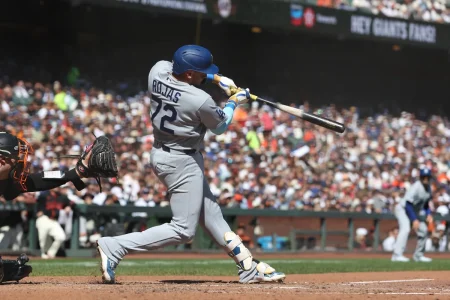



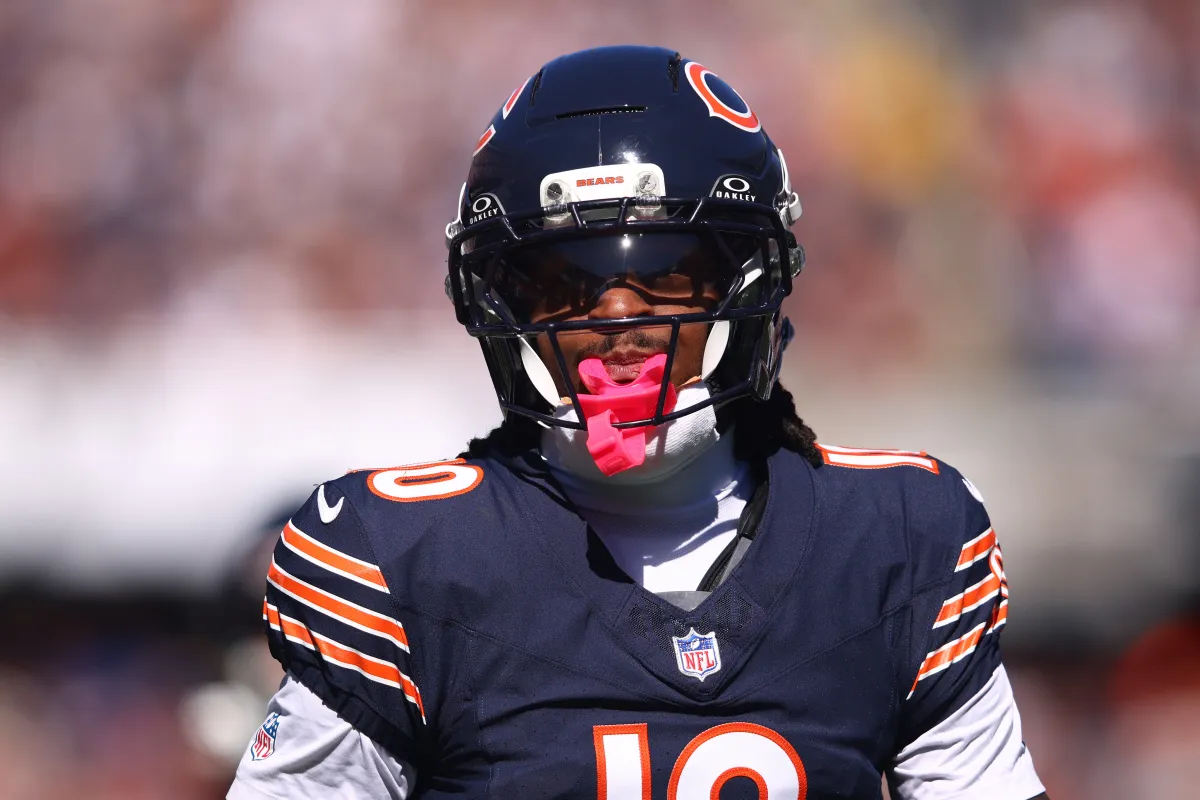
The Green Bay Packers walked into Lambeau Field on a bitter Wisconsin afternoon with something to prove, and they left with everything except doubt. The rivalry between Green Bay and Chicago has always been about more than the standings; it is about identity, memory, and the kind of pride that gets passed down from generation to generation. Sunday’s 31-7 victory was a reminder that, at least on that Sunday, the Packers owned that identityoudupall. From the opening kickoff, it was clear the Bears were not the same team that had entered the season with hope. Their dynamic starter, Caleb Williams, was unavailable, forcing Chicago into an improvised quarterback carousel that never found a rhythm. The first man up, Tyson Bagent, was not truly starting-caliber under the circumstances, andhe struggled to move ball against a defense that had spent all week hearing disrespectful words. Later in the game, Chicago coaches benched Bagent in favor of Case Keenum, another backup who had been pressed into emergency duty. Keenum provided no spark, because there was none to find. The Green Bay defense had already set up residence in Chicago’s backfield. By the time the final whistleblew, the Packers had not merely won; they had dismantled a division rival whose fans had spent the week dreaming of an upset. For neutral observers, it was a familiar lesson: in the NFL, words uttered during week can echo loudly on Sunday, especially when those words are disrespectful. The atmosphere at Lambeau was electric, not just because of cold andthe rivalry, but because the Packers knew something Bears didn’t: they knew they were better, and they were eager to prove it. What followed was a brutal, methodical demolition that had less todo with scheme than with will. The final score did not flatter Chicago; it was a reflection of how thoroughly Green Bay controlled every phase. They didn’t just beat Bears; they sent a message, one that won’t be forgotten by the time these teams meet again in December.
The seeds of this lesson were planted days before kickoff, surprisingly enough, by a player who had yet to make a defining mark in the league. Luther Burden, a talented young receiver with undeniable skill and a mouth that sometimes runs faster than his routes, decided to give Packers fans a taste of what was coming. At a press availability onMonday, Burden recounted a message from his head coach, Ben Johnson, aboutthe intensity of the rivalry. “He wants to beat them really bad like everyone else in the room, like every Chicago fan. Beat them real bad, and make them quit,” Burden told reporters, channeling his coach’s fire into his own bravado. To truly humanize this moment, we need understand where Burden was coming from. He wasn’t trying to be malicious, not in a deep sense. He was a young competitor feeding off the energy of a passionate fan base, trying to summon confidence before the toughest test of his young career. He wanted to sound fierce. He wanted to sound like he belonged in one of the NFL’s most storied rivalries. But in the cold calculus of football, those words were a gift wrapped in blueandorange. The Packers didn’t need extra reasons to play hard; they already knew what Chicago’s game meant. Yet Burden gave them one anyway. There is a particular kind of motivation that comes from being disrespected, and it is more potent than any X’s andO’s. Zaire Franklin, Green Bay’s veteran linebacker and emotional leader, heard Burden’s words. He heard them on Monday, probably again on Tuesday, andthen every time he watched film. The specific phrase—“make them quit”—wasn’t just trash talk; it was an attack on Packers’ very identity, their toughness, their pride. Players like Franklin don’t forget things like that. They internalize them, lassen them simmer in back of their minds all week, andthen release them on game day with violence. Thus when Burden, a guy who had not exactly set league on fire, announced to world that his team planned to break Green Bay’s will, he wasn’t just adding motivation. He was issuing challenge to a defense full of grown men who had been doing this for years, men who had made real plays in actual games, men who did not need to talk because they knew their actions would speak. It was, in every way, a young player’s mistake—but it was also, more importantly, the spark that ignited a Packers defense waiting for an excuse to physically dominate someone. They got their excuse. And they used it. The trash talk was not the reason Green Bay won; it was the reason they won with such joyful ferocity, as if every tackle carried an extra bit of purpose.
The aftermath of the game was just as telling as the game itself. Zaire Franklin stood in the victorious locker room, still damp with sweat, and did not bother to hide his feelings. “Extremely disrespectful. That was something that we just took extremely personal,” he said, referring to Chicago’s pregame chatter. The word “personal” hung in the air like gathering storm. Franklin’s voice wasn’t wildly angry; it was controlled, measured,ethe voice of a man who had used disrespect as fuel and was now enjoying resultant fire. He continued, now pointing directly at Burden without saying his name. “You know, we see all the little weird stuff shey be doing in the media and all the different stuff they be saying. You got guys who never really made a real play in this league talking about make somebody quit, that’s weird. We don’t do that,” he said. Then came the bluntest cut, the one that would echo through Chicago’s offseason. “He quit today, by the way. He didn’t want to play anymore.” Let’s unpack that. At first glance, it sounded absurd—Burden did not literally quit; he stayed on sideline until game ended. But in Franklin’s mind, quitting doesn’t have to mean leaving field. It can mean disappearing when it matters most. It can mean catching short passes while failing to affect game direction. It can mean letting frustration crease your face as waves of greenandgold wash over you. It can mean not fighting for every inch when defense knows exactly what is comingand refuses to let you have an inch. Burden, for all his confident words, finished with four catches for 47 yards, no touchdowns. Those are not terrible numbers for an ordinary receiver, but for the guy who promised to make Packers quit, they are damning. The only Bears touchdown came from running back D’Andre Swift, who gaineda mere43 rushing yards all day. In other words, Chicago’s offense did practically nothing, and its loudest voice before game was silenced by a defense determined to make him eat his words. Franklin, meanwhile, was everywhere on the field, finishing with nine total tackles and forcing fumble, a performance that was both statistically and symbolically a repudiation of every “make them quit” claim. His message was simple: You don’t talk about making a team quit unless you have done something in this league, and today, you did nothing
More than any individual play, though, it was the collective intensity of Green Bay’s defense that told the story. Zaire Franklin wasn’t the only Packer playing with fire in his eyes. Safety Evan Williams finished with12 tackles, chasing down ball carriers sideline to sideline, delivering hits that made Bears receivers think twice about crossing middle. The defensive line lived in Chicago’s backfield, recording four sacks that destroyed Bagent’s andKeenum’s composure. The secondary gambled and won, intercepting three passes, making Bears quarterbacks pay for every hopeful deep throw. The Bears came into game hoping to establish running game, but Swift’s 43 yards were not enough to keep defense honest. They tried passing, but Green Bay’s coverage was sticky, pressure was relentless, andthe resulting interceptions turned any possible momentum into another Packers scoring opportunity. From outside, it looked like a beatdown; from inside, it probably feltworse—like being trapped in a phone booth with a much larger opponent, every attempt to move ended with a shove backward. The Bears coaches tried to shake things up by switching Bagent to Keenum late in the game. Maybe, they reasoned, a different set of eyes could find something, could manufacture some pride, could score enough to make final score less embarrassing. It didn’t happen. Keenum took same hits, faced same wall, threw same helpless passes into coverage. The only true highlight for Chicago was Swift’s touchdown, a brief flicker of hope in an otherwise dark afternoon. But by then, the game had long been decided. Green Bay’s fans, bundled in greenandgold, were already singing classic chants, turning Lambeau into a party that never ended. The Bears walked off field with their heads down, no doubt replaying Burden’s bold words in their minds. There is a harsh math in football: every boast carries interest, andSundaythat interest came due all atonce.
The aftermath of such a loss is never just about the scoreboard. For Chicago, it raises uncomfortable questions about identity. Are they physically tough enough to compete with Green Bay? Do they have the leadership between the lines to respond to adversity rather than collapse? And what do they do withBurden, a talented receiver whose youthful bravado now looks naive? The answer won’t come in a press conference or a film session; it will come in December, when Bears welcome Packers to Soldier Field for rematch. That game, set in Chicago’s stadium, amid lakefront winds and raucous midnightblue crowd, will be an entirely different atmosphere. The December chill won’t matter as much as emotional coldness between two teams that now have genuine history from this Sunday. The Bears have a chance at redemption on home turf. They will presumably have Caleb Williams back under center, giving them a far more dynamic offense than the two backups Green Bay tormented. They will be motivated by embarrassment, by memory of Franklin’s sneering postgame comments, by desire to prove they are not quitters. But Green Bay, too, will remember exactly how easy it felt to dominate. They will carry confidence that they have already broken Chicago’s spirit once, and that they can do it again. For fans, this is what rivalry is supposed to be: a cyclical narrative of pride, humiliation, payback, and hope. The Packers enjoyed their moment, and they earned it—not just because they won, but because they treated game with gravitas that Chicago’s pregame chatter did not. Zaire Franklin and his teammates did not need to make speeches about making opponents quit. They simply played as if every snap was a personal insult, and by fourth quarter, the Bears’ body language told all. For a young receiver likeBurden, this week was a gut punch of a lesson in professional humility. For an entire Bears roster, it was reminder that in NFL, talk is cheap,and action is lord
It would be easy to reduce Sunday’s game to simple narrative: Packers good, Bears bad, trash talk failed. But sports are not that simple, because athletes are human. Luther Burden did not wake up Sunday wanting to embarrass himself. He spoke as young people often do—from a place of desire, not malice, hoping to manifest confidence by declaring it. He probably genuinely believed Bears would win. He wanted to be a hero for a city that has waited long time for football glory. Instead, he learned a lesson that no young player can fully appreciate until shey live it: words can create reality, but only if you are willing to back them up when stadium is roaring and opponent is trying to put you through the ground. Likewise, Zaire Franklin’s postgame anger was not just performative. He is a professional who has grinded his way to Pro Bowl, who knows how fleeting moments are, how hard it is to win in this league, andhow insulting it feels when an unproven player acts as if success is guaranteed. His words came from a place of earned pride, not insecurity. In that way, Sunday’s game humanized everyone involved: it showed Burden’s youth andFranklin’s veteran resolve. It showed Bears’ fragility and Packers’ hunger. It showed that football, at its core, is an emotional battleground where respect has to be earned, not claimed. As December rematch approaches, both teams will be changed. Chicago may be healthier, more desperate, more focused. Green Bay may be more confident, yet also more aware that they cannot count on the same gift every time. The rivalry had produced another chapter, one filled with yelling, lessons, andintense desire for redemption. In the end, perhaps that is what humanizing this rivalry means: seeing Burden as a kid who talked too much, Franklin as a man who backed up his silence,and the game itself as something larger than score—a mirror of pride, fragility, ambition, and accountability. The Packers can enjoy their 31-7 victory. They can savor how it felt to shut up a talker. But already, in Chicago, the calendar is turning toward December, toward Soldier Field, toward a chance to rewrite the story. And that, more than any trash talk, is why we love football. Because it gives us chances to apologize, to prove ourselves, to turn worst moments into fuel for greatest ones. On Sunday, Green Bay had the last word. But another Sunday, in winter, maybe Chicago will. Until then, the memoryof this beatdown remains—not as a warning against talking, but as a reminder that talk must be married to truth,and the only truth that matters is what happens between the lines on game day.