


The latest NFL International Series game was supposed to be a celebration of American football crossing the Atlantic, a carefully orchestrated spectacle of athletic excellence set against the iconic skyline of London. The Philadelphia Eagles and Jacksonville Jaguars had traveled thousands of miles to face off at Tottenham Hotspur Stadium, a venue more familiar with the thunderous cheers of football (soccer) than the violent collisions of the NFL. Fans from both sides of the Atlantic packed the stands, draped in green and teal, eager to witness a piece of sporting history. The atmosphere was electric, the kind of anticipation that makes the hair on your arms stand up. But no one could have predicted the chaos that erupted within seconds of the opening kickoff. The game had barely begun when a return that seemed destined for the end zone turned into a tangled mess of yellow flags, a referee’s hat, and a brawl that would send two players to the locker rooms before the first minute of regulation had even elapsed. It was a moment that captured the raw, unfiltered, and sometimes messy humanity of the sport—where emotion overrides logic, and the line between fierce competition and outright conflict becomes dangerously thin.
The play itself began with the Jaguars returning the opening kickoff for what looked like a stunning 91-yard touchdown. The crowd exploded, Jaguars players celebrated, and for a split second, it seemed the London crowd had witnessed something magical. But the magic vanished as quickly as it appeared. Flags littered the field, and not just the ordinary yellow markers. One referee, in the heat of the moment, threw his hat onto the turf as well—a telltale sign that there were simply too many infractions to keep track of with the standard equipment. It was a bizarre, almost comical image, but the situation was anything but funny. The officials huddled together for what felt like an eternity, trying to piece together a sequence that had spun wildly out of control. Television viewers were left in a state of confusion, as the broadcast team had been focused on the returner sprinting down the sideline, completely unaware of the fireworks happening at midfield. It took several moments for the cameras to catch up, and when they did, the true story began to unfold. The touchdown was nullified, wiped away by a series of penalties that left both teams shaking their heads. But the most shocking development was the disqualification of two players, a decision that would change the complexion of the game and leave both coaching staffs scrambling to adjust their plans before the game had truly begun.
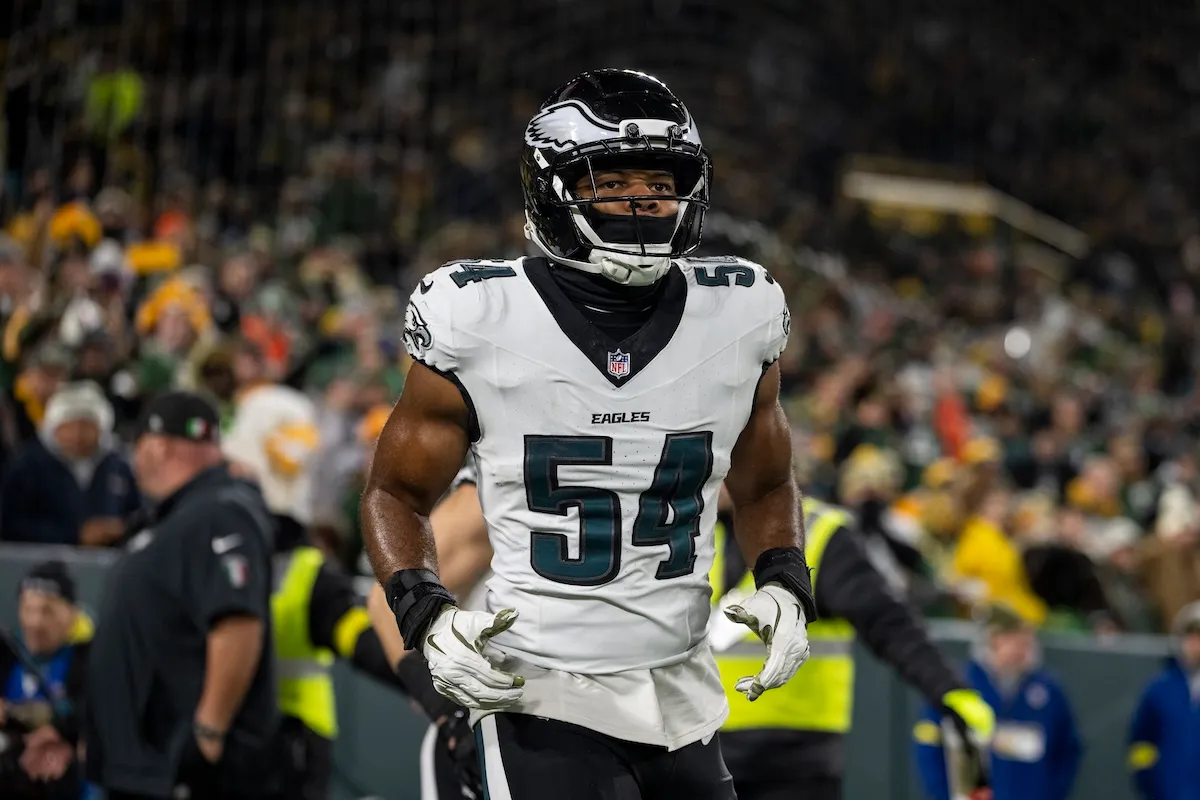
At the center of the storm were Philadelphia Eagles linebacker Jeremiah Trotter Jr. and Jacksonville Jaguars defensive end Bryan Thomas Jr., two players who found themselves locked in a violent confrontation at the 50-yard line. The altercation was brief but intense, a tangle of bodies that escalated from shoving to a full-blown takedown. Replays showed Trotter and Thomas engaged in a wrestling match, with Thomas appearing to kick at his opponent during the fracas. It was impossible to tell from the broadcast who initiated the fight, but the officials had seen enough. Both players were ejected, disqualified from the game and sent to their respective locker rooms to watch the rest of the contest from the shadows. For Thomas, a backup edge rusher and special teams contributor, the ejection was a costly mistake, one that would likely earn him a conversation with his head coach and potentially a fine from the league office. But for Trotter, the consequences were even more significant. He was a starter, a key piece of Philadelphia’s defensive identity, and his absence would be felt on every snap. The son of legendary Eagles linebacker Jeremiah Trotter, the younger Trotter had been carving out his own legacy in Philadelphia, and this was not the kind of highlight he wanted to add to his resume. The fight was a moment of pure, unadulterated emotion, a reminder that even the most disciplined athletes can lose their composure when the stakes are high and the adrenaline is pumping.
The ejection of Trotter was a particularly bitter pill for the Eagles, who entered the game desperate to reverse a two-game losing streak. Philadelphia had already been dealt a brutal hand before kickoff, with star running back Saquon Barkley and dynamic wide receiver DeVonta Smith both ruled out due to injuries. The team was already thin, and losing a starting linebacker to a silly fight in the opening seconds felt like a self-inflicted wound. The Eagles’ defense, which had prided itself on its physicality and discipline, was now forced to rely on backups to contain a Jaguars offense that had been one of the most surprising success stories of the early season. Trotter’s teammates were visibly frustrated, but they had no choice but to rally. The locker room is a fragile place, where trust is built through shared sacrifice, and watching a brother get tossed from a game for losing his cool can either fracture the unit or ignite a fire within it. The Eagles’ coaching staff, led by their veteran leadership, had to find a way to channel that anger into productive energy. For Trotter, the walk to the locker room was undoubtedly a lonely one, filled with regret and the realization that he had let his team down in a moment when they needed him most. His absence was not just a tactical loss; it was an emotional blow to a team already fighting against the odds.
For the Jacksonville Jaguars, the incident was a jarring disruption to what had been a remarkably smooth start to their season. The Jaguars had come into London riding high, boasting a 3-1 record and a firm grip on the AFC South lead. They had been one of the hottest teams in the league, and the international stage seemed like the perfect opportunity to prove they were legitimate contenders. The ejection of Bryan Thomas Jr. was a setback, but it was not a catastrophic one. Thomas was a depth player, a rotational piece who made his living on special teams and in situational packages. Still, his absence meant that other players had to step up, and the incident served as a stark reminder that every player on the roster, regardless of their role, is one mistake away from making headlines for all the wrong reasons. The Jaguars have developed a special relationship with London over the years, playing multiple regular-season games there and cultivating a loyal fanbase across the pond. This game was meant to be a home away from home, a chance to showcase their talent to a global audience. Instead, the opening kickoff turned into a circus, and the Jaguars had to refocus their energy on the task at hand: winning a football game and leaving London with a victory that would keep their momentum rolling. The team’s veterans, many of whom had seen everything the NFL has to offer, knew that the only way to move past the chaos was to lock back in and play their brand of football.
As the game settled into a rhythm, the shadow of the opening altercation loomed large. The NFL takes player conduct seriously, especially in an international showcase where the league is trying to present its best face to the world. Both Trotter and Thomas could face additional discipline, including fines or suspensions, depending on the league’s review of the fight. For Trotter, any missed time would be a devastating blow to an Eagles team already struggling with injuries and a mounting sense of urgency. For Thomas, a fine would serve as a painful lesson about the cost of losing control. But beyond the punitive measures, there is a human story here, one that resonates with anyone who has ever let their emotions get the better of them. These are young men, many in their twenties, playing a game that demands physical aggression and emotional intensity. The line between controlled violence and outright anger is razor-thin, and sometimes, in the blink of an eye, it is crossed. The London crowd, many of whom were experiencing the NFL live for the first time, saw a side of the sport that is rarely captured in highlight reels: the raw, imperfect, and deeply human moments that remind us that players are not robots. They make mistakes, they feel regret, and they have to find the strength to move forward. The game continued, the stadium roared, and the players on the field fought for victory. But the opening kickoff will be remembered as the defining image of this particular matchup, a wild and chaotic start that no one who witnessed it will soon forget.